







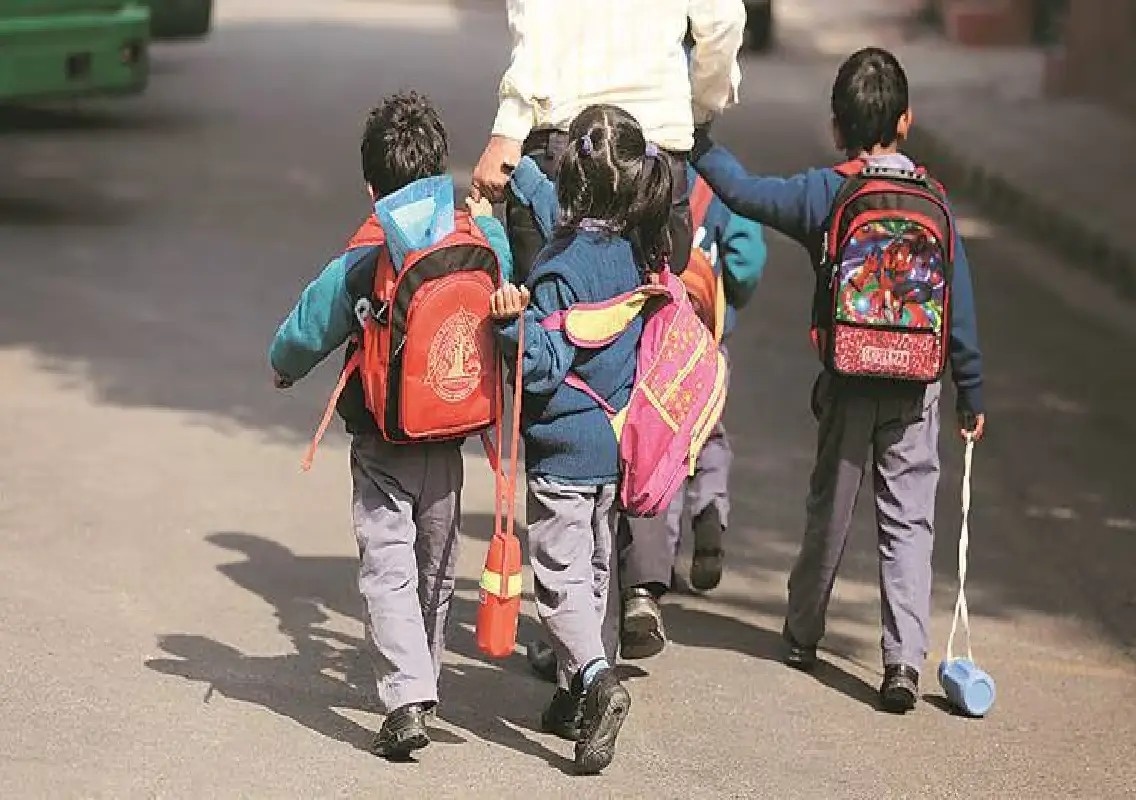


Nearly 51 per cent of children in Delhi walk or cycle to school, a figure that may appear encouraging for sustainable urban mobility. However, a new study by the Transportation Research and Injury Prevention Centre at IIT Delhi suggests that for many children, active travel is driven more by necessity than choice.
The study, conducted across six neighbourhoods in the national capital, found significant inequalities in how children access education and commute to school.
Walking and cycling remain common
Researchers found that children from lower-income households are far more likely to walk or cycle to school because they attend nearby government-aided schools and have limited transport options.
According to the study, 77 per cent of children from low-income families attend schools located within one kilometre of their homes. In contrast, only 16 per cent of children from very high-income households study so close to home.
Many affluent families choose private schools farther away and rely on cars or other motorised transport to reach them.
Not all school journeys are safe
While walking and cycling are often viewed as healthy and environmentally friendly, the study highlights the challenges many children face every day.
Students frequently navigate broken footpaths, unsafe road crossings and heavy traffic while travelling to and from school. Among children from very low-income families attending private schools, nearly 73 per cent still walked or cycled, compared to just 8 per cent from the highest income groups.
Researchers say this indicates that active travel often reflects limited mobility choices rather than personal preference.
Need for child-friendly streets
The report calls for safer school travel through better footpaths, protected crossings, reduced traffic speeds and improved neighbourhood accessibility.
Although initiatives such as Delhi’s Safe School Zone programme have been introduced, implementation remains limited. Experts believe expanding such projects could improve road safety and encourage healthier travel habits among children.
The study concludes that access to education is not just about the availability of schools. It is also about ensuring that every child can reach school safely, comfortably and affordably.