







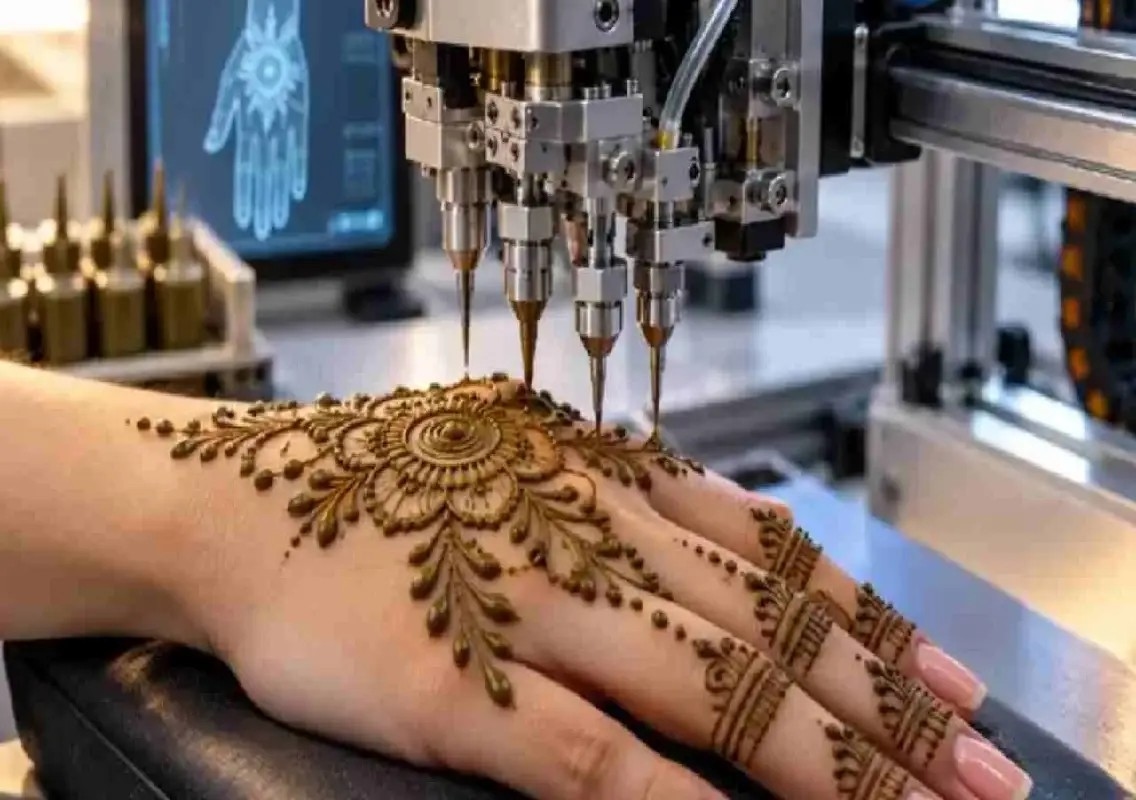


Mumbai: RPG Group Chairman Harsh Goenka has sparked a discussion on automation and the future of employment after sharing a video that appears to show a machine applying intricate mehendi designs on a person’s hand within seconds.
Goenka shared the video on X with a brief caption that immediately drew attention: “Some more jobs gone.”
The post quickly gained traction on the social media platform, with more than two lakh views within hours. It triggered a debate among users over the growing role of automation and artificial intelligence in tasks that have traditionally depended on human skills and craftsmanship.
Machine applies intricate mehendi designs
The video shared by Goenka appears to show an automated device creating a detailed mehendi design directly on a hand in a matter of seconds.
Mehendi application is traditionally a highly skilled, manual activity. Professional mehendi artists spend considerable time creating intricate patterns for weddings, festivals and other celebrations. The apparent speed of the machine therefore became the central point of discussion following Goenka’s post.
While the video was shared primarily as a comment on automation, its application to a culturally familiar and traditionally human-led service prompted users to question how far technology could extend into everyday occupations.
Goenka’s short caption, “Some more jobs gone,” also added an element of irony to the post and encouraged users to discuss the possible impact of automation on employment.
Social media users debate automation
The post generated a range of reactions, with users discussing whether machines capable of performing specialised tasks could eventually reduce demand for human workers.
Automation has already transformed several industries, particularly manufacturing, logistics, banking, customer service and technology. Machines and software are increasingly being used to perform repetitive tasks, improve efficiency and reduce the time required for certain processes.
The mehendi machine video offered a more relatable example of this trend because it appeared to demonstrate automation in a service that is generally associated with individual artistic skill.
The discussion also raised a broader question: whether technology will simply eliminate certain jobs or instead change the nature of work and create demand for new skills.
Human creativity versus machine efficiency
Although a machine may be capable of reproducing intricate patterns rapidly, users also pointed to the distinction between speed and creativity.
Traditional mehendi artists often customise designs based on a customer’s preferences, occasion, hand shape and desired style. The personal interaction between an artist and customer is also an important part of the experience, particularly during weddings and festivals.
An automated system may offer consistency and speed, but whether it can replicate the personalisation and creative interpretation provided by an experienced artist remains a matter of debate.
The video therefore became more than an unusual example of technological innovation. It served as a prompt for a larger conversation about what aspects of human work can be automated and what skills are likely to retain value in an increasingly technology-driven economy.
Automation debate gains fresh momentum
Goenka’s post comes at a time when automation and artificial intelligence are generating growing discussions about the future of employment across sectors.
Advances in robotics, generative AI and automated systems have enabled machines to perform increasingly sophisticated tasks. While businesses often view automation as a way to improve productivity and efficiency, workers and policymakers have raised concerns about job displacement and the need for reskilling.
The mehendi application shown in the video represents a relatively small and unconventional example, but its appeal lies in how easily users can understand the potential disruption. A task that normally requires a trained individual appears to have been completed by a machine almost instantaneously.
The viral response to Goenka’s post demonstrates how examples of automation involving familiar professions can quickly capture public attention.
At the same time, the discussion highlights that the future of work is unlikely to be determined solely by whether a machine can perform a particular task. Factors such as cost, reliability, creativity, customer preference and the value placed on human interaction will also influence whether automated alternatives become widely adopted.
Goenka’s post has consequently opened up a wider conversation about the balance between technological efficiency and human employment, with the seemingly simple mehendi machine becoming an unexpected example in the ongoing automation debate.