







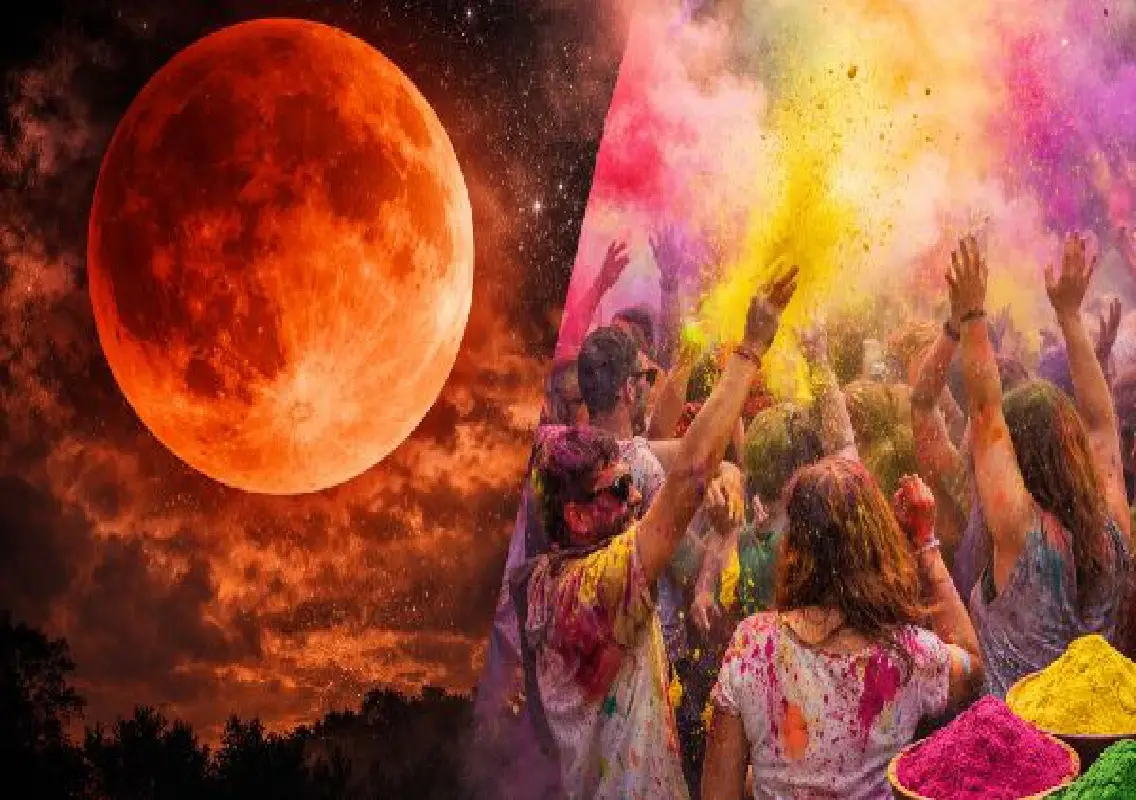


New Delhi: Holi 2026 comes with a rare celestial twist as the festival of colours coincides with a lunar eclipse, also known as a Chandra Grahan. The overlap has sparked widespread curiosity about rituals, Grahan Sutak timings and whether traditional Holi celebrations can proceed as usual.
As the Holi 2026 lunar eclipse approaches, online searches for terms such as “Grahan Sutak rules”, “Holi during lunar eclipse” and “celebration guidelines” have seen a noticeable rise. While Holi is celebrated as a day of joy, colour and togetherness, a lunar eclipse carries religious significance in many Hindu households, often accompanied by certain observances and restrictions.
What is Grahan Sutak?
Grahan Sutak is considered an inauspicious period that begins several hours before the start of a lunar eclipse. According to traditional beliefs, the Sutak period for a Chandra Grahan generally begins nine hours before the eclipse becomes visible.
During Grahan Sutak, temples usually remain closed, and certain religious activities are paused. Many devotees refrain from cooking, eating or initiating new tasks during this time. Pregnant women in some households are also advised to remain indoors and avoid using sharp objects, based on long-held cultural beliefs.
The exact timing of Sutak depends on when the eclipse begins in a specific region. Families often refer to local panchangs (Hindu calendars) or announcements from nearby temples to confirm precise timings.
Can you play Holi during a lunar eclipse?
The most common question surrounding Holi 2026 is whether it is permissible to play with colours during the Grahan Sutak period.
Traditionally, some families avoid celebrations, social gatherings or festive rituals during Sutak. In such households, playing with colours, applying gulal or organising Holi parties may be postponed until the eclipse concludes.
However, practices vary widely across regions and communities. In many parts of the country, if Holi festivities take place before the Sutak period begins, celebrations continue as planned. Some families prefer to complete the colour play earlier in the day and observe eclipse-related restrictions once Sutak starts.
Importantly, there is no legal or government restriction on celebrating Holi during a lunar eclipse. Observance of Sutak is a matter of personal faith and family tradition.
Religious perspective on Chandra Grahan
In Hindu tradition, a Chandra Grahan is regarded as a spiritually significant time. Devotees often engage in prayer, chanting of mantras and quiet reflection during the eclipse.
Many people take a ritual bath after the eclipse ends and clean their homes before resuming routine activities. Some households believe that food prepared before Sutak should not be consumed during the eclipse. As a precautionary custom, tulsi leaves are sometimes placed in cooked food to symbolically protect it from impurity.
These practices differ across states and communities, reflecting the diversity of India’s cultural landscape.
Balancing faith and festivity
Holi, celebrated on the full moon day of the Hindu month of Phalguna, marks the victory of good over evil and the arrival of spring. It is a festival that transcends age and social boundaries, bringing people together in vibrant celebration.
When it coincides with a lunar eclipse, families often strike a balance between faith and festivity. Some may prioritise religious observances during Sutak and resume celebrations later. Others may treat the day as usual while offering prayers at home.
How to plan Holi 2026 celebrations
For those preparing for Holi 2026, a few simple steps can help ensure smooth planning:
- Check the exact Sutak timing for your city through a reliable panchang or temple notice.
- Complete colour play before Sutak begins if you follow traditional guidelines.
- Keep celebrations safe and respectful of elders’ beliefs in the family.
- Resume festivities after the eclipse ends, if preferred.
Conclusion
Holi 2026 presents a unique blend of celestial phenomenon and cultural celebration. While a lunar eclipse may bring certain religious observances into focus, the spirit of Holi remains one of harmony and joy. Ultimately, families can choose how to observe the day, balancing long-held traditions with the festive essence of the festival.