







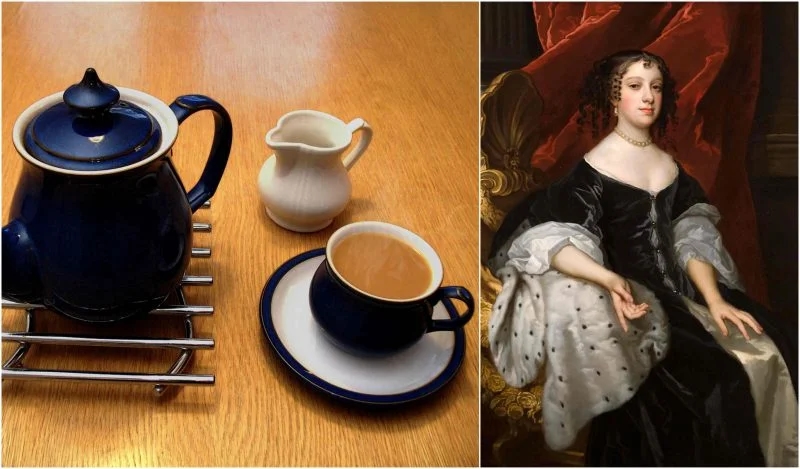


Tea today feels inseparable from Indian life. From morning chai to roadside tea stalls, it is hard to imagine that India was not a major tea-drinking nation until the 19th century. Yet the journey of tea into Indian cups — and British identity — is a story shaped by empire, trade and one influential royal marriage.
Tea before it became Indian
Before 1800, tea was not widely consumed in India, except in a few regions with indigenous varieties. Commercial tea cultivation began only in the 1830s, when the British East India Company introduced large-scale tea plantations to meet Britain’s growing demand and reduce dependence on Chinese imports.
Ironically, Britain itself was not always a tea-drinking nation.
Portugal’s quiet role in tea history
Tea first entered Europe through Portuguese imperial networks. After Vasco da Gama opened the sea route to India in 1498, Portuguese traders established links stretching to China and Japan. In Macau, they encountered tea and sent samples and descriptions back to Portugal, where it became an elite luxury by the late 16th century.
Catherine of Braganza: tea’s royal influencer
Tea reached England decisively through Catherine of Braganza, daughter of Portugal’s King John IV. When she married Charles II in 1662, her dowry included wealth, territories — including Bombay — and crates of tea.
At the time, tea in England was sold mainly as a medicinal substance. Catherine’s daily tea-drinking rituals at court transformed it into a fashionable beverage almost overnight. English aristocracy quickly followed suit, and tea became a marker of refinement and social status.
From luxury to national habit
By the 18th century, tea spread to England’s middle class, despite heavy taxation and widespread smuggling. In 1784, William Pitt the Younger slashed tea taxes on advice from Richard Twining, boosting legal imports. Companies like Twinings helped cement tea as Britain’s national drink.
Tea returns to India — transformed
In the 19th century, Britain developed tea plantations across India and Ceylon, embedding tea into colonial economics. Over time, Indians made it their own — spiced, brewed strong, and shared socially. Today, India is the world’s second-largest producer and consumer of tea.
Meanwhile, Portugal still drinks “chá” and remains Europe’s only commercial tea producer through the Gorreana Tea Company in the Azores.
A drink shaped by history
From Chinese courts to Portuguese ships, English palaces and Indian streets, tea’s journey shows how cultures travel, blend and transform. Behind every cup lies a global story — and the unexpected influence of one queen’s personal taste.