







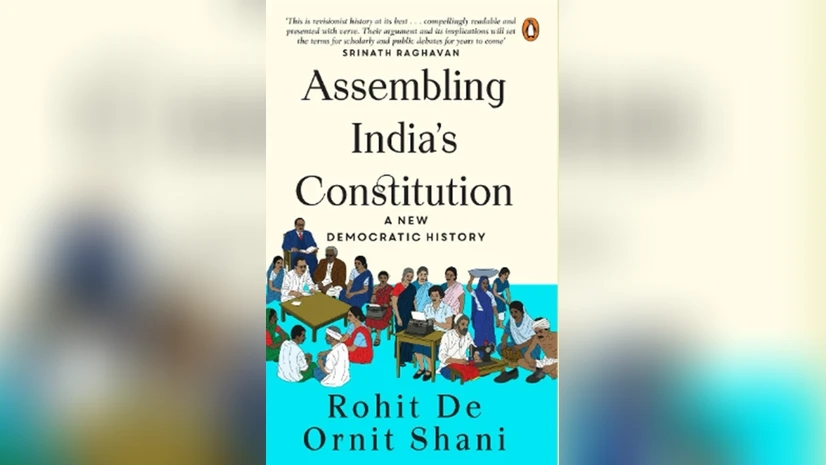


A new book by historians Rohit De and Ornit Shani shines fresh light on the making of India’s Constitution by shifting attention from the well-known proceedings of the Constituent Assembly to the energetic, often contentious public engagement that unfolded far beyond its walls. Assembling India’s Constitution: A New Democratic History, published by Penguin, explores how Dalit organisations, upper-caste groups, provincial associations and individual petitioners articulated competing visions of justice, equality and community during the nation’s constitutional moment.
Caste as the axis of constitutional imagination
No system shaped everyday life in India more profoundly than caste. It determined occupation, residence, marriage, food practices and social relations. Constitution-making in the 1940s therefore opened the possibility of challenging a deeply entrenched hierarchy. As legal scholar Upendra Baxi has described, this period marked a “normative war” against caste-based violence and exclusion.
The new book reveals how anxieties, hopes and demands around caste animated the public’s participation. Dalit groups pressed for the end of untouchability, bonded labour and forced caste-based obligations, while many upper-caste groups feared that constitutional reform might unsettle the structures that had historically privileged them.
Petitions from villages and towns: voices seeking justice
One vivid example is the handwritten memorandum submitted by S. Uppiliappan, a resident of a village in present-day Tamil Nadu. His letter, written in Tamil, moved through multiple government offices because officials struggled to decipher it. Eventually, the Press Information Bureau identified its core demands: special safeguards, community autonomy and protected settlements. The ambiguity of his caste location — possibly Dalit, possibly upper caste — reflected a larger truth: diverse groups were grappling with social change, each seeking constitutional guarantees for dignity and security.
Dalit mobilisation: demands for rights, safety and economic reform
Dalit political organisations had already begun mobilising intensely by the late 1940s. Despite being included in the “General” category for the Constituent Assembly, Dalit leaders insisted that their lived experiences required explicit constitutional protection.
Across India, Dalit associations held meetings, passed resolutions and warned that a Constitution drafted without their real representatives would lack legitimacy. Leaders from the All India Depressed Castes League and the Scheduled Caste Federation (led by Dr B R Ambedkar) articulated a strikingly unified set of demands.
They argued that:
- Freedom of speech meant little without protection from upper-caste retaliation, boycotts or violence.
- Equality of occupation required protection from coercion into degrading caste-based labour.
- Untouchability could not merely be morally condemned; it needed enforceable constitutional prohibitions.
- Land redistribution or state socialism was necessary to secure real liberty for landless Dalit labourers.
Dalit women, too, articulated demands for equality within family law, arguing that customary Dalit practices historically offered more flexibility and rights than orthodox Hindu law.
Upper-caste anxieties and calls for a religious state
Upper-caste Hindus, particularly orthodox groups, reacted differently. Fearing a constitutional order shaped by universal franchise, some portrayed themselves as minorities requiring protection. The book documents numerous petitions seeking guarantees for religious autonomy or demanding that the Constitution be anchored in Dharm Rajya or Ram Rajya.
One of the most striking interventions came from the Shankaracharya of Dwarka, who argued that constitutional governance should be guided by Hindu scriptures and expert religious scholars, not by modern democratic institutions. Such petitions reveal a moment when the very nature of India’s future — democratic, religious, secular, hierarchical or egalitarian — was being contested.
A democratic churn that shaped a radical Constitution
The authors argue that India’s Constitution was not simply the gift of enlightened elites. Its transformative provisions — abolition of untouchability, prohibition of forced labour and the creation of affirmative action — were forged through sustained public mobilisation, particularly by Dalits determined to secure social and economic freedom.
The Constitution that emerged was a product of this vast, often fractious democratic engagement. It reflected the aspirations of millions who saw in it a pathway to reshape social relationships and challenge centuries of entrenched inequality.