









In 2014, the Indian National Congress secured 44 seats with 19.3% of the vote. By 2019, it increased to 52 seats with 19.49% of the vote, and in 2024, it surged to 99 seats with 21.26% of the vote. This remarkable turnaround also saw the Congress’s overall strike rate improve to 30% from 8.3% in 2019 and 9.4% in 2014. In head-to-head contests against the BJP, the strike rate improved to 29%, up from 8% in 2019 and 12.2% in 2014.
The performance of Congress and the INDIA bloc limited the BJP to 240 seats, short of a majority, though the larger NDA grouping won 294 seats.
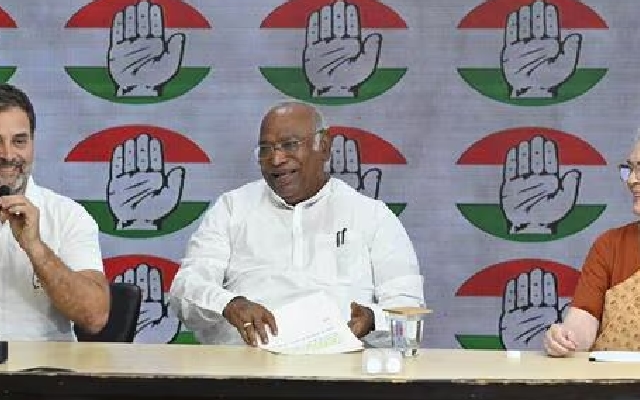
“The election result that has come today is the result of the people. This is the victory of the people and democracy. We humbly accept the public opinion in the elections of the 18th Lok Sabha. This time the public has not given a clear majority to any one party (especially the ruling party),” Congress president Mallikarjun Kharge said on Tuesday. He also criticized Prime Minister Narendra Modi, stating, “BJP has sought votes on one person and one face, but now it is clear that the mandate has gone against Narendra Modi. This is a huge defeat for them morally and politically. They have suffered a huge loss from a moral point of view.”
The Congress’s resurgence was built on three pillars:
1. Alliances
The INDIA bloc of opposition parties initially faced challenges, with partners expressing frustration over delays in seat-sharing talks. However, the Congress-led bloc of 30 parties eventually fielded candidates across 543 seats, avoiding significant intragroup contests except in 75 seats across West Bengal, Kerala, and Punjab. The alliance managed to field a single candidate against the BJP in around 350 seats. The Congress itself fielded only 328 candidates, the lowest ever, and was willing to go even lower, as hinted by Kharge in a January meeting where he suggested focusing on 255 seats.
“We respected INDIA partners. We accommodated their wishes and fought together,” Rahul Gandhi said at a press conference on Tuesday.
The Congress was strategic in candidate selection. For example, despite advice from the Samajwadi Party not to field Imran Masood from Saharanpur, the Congress stuck with him, resulting in his victory with more than 77,000 votes.
In Punjab, the Congress avoided a pact with the Aam Aadmi Party to prevent splitting votes, winning seven out of 13 seats. Similarly, it did not partner with the Trinamool Congress in West Bengal or the Left in Kerala, where the UDF alliance won 18 seats, one less than last time.
2. The Campaign
The Congress focused on the caste census, unemployment, and price rise, emphasizing the 25 guarantees in its manifesto. An A4-size card with these guarantees became central to their campaign, promising major benefits like ₹1 lakh for women heads of poor families, 10 kg of free food grain, and the right to apprenticeship.
Rahul Gandhi highlighted these promises while countering BJP claims about wealth redistribution and favoritism towards Muslims. He also advocated for a caste census and raising the reservation ceiling for SC, ST, and OBCs.
Clad in his Bharat Jodo Yatra attire, Gandhi made the Constitution a key election plank, asking why the BJP needed 400 seats and suggesting it was to change the Constitution and abolish reservations.
3. Party Organization
Between 2019 and 2024, Rahul Gandhi traveled over 10,000 km, mostly on foot, to revive the Congress organization at the grassroots level. Priyanka Gandhi Vadra focused on campaigning across India, especially in Uttar Pradesh.
Under Kharge, the Congress organization became united and responsive, effectively using social media to counter the BJP. For example, Rahul Gandhi quickly debunked Prime Minister Modi’s claim about the Congress receiving a “tempo-load” of money from Adani and Ambani.
With 99 seats in the Lok Sabha, the Congress still trails behind the BJP but has shown significant improvement.
Political analyst Suman Chattopadhyay noted, “It was a major turnaround for the Congress given the adversities it has faced in the run-up to the poll. It will form a bigger and better pressure group inside and outside Parliament but also has the larger responsibility to take the allies together for the upcoming elections.”