







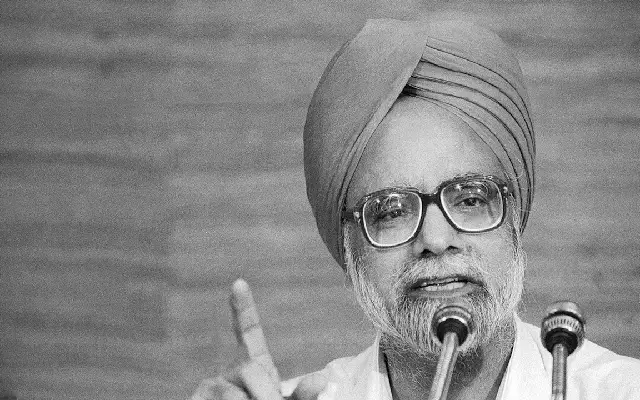


In June 1991, Manmohan Singh, then Chairman of the University Grants Commission (UGC), had just returned from a conference in the Netherlands. One evening, his son-in-law, Vijay Tankha, answered a late-night call from P.C. Alexander, a close aide to Prime Minister P.V. Narasimha Rao. Alexander urgently requested that Singh meet with Rao. Initially dismissing the call as insignificant, Singh, an academic with no political experience, did not take the message seriously.
However, by June 21, Singh found himself at Rashtrapati Bhavan, unexpectedly taking the oath as India’s new Finance Minister. In his reflections, Singh recalled, “Everybody was surprised to see me as a member of the new team lined up to take the oath of office. My portfolio was allotted later, but I was told straight away by Narasimha Rao ji that I was going to be finance minister,” as quoted in the book Strictly Personal: Manmohan & Gursharan by his daughter Daman Singh.
Singh’s appointment marked a pivotal turning point in India’s economic history. At the time, the country was facing an economic crisis, with foreign exchange reserves plummeting to just Rs 2,500 crore—barely enough to cover two weeks of imports. Inflation was spiraling, and global banks were unwilling to offer loans. Despite the overwhelming challenges, Singh, alongside Prime Minister Narasimha Rao, became the architect of India’s 1991 economic reforms. The reforms dismantled the old, insular, and control-heavy economic framework, opening the country up to the world. These transformative changes paved the way for India to become the world’s fastest-growing major economy.
Singh’s appointment was unexpected, and it is often seen as a defining moment that reshaped India’s economic landscape. Through bold decisions and a focus on liberalization, Singh played a key role in setting India on a path of rapid growth and transformation.
Why Global Investors Flock to Bengaluru: Manmohan Singh
Mangaluru: Beach Festival at Tannirbhavi Postponed Due to Mourning for Manmohan Singh
#manmohansingh #PM #IndiaPM #Obituary #newskarnataka