







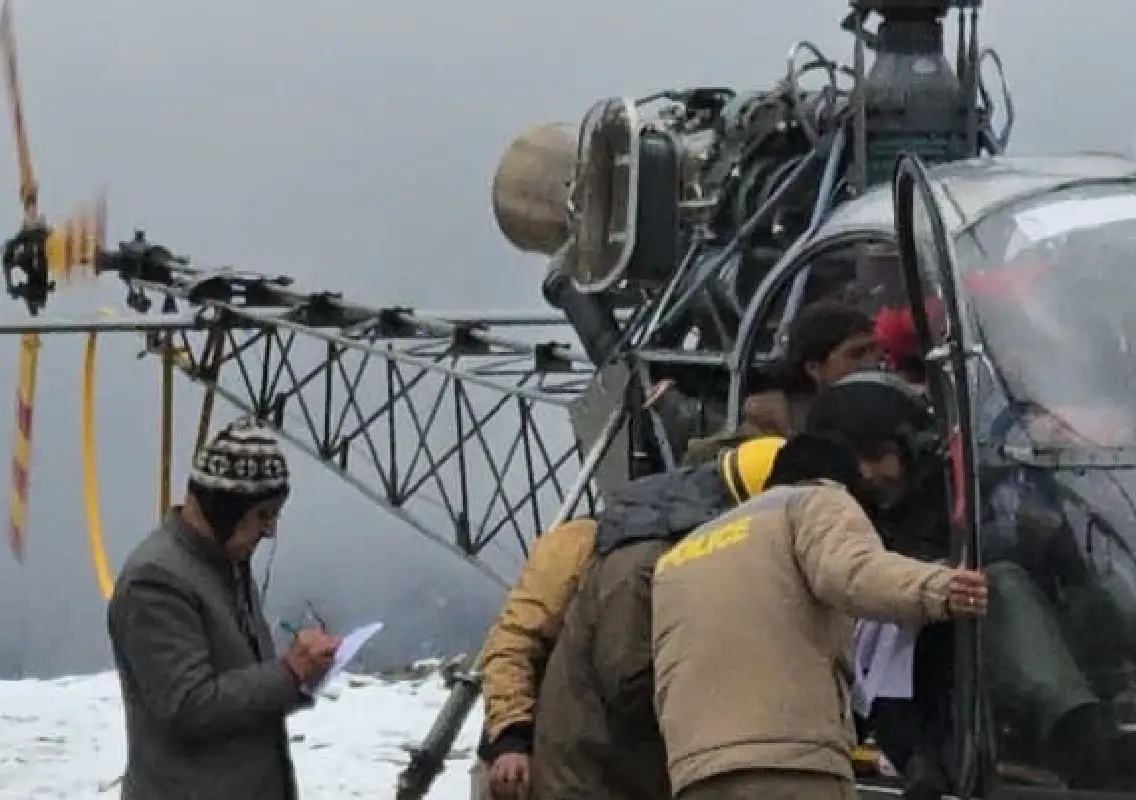


An Indian Air Force (IAF) Cheetah helicopter carried out a critical medical evacuation on Sunday, airlifting an 85-year-old paralysed woman from the snowbound village of Dhanderwari in Himachal Pradesh after all road access was blocked due to heavy snowfall.
Rescue from 9,000 feet amid harsh weather
The emergency evacuation was conducted from an altitude of nearly 9,000 feet above mean sea level under challenging conditions, including active snowfall and poor visibility. The woman was airlifted to Chandigarh for urgent medical treatment and is now reported to be stable, officials said.
The Indian Air Force shared a video of the operation on X, showing personnel carrying the elderly woman on a stretcher through deep snow before carefully loading her into the helicopter. The footage has drawn praise for the swift response and professionalism of the rescue team.
Snowfall and rain across hill districts
Himachal Pradesh witnessed widespread snowfall and rainfall on Sunday, even as a yellow weather warning remained in place. Authorities cautioned residents against thunderstorms, lightning and gusty winds across several districts.
Shillaroo in Shimla district and Kothi in Kullu district recorded 5 cm of snowfall, while Kufri received 4 cm. Gondhla village in Lahaul and Spiti saw 3 cm of snow, followed by Khadrala in Shimla at 2.5 cm and Sangla in Kinnaur at 2.1 cm. Kalpa recorded 0.8 cm of snowfall.
Rainfall was highest in Manali at 10 mm, followed by Sujanpur Tira in Hamirpur district at 7.8 mm. Shimla received 4.2 mm of rain, while Solan, Nadaun and Nahan also recorded light rainfall.
The lowest temperature in the state was minus 3.6 degrees Celsius at Tabo in Lahaul and Spiti.
More snowfall likely
The Met Department has forecast continued snowfall and rainfall in the middle and higher hill areas of Himachal Pradesh on February 2 and 3, while weather is expected to remain dry in the plains and lower hill regions.
The rescue has once again highlighted the crucial role played by the IAF in reaching remote and inaccessible regions during natural disruptions.