







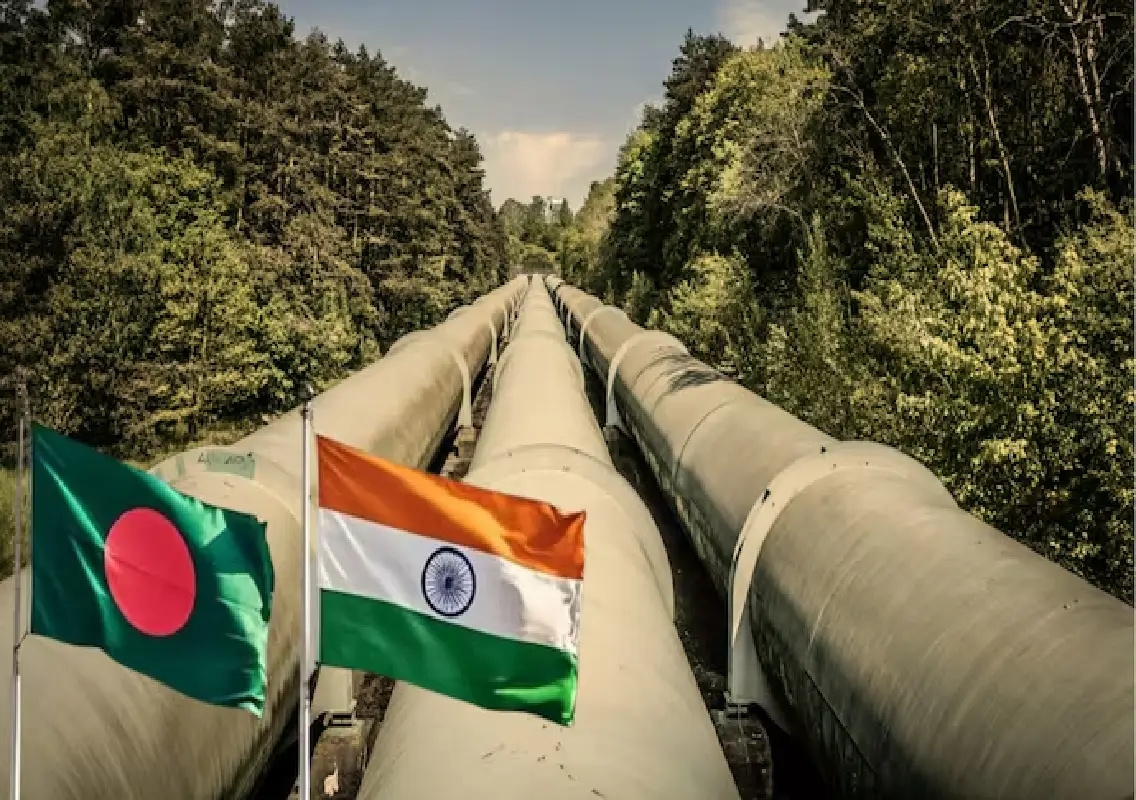


New Delhi: India has begun supplying diesel to Bangladesh through a cross-border pipeline from the Numaligarh refinery in Assam, providing crucial relief as the neighbouring country grapples with a fuel shortage amid global energy disruptions caused by the ongoing conflict in West Asia.
According to Bangladesh Petroleum Corporation (BPC), at least 5,000 tonnes of diesel were expected to reach Bangladesh on Tuesday as part of the first shipment under a broader annual fuel supply agreement between the two countries.
Officials said the delivery could help ease immediate pressure on Bangladesh’s power generation and transport sectors, which have been affected by disruptions in global oil supply chains.
Diesel transported through India–Bangladesh Friendship Pipeline
The diesel is being transported through the Bangladesh–India Friendship Pipeline, a cross-border infrastructure project that connects the Numaligarh refinery in Assam to the Parbatipur depot in the Dinajpur district of northern Bangladesh.
The pipeline was inaugurated in March 2023 by Prime Minister Narendra Modi and former Bangladesh Prime Minister Sheikh Hasina, marking a major milestone in energy cooperation between the two neighbours.
Sources in Bangladesh Petroleum Corporation said the diesel consignment would travel through the pipeline from Assam to the Parbatipur depot, which serves as a key fuel distribution centre for northern Bangladesh.
Before the pipeline became operational, fuel shipments between the two countries relied primarily on railway tankers, which were slower and more expensive.
The pipeline has significantly improved the efficiency of fuel transport by reducing transportation costs and delivery time.
First shipment part of larger annual agreement
Officials confirmed that the 5,000 tonnes of diesel being pumped through the pipeline is only the first instalment under a larger annual supply agreement.
Under the agreement, India has committed to supplying 1,80,000 tonnes of diesel to Bangladesh every year.
BPC Chairman Muhammad Rezanur Rahman said the current shipment is part of a structured supply plan designed to stabilise fuel availability in Bangladesh.
“We have an agreement with India, and according to that agreement, India will supply 1,80,000 tonnes of diesel to Bangladesh via the pipeline each year. The 5,000 tonnes that is arriving now is part of that agreement,” he said.
He added that at least 90,000 tonnes of diesel are expected to be delivered within the next six months to help Bangladesh manage the ongoing fuel shortage.
Pumping process and delivery timeline
According to officials from Bangladesh Petroleum Corporation, the pumping of diesel began at around 3.20 pm on Monday.
The pipeline system allows approximately 113 tonnes of diesel to be transported every hour.
At this rate, it takes about 44 hours for a shipment of roughly 5,000 tonnes to reach the Parbatipur depot from the Numaligarh refinery.
Officials expect the current delivery process to be completed by Wednesday evening.
Once the diesel reaches the Parbatipur depot, it will be distributed to various regions in northern Bangladesh to support transport services and electricity generation.
Fuel crisis triggered by global supply disruptions
Bangladesh is currently facing a severe fuel shortage due to disruptions in global energy supplies caused by the ongoing US–Israel–Iran conflict in West Asia.
The crisis has been aggravated by tensions around the Strait of Hormuz in the Persian Gulf, one of the world’s most important oil transit routes.
A significant portion of global oil shipments passes through the strait, and any disruption to this corridor can have immediate effects on international fuel supplies.
Bangladesh is particularly vulnerable to such disruptions as it imports around 95 per cent of its fuel, much of it from Middle Eastern countries.
The supply disruptions have already caused fuel shortages in several parts of the country, leading to long queues at petrol stations and concerns about the availability of fuel.
Authorities in Bangladesh have introduced temporary fuel rationing measures in some areas. Motorcycles have reportedly been limited to purchasing 10 litres of petrol, while cars are allowed up to 40 litres.
Energy ties strained after political change in Bangladesh
Energy cooperation between India and Bangladesh had faced challenges following political developments in Bangladesh in 2024.
After the collapse of Sheikh Hasina’s government in August 2024 amid widespread protests, the interim administration led by Muhammad Yunus reviewed several major power and energy agreements with India.
During that period, some cross-border energy projects slowed down and power imports were reduced.
One major controversy involved Bangladesh’s agreement to import 1,320 MW of electricity from a coal-fired power plant operated by the Adani Group in Jharkhand. Critics in Bangladesh argued that the agreement forced the country to pay higher electricity prices.
In November 2024, the company temporarily halved electricity supply due to around $850 million in unpaid dues. The full supply resumed in March 2025 after Bangladesh began clearing the outstanding payments.
Signs of stabilising bilateral energy cooperation
Despite the earlier tensions, India’s latest diesel supply is being viewed as a sign that energy cooperation between the two neighbours is stabilising.
Analysts note that geography and existing infrastructure make India one of the most reliable energy partners for Bangladesh.
The Bangladesh–India Friendship Pipeline has become a strategic asset for both countries, allowing faster and more efficient fuel transfers during periods of global supply disruption.
Officials believe the continued diesel shipments could help strengthen bilateral ties and ensure energy security for Bangladesh during the current global crisis.
Conclusion
India’s decision to begin diesel supplies through the cross-border pipeline comes at a critical time for Bangladesh as it struggles with fuel shortages triggered by global geopolitical tensions.
The shipment of 5,000 tonnes marks the first step under a larger annual agreement that will see 1,80,000 tonnes of diesel supplied every year.
With global oil markets facing uncertainty due to the West Asia conflict, the pipeline-based fuel supply is expected to play a crucial role in supporting Bangladesh’s energy needs while reinforcing the strategic partnership between the two neighbouring countries.