







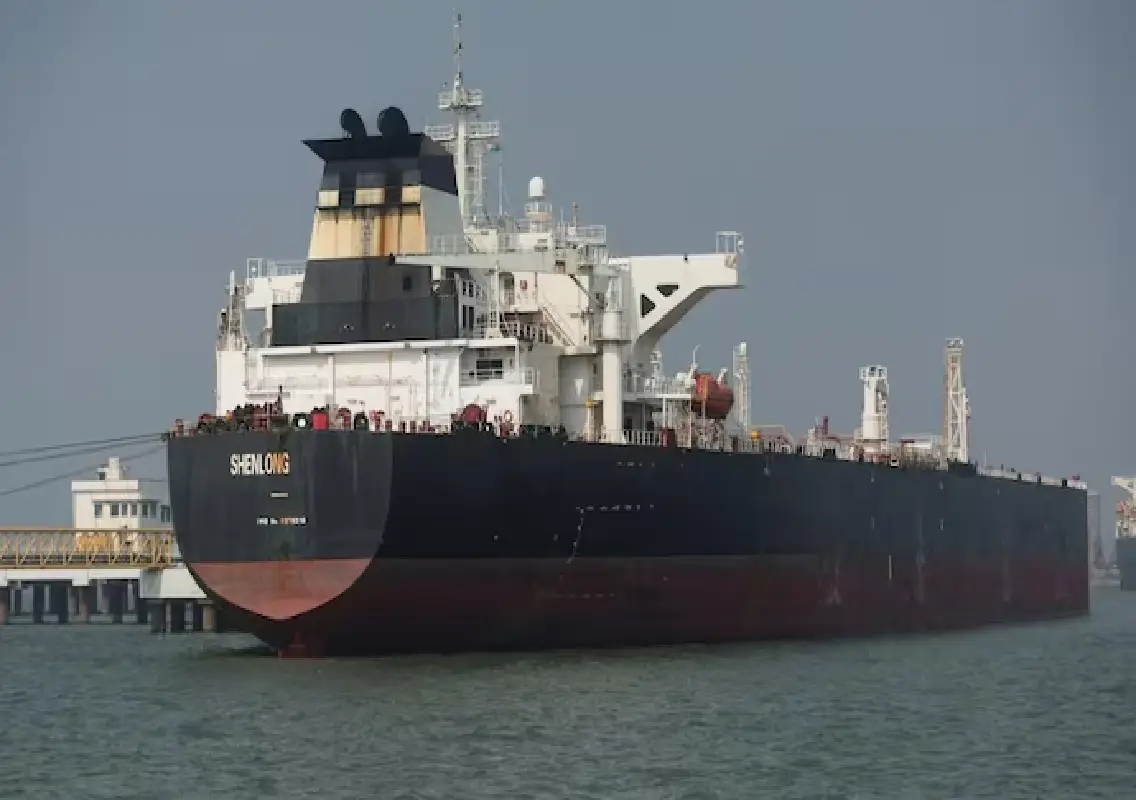


New Delhi: India on Saturday dismissed reports claiming that an Iranian crude oil shipment meant for the country had been diverted to China due to payment issues, calling such assertions “factually incorrect.”
The clarification came from the Ministry of Petroleum and Natural Gas amid widespread speculation over the movement of an oil tanker initially believed to be headed to India.
Reports of tanker diversion spark speculation
The controversy arose after ship-tracking firm Kpler reported that the Aframax tanker Ping Shun had altered its destination mid-voyage.
The vessel had earlier signalled Vadinar in Gujarat as its destination but was later seen heading towards Dongying in China. The cargo was expected to mark India’s first import of Iranian crude since 2019.
Government rejects payment issue claims
Refuting the reports, the petroleum ministry stated that claims suggesting the diversion was due to payment hurdles were inaccurate.
“The news reports and social media posts of an Iranian crude cargo being diverted from Vadinar, India to China due to ‘payment issues’ are factually incorrect,” the ministry said in a statement.
It emphasised that India imports crude oil from more than 40 countries and that oil companies have full flexibility to source supplies based on commercial considerations.
Mid-voyage changes common in oil trade
Officials clarified that changes in a tanker’s destination during transit are not unusual in the global oil trade.
According to the ministry, Bills of Lading often mention indicative discharge ports, and cargoes can be redirected mid-voyage depending on operational efficiency and market dynamics.
This flexibility allows companies to optimise logistics and pricing rather than being bound to a fixed destination.
Crude supply remains secure
The government reassured that India’s crude oil requirements are fully secured for the coming months. It stated that Indian refiners have already arranged sufficient supplies, including potential sourcing from Iran.
The ministry reiterated that there are no payment-related obstacles affecting Iranian crude imports, countering rumours circulating on social media.
Context of Iran oil imports
India had previously been one of the largest importers of Iranian crude oil before US sanctions tightened in 2018. At its peak, Iranian oil accounted for about 11.5 per cent of India’s total imports.
Imports declined sharply in 2019 following restrictions and have not resumed since then. India subsequently diversified its sourcing to include suppliers from the Middle East, the United States, and other regions.
Temporary waiver amid global tensions
The latest developments come after the United States issued a 30-day waiver on March 20, allowing limited purchases of Iranian crude cargoes at sea. The move was aimed at stabilising global oil prices amid ongoing geopolitical tensions in the Middle East.
The waiver, which is set to expire on April 19, has prompted Indian refiners to explore opportunities to procure Iranian crude under the temporary window.
Conclusion
India’s firm denial of the diversion claims highlights the complexities of global oil trade and the importance of accurate reporting. While tanker routes may change for operational reasons, authorities have made it clear that there are no payment issues affecting imports and that the country’s energy needs remain secure.