







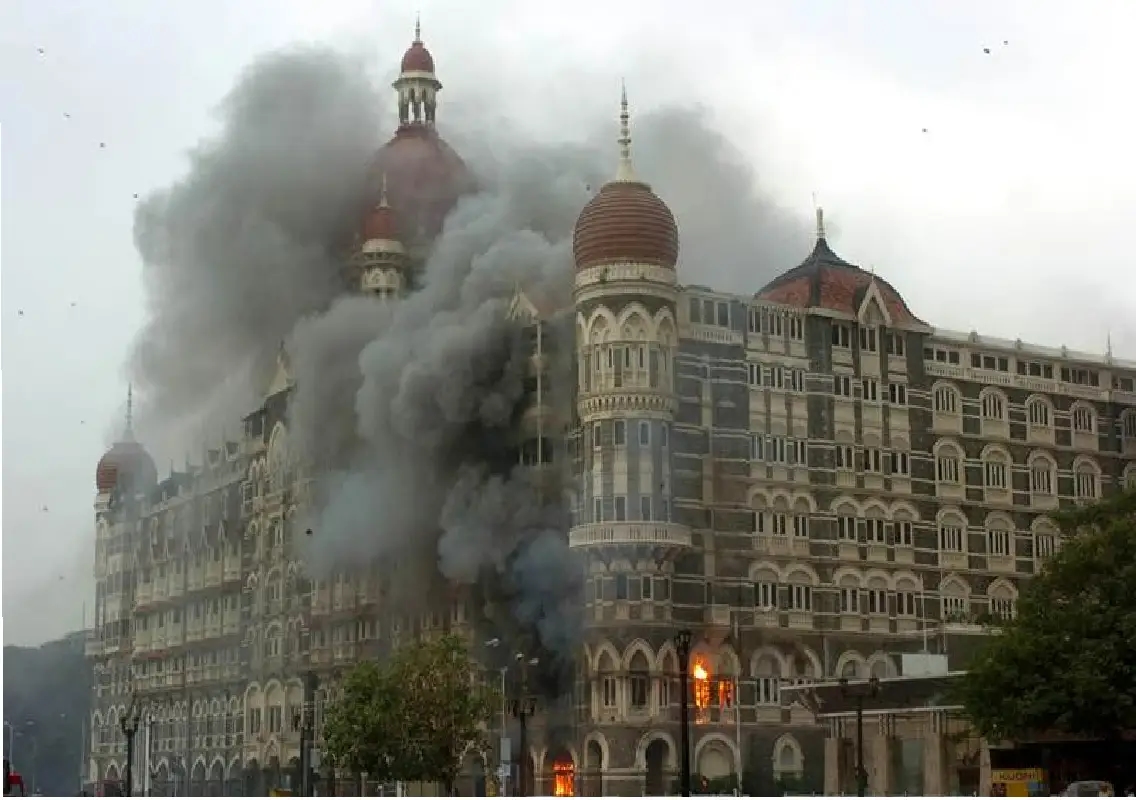


India is marking the 17th anniversary of the 26/11 Mumbai terror attacks, one of the deadliest assaults on the nation, carried out by Pakistan-backed Lashkar-e-Taiba (LeT) terrorists on 26 November 2008. The coordinated strikes, executed by a group of 10 heavily armed attackers, left 166 people dead and over 300 injured, shaking the country and drawing global outrage.
Four days of horror that changed India
The terrorists infiltrated Mumbai via the sea route on the night of 26 November, targeting some of the most iconic and crowded locations in the city. The Taj Mahal Palace Hotel, Oberoi Trident Hotel, Chhatrapati Shivaji Maharaj Terminus, Nariman House (a Jewish outreach centre), Cama Hospital, Metro Cinema, and Leopold Cafe were among the sites attacked after prior reconnaissance by the group.
For four days, Mumbai witnessed unprecedented violence as commandos, police, and security forces battled the gunmen. Nine terrorists were eventually neutralised, while one—Mohammad Ajmal Amir Kasab—was captured alive. His arrest became crucial in exposing the role of Pakistan-based handlers and the LeT leadership.
Kasab was sentenced to death in 2010 and executed in 2012 at Pune’s Yerawada Central Prison.
The scars and memories that remain
Even 17 years later, reminders of the tragic night remain etched across the city. Bullet marks preserved at Leopold Cafe and Nariman House, memorial sites, and the bust of Assistant Sub-Inspector Tukaram Omble—who lost his life while capturing Kasab—serve as powerful symbols of sacrifice and resilience.
Families of the victims, survivors, police officers, and citizens still grapple with memories of the attack, making 26/11 not just an annual observance but an emotional moment of collective remembrance.
India’s renewed commitment to national security
This year’s anniversary comes in the wake of the recent 10 November blast in Delhi, reinforcing the importance of continued vigilance and India’s stance of ‘zero tolerance’ towards terrorism. Security agencies, particularly the National Security Guard (NSG), have highlighted the ongoing relevance of lessons learned from 26/11—ranging from intelligence coordination to rapid-response capabilities.
NSG’s ‘Neverever’ memorial at Gateway of India
The Ministry of Home Affairs announced that NSG Mumbai will host a solemn memorial ceremony themed ‘Neverever’ at the Gateway of India. The event will honour martyrs, survivors, and all victims of the attack while renewing the national pledge that such an incident must never recur.
A dedicated memorial zone will showcase photographs and names of all those who lost their lives. Floral tributes, candles, and a concept-based ‘Living Memorial’—created using wax from homage candles—will be preserved for future observances.
In addition, 11 colleges and 26 schools across Mumbai will conduct pledge-taking ceremonies under the ‘Neverever’ theme, encouraging students to commit themselves to peace, vigilance, and national security.
As night falls, the Gateway of India will be illuminated in tricolour lights with the word ‘Neverever’ glowing prominently.
Fresh NIA queries in Tahawwur Rana case
In a related development, the National Investigation Agency (NIA) has sought additional information from the United States government under the Mutual Legal Assistance Treaty (MLAT) regarding the case of Tahawwur Rana. Rana, extradited to India earlier this year, is accused of involvement in planning the 26/11 attack.
Sources suggest that the fresh queries, sent in October, follow months of interrogation and may help unearth more details about the international conspiracy behind the 2008 terror strikes.
Conclusion
Seventeen years after the horrific 26/11 attacks, India continues to honour the memories of those who died and those who fought valiantly. The anniversary reaffirms not only the nation’s grief but also its resolve to strengthen counter-terror measures, preserve peace, and ensure that such acts of terror never repeat.