







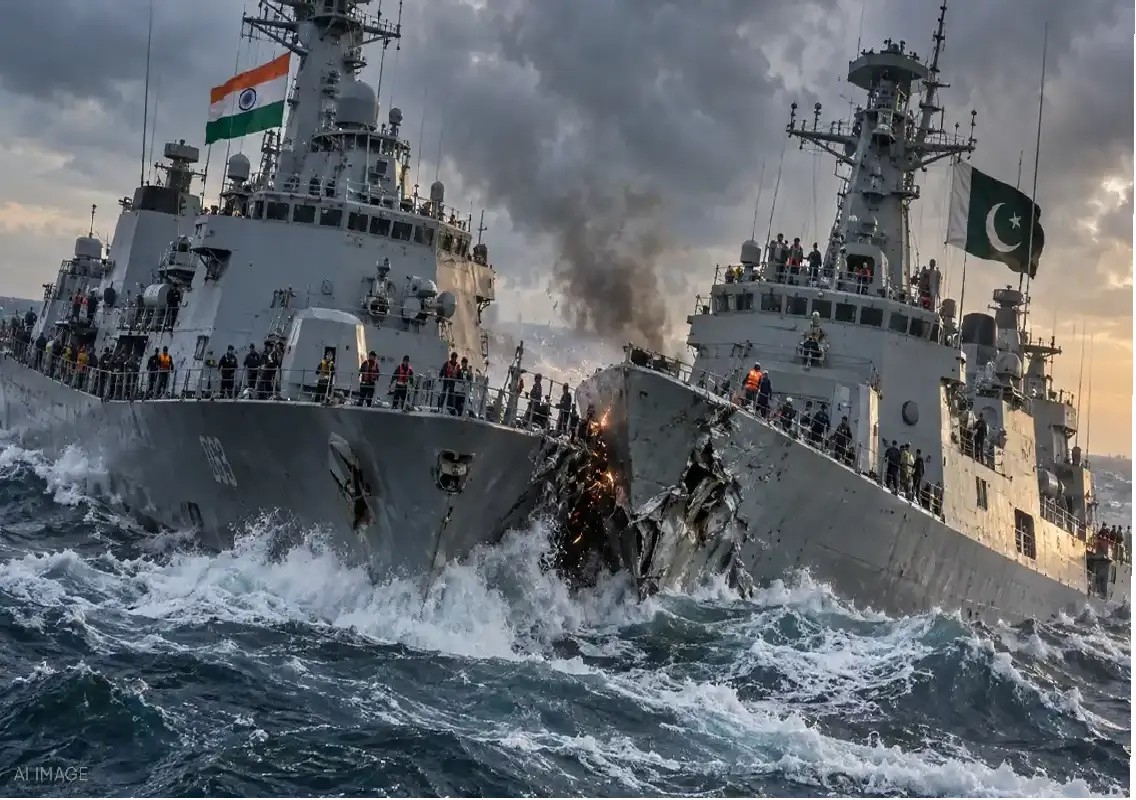


New Delhi: India has summoned Pakistan’s Chargé d’Affaires in New Delhi and lodged a strong diplomatic protest after a Pakistani naval unit was involved in a collision with an Indian Navy vessel in international waters in the Arabian Sea.
The Ministry of External Affairs (MEA) described the conduct of the Pakistani naval units as “unacceptable and unprofessional”. The incident reportedly caused no major damage, but India said the circumstances raised concerns about maritime safety and compliance with bilateral commitments.
India cites 1991 bilateral agreement
According to the MEA, the incident was in direct contravention of Article 10 of the 1991 Agreement between India and Pakistan on Advance Notice on Military Exercises, Manoeuvres and Troop Movements.
The agreement lays down arrangements intended to reduce the possibility of dangerous encounters between the armed forces of the two countries. It covers major exercises and manoeuvres involving land, naval and air forces and establishes specific conditions and notification requirements.
India has advised the Pakistani Chargé d’Affaires to convey to the concerned authorities that military units must exercise due care and respect relevant bilateral agreements to prevent similar incidents.
India asks for greater caution at sea
The Indian MEA has also instructed its Chargé d’Affaires in Islamabad to lodge a similar protest with Pakistan’s Ministry of Foreign Affairs.
The latest incident is not the first reported maritime confrontation involving Indian and Pakistani naval vessels. In 2011, India protested over the manoeuvres of Pakistani naval ship PNS Babur near INS Godavari. Historical MEA records said the incident raised concerns over navigational safety and cited both international collision-prevention regulations and Article 10 of the 1991 agreement.
Focus remains on preventing a repeat
While the latest collision did not result in major reported damage, the diplomatic response underscores the importance of caution when military vessels operate in proximity.
For both countries, adherence to maritime safety practices and existing bilateral arrangements remains important to reduce the risk of accidental encounters becoming larger diplomatic or security incidents.