







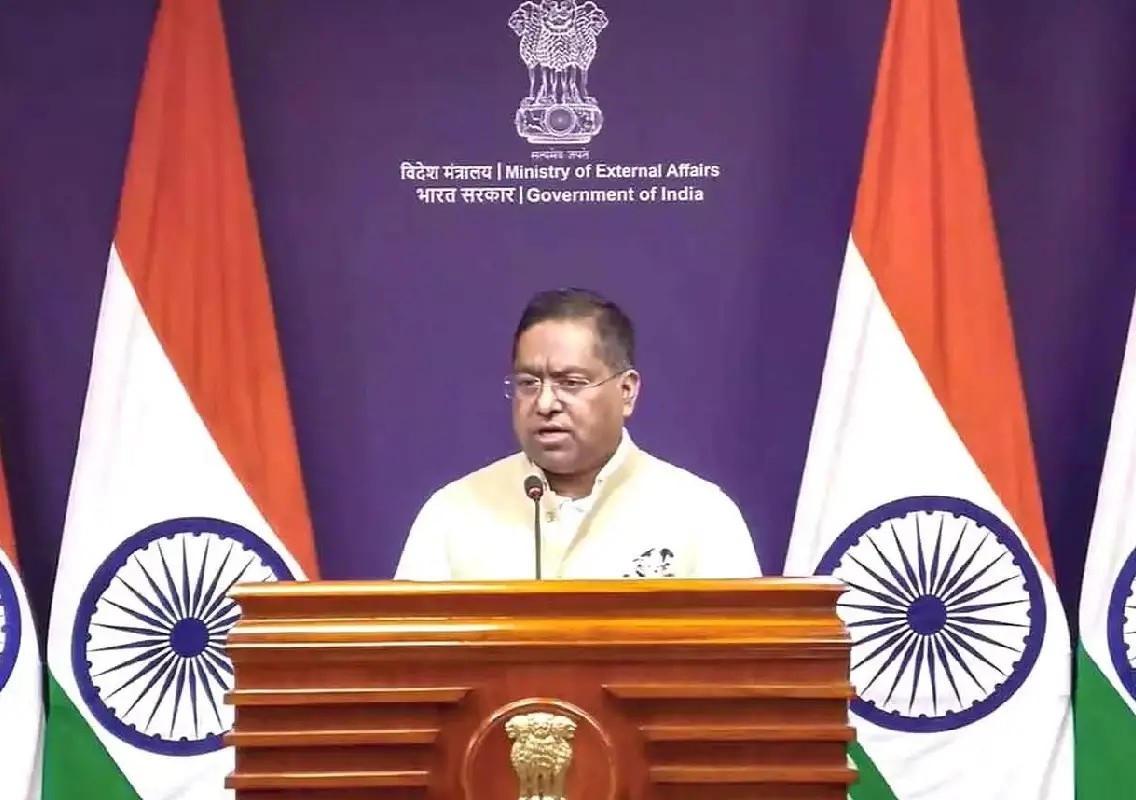


New Delhi: India on Wednesday strongly rejected remarks made by the United Nations Committee on the Elimination of Racial Discrimination (CERD), describing references to the country in its latest observations as “politically motivated” and “highly malicious”.
The Ministry of External Affairs (MEA) said India had taken note of the statement issued by CERD following the country’s periodic review under the International Convention on the Elimination of All Forms of Racial Discrimination (ICERD).
The review was held in Geneva on August 11 and 12, with an Indian inter-Ministerial delegation led by Solicitor General Tushar Mehta participating in the proceedings.
India said it took part in the review in a spirit of constructive engagement and reiterated its commitment to combating racial discrimination and protecting the rights of disadvantaged communities.
The exchange comes after CERD expressed concern over alleged violations affecting several vulnerable groups in India, including Scheduled Tribes, Scheduled Castes, Dalits, ethnic and ethno-religious groups and non-citizens.
India questions sweeping observations
The MEA said India’s delegation had already responded to what it described as sweeping generalisations and unsubstantiated allegations during the review meeting.
According to the ministry, the Indian delegation also objected to what it considered an attempt by the committee to go beyond the mandate of the Convention.
India said its constitutional safeguards, legal framework and democratic institutions provide mechanisms to protect citizens and address discrimination.
The government also highlighted India’s pluralistic and diverse character, arguing that the country’s social and demographic complexity needs to be considered while assessing its progress on equality and human rights.
The MEA said India would respond to the committee’s observations through the established procedure.
However, it made clear that it rejected the references concerning the country in strong terms.
MEA calls references politically motivated
The MEA’s response was unusually strong in its description of the CERD remarks.
The ministry said it rejected “politically motivated” and “highly malicious” references in the committee’s report.
The statement followed CERD’s concerns over reports of alleged large-scale violations by law enforcement officials against ethnic and ethno-religious groups, Indigenous and Tribal Peoples, Scheduled Tribes, Scheduled Castes and Dalits, as well as non-citizens.
The UN committee had called for stronger protections and investigations into allegations of serious rights violations.
India, however, has maintained that such observations do not adequately reflect its constitutional and institutional safeguards.
The government said its participation in the review demonstrated its willingness to engage with international human rights mechanisms while defending its record and sovereignty.
What did the UN committee say?
CERD is an independent expert body responsible for monitoring how countries that are party to the International Convention on the Elimination of All Forms of Racial Discrimination implement their obligations.
Following India’s review, the committee raised concerns about alleged discrimination and violence affecting vulnerable communities.
Its observations included concerns relating to the treatment of Indigenous and Tribal Peoples, Scheduled Castes and Dalits, ethnic and ethno-religious groups and non-citizens.
The committee also referred to allegations involving law enforcement, including excessive use of force, arbitrary and prolonged detention, torture, ill-treatment and sexual violence.
It urged India to investigate such allegations and ensure that those responsible are held accountable.
The observations have therefore triggered a direct response from the Indian government, which has disputed the characterisation of the situation presented by the committee.
India highlights constitutional safeguards
During the review, India placed considerable emphasis on its constitutional and legal framework.
The Indian delegation highlighted constitutional protections, affirmative action policies, judicial remedies and democratic accountability as mechanisms aimed at promoting equality and protecting disadvantaged communities.
The government also pointed to targeted public policies and sustained socio-economic development.
The Permanent Mission of India in Geneva said the discussions covered the country’s institutional framework for implementing ICERD, progress among disadvantaged groups and measures aimed at combating prejudice and intolerance.
India argued that its democratic institutions and constitutional framework provide a foundation for protecting equality, dignity and opportunity.
Review covered periodic reports
The latest CERD review examined India’s combined periodic reports submitted to the committee in 2023.
The review forms part of the routine process under the International Convention on the Elimination of All Forms of Racial Discrimination.
Countries that are party to the convention periodically report on measures they have taken to meet their obligations.
The process allows the committee to question governments, examine progress and identify areas where it believes further action is necessary.
India’s participation in the latest review was therefore part of an established international treaty mechanism rather than a standalone investigation.
The MEA stressed this aspect while responding to the committee’s conclusions.
India points to its pluralistic character
Another central part of India’s response was its emphasis on the country’s scale and diversity.
The Permanent Mission of India in Geneva highlighted India’s pluralism, diversity and social complexity during the review.
The government said these characteristics must be taken into account when assessing policies concerning discrimination and equality.
India also referred to affirmative action and targeted public programmes designed to support disadvantaged sections of society.
The government said its objective remained ensuring equality, dignity and opportunity for all citizens.
India’s historical role in the convention
The MEA also highlighted India’s historical involvement in the development of the international framework against racial discrimination.
According to the government, India was actively involved in the negotiation and drafting of the ICERD during the 1960s.
That period was marked by international opposition to colonialism, apartheid and racial discrimination, particularly across newly independent and developing countries.
India has therefore sought to present its participation in the convention as part of a longstanding commitment to opposing racial discrimination globally.
The government says this historical role reinforces its position that it remains committed to the principles underlying the convention.
A disagreement over international scrutiny
The latest exchange reflects a wider tension that can arise when international human rights bodies assess the domestic policies and practices of individual countries.
UN treaty bodies operate through international conventions to which countries have agreed to be bound. At the same time, governments may challenge observations they consider inaccurate, overly broad or outside the relevant treaty mandate.
In India’s case, the government has accepted the review process but strongly disputed some of the committee’s conclusions.
The MEA said India would continue to respond through established procedures while maintaining its position on the observations it has rejected.
Government says commitment remains unchanged
Despite its criticism of CERD’s remarks, India said its commitment to combating racial discrimination remains unwavering.
The government pointed to constitutional safeguards, judicial remedies, affirmative action and public policies as evidence of its efforts to protect disadvantaged groups.
The Permanent Mission also said the review demonstrated India’s continued engagement with the international human rights framework.
The disagreement, therefore, is primarily over the committee’s assessment and characterisation of conditions in India rather than India’s participation in the treaty review mechanism itself.
India and the UN panel face off over findings
The sharp exchange between India and CERD highlights a significant disagreement over how the country’s record on discrimination and protection of vulnerable communities should be assessed.
CERD has raised concerns over alleged violations affecting Scheduled Castes, Scheduled Tribes, Dalits, ethnic and ethno-religious groups and non-citizens, and called for greater accountability.
India has rejected those observations as politically motivated and malicious, while pointing to its Constitution, legal protections, democratic institutions, affirmative action and social welfare measures.
The Indian government has said it will continue to engage with the international human rights framework and respond to CERD through established procedures.
As the process moves forward, the contrasting positions underline the importance of ensuring that allegations of discrimination and rights violations are examined through credible mechanisms, while also recognising the legal and constitutional framework through which India addresses equality and the protection of disadvantaged communities.