









India on Saturday summoned Pakistan’s Chargé d’Affaires Saad Warraich and lodged a strong protest over what the Ministry of External Affairs (MEA) described as the “continued facilitation of illegal cross-border infiltration from Pakistan”. India also rejected Pakistan’s allegations regarding the October 2 incident in Punjab’s Ferozepur sector as “baseless and motivated”.
Pakistan had earlier summoned India’s Chargé d’Affaires in Islamabad and lodged a strong protest over the deaths. Its Foreign Office said the two men were Pakistani civilians and accused BSF personnel of using unprovoked lethal force against them.
The two governments have therefore presented sharply different accounts of the same incident, with the circumstances surrounding the deaths remaining disputed.
India says three people crossed into its territory
According to the Indian government’s account, three individuals entered Indian territory in the Ferozepur sector on October 2.
The MEA said the three continued moving towards the border fence despite multiple warnings from the Border Security Force to return to Pakistan.
The ministry said the BSF was “compelled to engage them” after they posed what it described as an imminent security threat. India has maintained that two of the men were killed during the encounter, while a third person returned towards Pakistan.
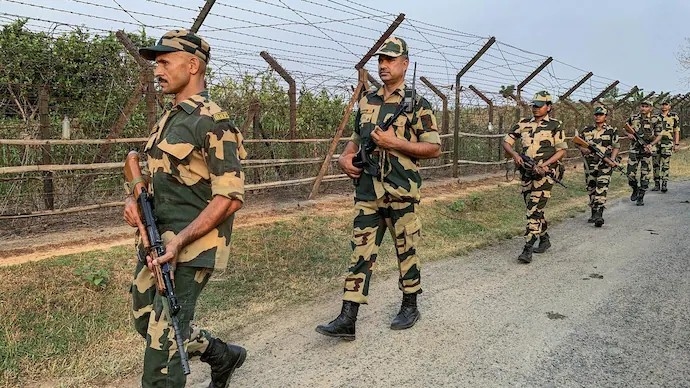
The incident took place along the International Border in Punjab. Earlier reports quoting officials said the two men were shot dead by BSF personnel in Tarn Taran district after allegedly continuing towards the Indian side despite warnings.
Indian officials said the episode was being viewed in the context of broader security concerns along the border.
MEA links incident to alleged narcotics movement
In its diplomatic protest, India also raised concerns about what it described as repeated cross-border movement by armed narcotics syndicates operating from Pakistan.
The MEA said the incident highlighted a pattern involving cross-border movement and urged Pakistan to investigate infiltration and drug-smuggling activities.
New Delhi also asked Islamabad to examine what it described as the alleged complicity of Pakistani border-guarding forces and to take appropriate remedial measures.
India further called on Pakistan to respect the sanctity of the International Border and comply with relevant bilateral arrangements.
The government also urged Pakistan to ensure that its border forces exercise effective control to prevent unauthorised movement from its territory and take steps to prevent similar incidents from recurring.
The allegations regarding organised narcotics networks and the involvement of Pakistani border forces are India’s claims and have not been independently established in the diplomatic exchange.
Pakistan says the two were unarmed civilians
Pakistan has rejected India’s characterisation of the two deceased men as infiltrators.
According to Pakistan’s Foreign Office, the Indian Chargé d’Affaires was summoned on October 3 to register Islamabad’s “strong protest” over the killing of two Pakistani civilians by BSF personnel in the Bedian sector along the International Border.
Pakistan said the two men were unarmed and had inadvertently crossed the International Border.
Its Foreign Office accused BSF personnel of using what it called “unprovoked lethal force” and described the action as unjustified and disproportionate.
Islamabad also categorically rejected any attempt to describe the deceased as infiltrators.
Pakistan called for an immediate, transparent and credible investigation into the incident and sought appropriate disciplinary and legal action against anyone found responsible.
It also asked India to formally communicate the findings of any investigation to the Pakistani government.
Earlier account said three men were moving towards India
Before the diplomatic exchange, Indian officials had provided details of the encounter.
According to officials quoted in reports, three men were seen moving towards the Indian side. One of them subsequently returned towards Pakistan, while the other two allegedly continued advancing despite warnings from BSF personnel.
Tarn Taran Deputy Superintendent of Police Atul Soni was quoted as saying the two men continued towards the Indian side after being warned to turn back.
The officials’ account said BSF personnel opened fire after the two allegedly failed to heed repeated warnings.
Senior BSF officers subsequently visited the area, while the identities of the deceased were being ascertained.
The precise circumstances leading to the firing remain at the centre of the dispute between the two countries.
Diplomatic protests exchanged within hours
The latest incident resulted in a tit-for-tat diplomatic exchange.
Pakistan first summoned India’s Chargé d’Affaires in Islamabad and lodged its protest over the deaths. India subsequently summoned Pakistan’s Chargé d’Affaires in New Delhi and rejected Islamabad’s version of events.
The exchange reflects how incidents along the India-Pakistan border can quickly acquire a diplomatic dimension, particularly when the two governments disagree over whether a border crossing involved civilians or an infiltration attempt.
India’s protest focused on preventing unauthorised movement across the International Border and on its concerns about cross-border narcotics activity.
Pakistan’s response centred on the protection of civilians, the use of force and its demand for an investigation.
Neither side has accepted the other’s account of the incident.
Border security remains a concern in Punjab
Punjab shares a long stretch of the International Border with Pakistan, and security agencies routinely monitor the area for unauthorised crossings and other forms of cross-border activity.
The border is also a major focus of efforts to prevent the movement of narcotics and other contraband.
India has repeatedly raised concerns over alleged cross-border drug trafficking, while security agencies have also dealt with attempts involving drones and other methods of transporting contraband across the border.
The latest episode has brought these concerns back into focus, with the Indian government specifically linking the October 2 incident to what it described as movement by armed narcotics syndicates.
Pakistan, however, has disputed India’s characterisation of the men involved and has called for an investigation into their deaths.
Investigation and competing claims
At present, the two governments remain divided over the basic circumstances of the incident.
India says three individuals entered its territory and continued towards the border fence despite repeated warnings, leading the BSF to engage them after they were assessed as posing a security threat.
Pakistan says the two men were unarmed civilians who accidentally crossed the International Border and that lethal force was unjustified.
The competing versions mean that the circumstances surrounding the deaths cannot be treated as settled solely on the basis of either government’s account.
The diplomatic protests have nevertheless placed fresh attention on border management, unauthorised crossings and alleged narcotics movement along the Punjab frontier.
For now, New Delhi has asked Islamabad to take steps to prevent unauthorised movement from its territory, while Islamabad has demanded a credible investigation into the deaths. The incident is likely to remain a point of contention between the two countries until further evidence or an official investigation establishes more details.