







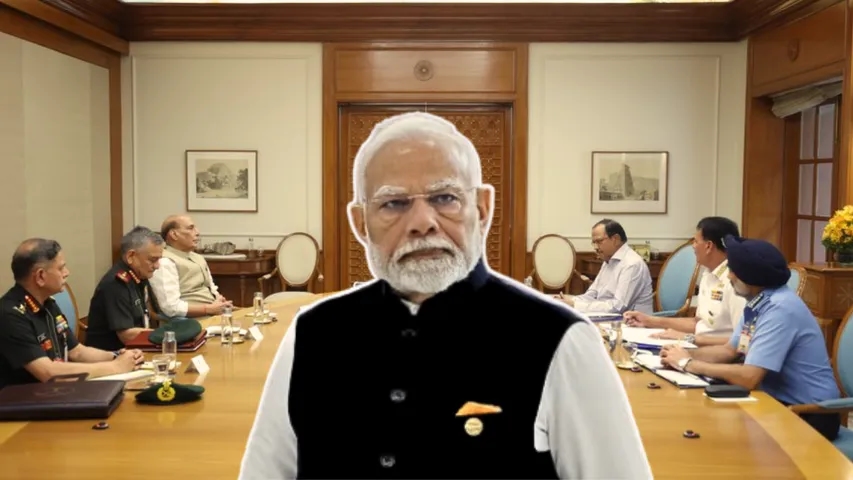


Prime Minister Narendra Modi has granted the Indian armed forces complete autonomy to determine the how, where, and when of India’s response to the April 22 Pahalgam terror attack that left 26 people—mostly tourists—dead. In a top-level national security meeting on Tuesday, PM Modi declared, “It is our national resolve to deliver a crushing blow to terrorism.”
The meeting, held in Delhi, was attended by Defence Minister Rajnath Singh, National Security Advisor Ajit Doval, Chief of Defence Staff General Anil Chauhan, and the chiefs of the Army, Navy, and Air Force. The leaders reviewed response options amid rising public anger and demands for accountability.
Sources said PM Modi expressed complete confidence in the armed forces’ ability to act decisively, allowing them unrestricted operational flexibility to select targets, tactics, and timing. This signals a strong possibility of a retaliatory strike, echoing India’s previous surgical strikes post-Uri and the Balakot airstrike after Pulwama.
Earlier, Modi had warned that those behind the attack—including their supporters—would face consequences “beyond their imagination,” making a direct reference to Pakistan’s history of sheltering terror outfits.
In parallel, India has taken diplomatic measures, including suspending the Indus Waters Treaty and halting visa services for Pakistani nationals.
On the same day, Home Secretary Govind Mohan led a closed-door meeting with heads of paramilitary forces and senior intelligence officials. Though the agenda remains undisclosed, it’s believed to align with the broader response strategy.
- Modi’s English Warning to the World: “They’ll Pay an Unimaginable Cost”
- Modi Vows to Hunt Down Terrorists After Kashmir Attack, India Tightens Grip
#PahalgamAttack
#ModiSecurityMeet
#IndiaStrikesBack
#TerrorismResponse