







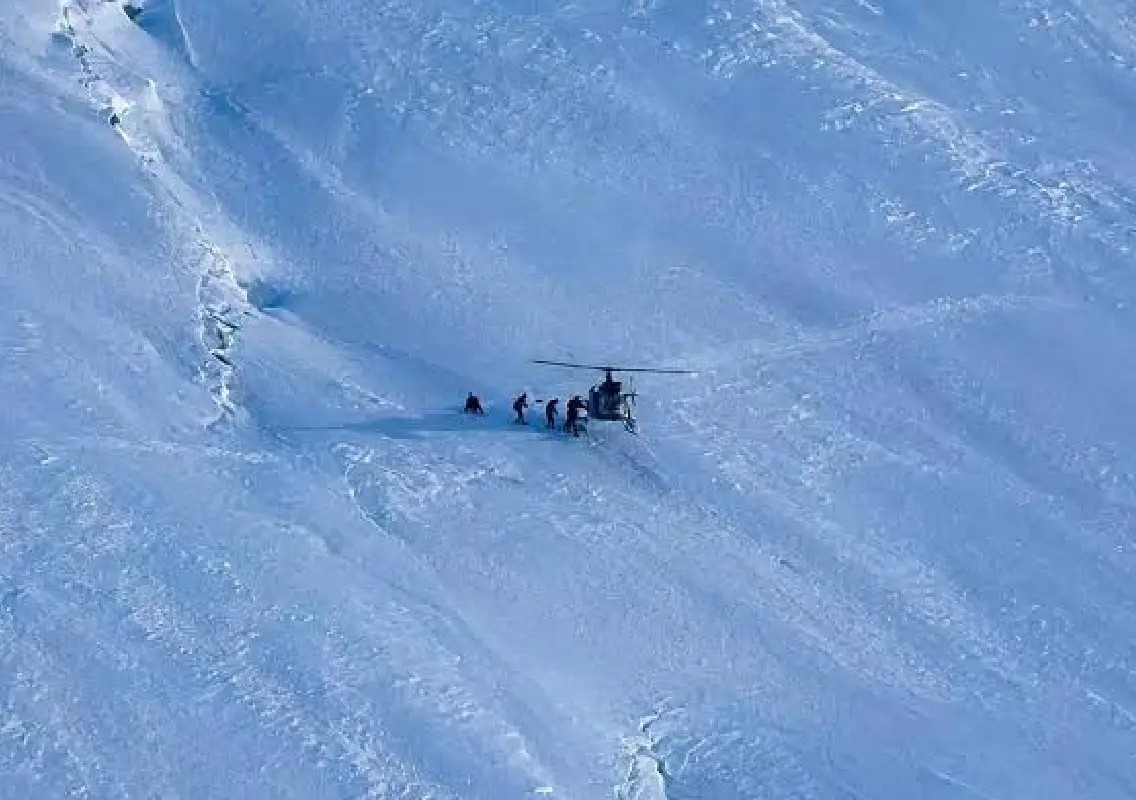


Indian Army Aviation pilots carried out a challenging high-altitude casualty evacuation at 18,600 feet near the Nun Kun massif, rescuing a patient from a steep mountain slope amid strong winds and treacherous terrain.
The operation was conducted in the final available light of the day, leaving the crew with only a narrow window to complete the evacuation.
Helicopter stripped down for critical mission
The extreme altitude posed a major challenge as thin air reduced the helicopter’s engine performance and lifting capacity.
To improve its ability to operate at such a height, the crew removed all non-essential equipment and carried only the fuel required for the mission. The weight reduction helped maximise the helicopter’s lifting capability while retaining sufficient range for the rescue and return journey.
No space for a conventional landing
When the pilots reached the casualty, they found no suitable landing area on the steep mountain slope.
Strong winds further increased the risk, making a conventional landing impossible.
The crew instead performed a precise low-hover manoeuvre, holding the helicopter steady with one skid touching the mountain slope.
The patient was quickly secured inside the aircraft before the pilots lifted off and began the descent.
Rescue completed before daylight faded
The operation had to be completed during the “last available landing window of the day”, according to the Fire and Fury Corps of the Indian Army.
The formation described the mission as a demonstration of the skill, courage and determination of its aviation personnel.
The successful evacuation at 18,600 feet highlighted the demanding conditions faced by Army aviation crews operating in the high-altitude Himalayan terrain, where thin air, strong winds, steep slopes and rapidly fading daylight can leave rescuers with only minutes to act.