







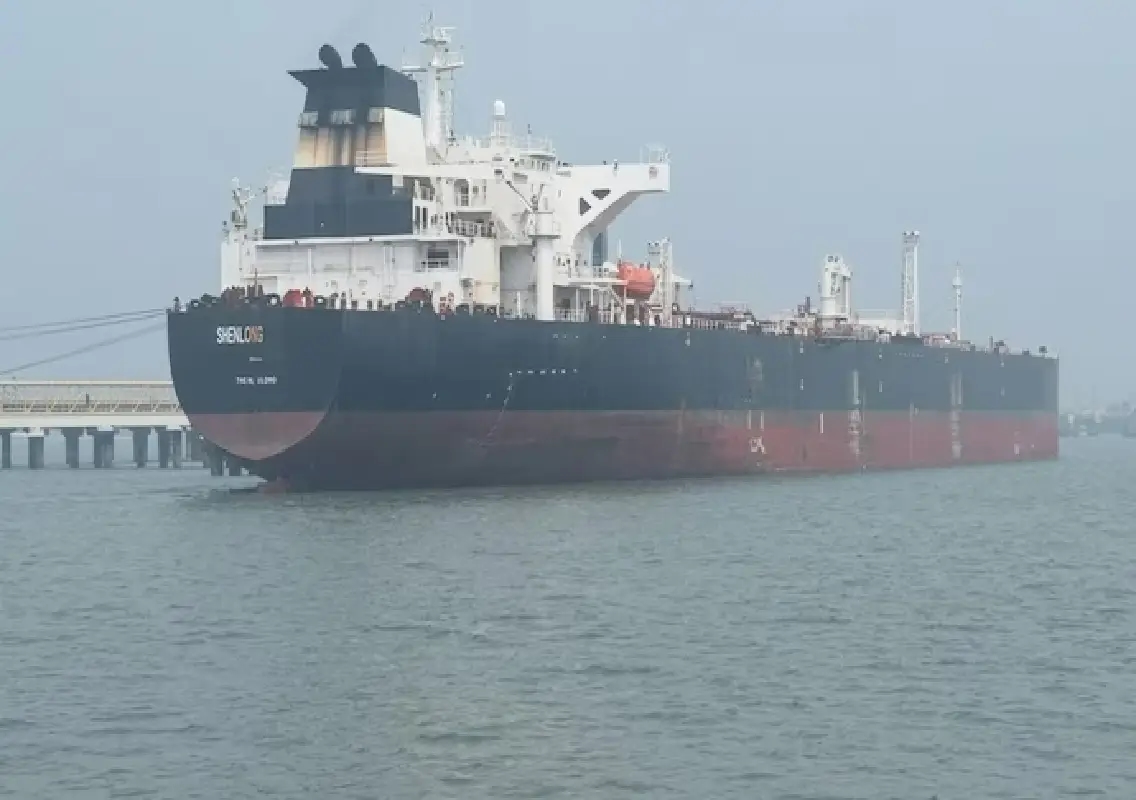


Mumbai: A crude oil tanker captained by an Indian has successfully reached the city’s port after navigating the strategically crucial Strait of Hormuz, despite heightened tensions in the Middle East region. The Liberian-flagged tanker Shenlong Suezmax, which was carrying crude oil loaded from Saudi Arabia, arrived at Mumbai Port on Wednesday after receiving clearance from Iranian authorities to pass through the narrow waterway.
Officials from the Mumbai Port Trust confirmed the arrival of the vessel, describing it as a significant development at a time when maritime security in the Gulf region remains uncertain due to ongoing geopolitical tensions.
Clearance after diplomatic engagement
The tanker’s passage through the Strait of Hormuz reportedly followed diplomatic discussions between S. Jaishankar and his Iranian counterpart Abbas Araghchi.
Sources indicated that the talks helped ensure safe passage for Indian-linked vessels through the sensitive maritime corridor, which has recently witnessed heightened security measures and military activity.
The tanker had departed from Ras Tanura on March 1 after loading crude oil. It then navigated through the Strait of Hormuz before continuing its journey to India.
The successful transit is seen as an important sign of diplomatic coordination aimed at safeguarding energy shipments during a period of instability in the Gulf region.
Importance of the Strait of Hormuz
The Strait of Hormuz is widely regarded as one of the world’s most critical maritime chokepoints for energy transportation.
A significant portion of global crude oil and natural gas shipments passes through this narrow waterway that connects the Persian Gulf to the Gulf of Oman.
Any disruption to shipping traffic through the strait can have major implications for global energy markets, affecting oil prices and supply chains across the world.
In recent weeks, tensions have escalated after a military campaign involving United States and Israel against Iran began in late February.
Following these developments, Iran has tightened its control over the strait and increased surveillance of ships passing through the corridor.
Attacks on ships raise concerns
The escalating conflict has already led to multiple incidents targeting vessels in the region.
Reports indicate that at least 16 ships have been attacked in the passage since military operations against Iran began. These incidents have raised alarm among global shipping companies and governments relying on oil imports from the Gulf.
In one such incident on Wednesday, a Thai vessel bound for Kandla Port was reportedly attacked while transiting the Strait of Hormuz.
India strongly criticised the attack, emphasising the importance of ensuring freedom and safety of navigation in international waters.
Additional incidents reported in the region include attacks on a container ship near Dubai, a drone strike targeting a major Saudi oil field and disruptions to oil terminal operations in Basra.
These developments have intensified concerns about the stability of global energy supply chains.
Monitoring Indian vessels and seafarers
The Ministry of Ports, Shipping and Waterways stated that it is closely monitoring the safety of Indian vessels and seafarers operating in the region.
According to official figures, 28 Indian-flagged vessels are currently operating in the Persian Gulf region.
Of these, 24 ships carrying about 677 Indian seafarers are located west of the Strait of Hormuz, while four vessels with around 101 Indian crew members are positioned east of the strait.
Authorities have established a 24-hour control room at the ministry as well as the Directorate General of Shipping to track developments and coordinate assistance if required.
The monitoring system was activated on February 28 following the escalation of hostilities in the region.
Impact on global oil markets
The growing tensions in the Gulf have raised fears of disruptions to global oil supply.
Iran has warned that crude oil prices could surge dramatically if the conflict intensifies, potentially reaching around USD 200 per barrel — nearly double the current levels.
Such a price spike could significantly impact major oil-importing countries including India, which is the world’s third-largest consumer of crude oil.
In response to the uncertain situation, India has also been exploring alternative sources of crude imports, including increased purchases from Russia.
Conclusion
The safe arrival of the Shenlong Suezmax tanker in Mumbai highlights the continued importance of diplomatic engagement and maritime monitoring during periods of geopolitical tension. As instability in the Gulf region persists, ensuring the safe transit of energy shipments through the Strait of Hormuz remains crucial for global energy security and economic stability.
Authorities in India continue to closely track developments in the region while working to safeguard the interests of Indian vessels, seafarers and energy supplies.