







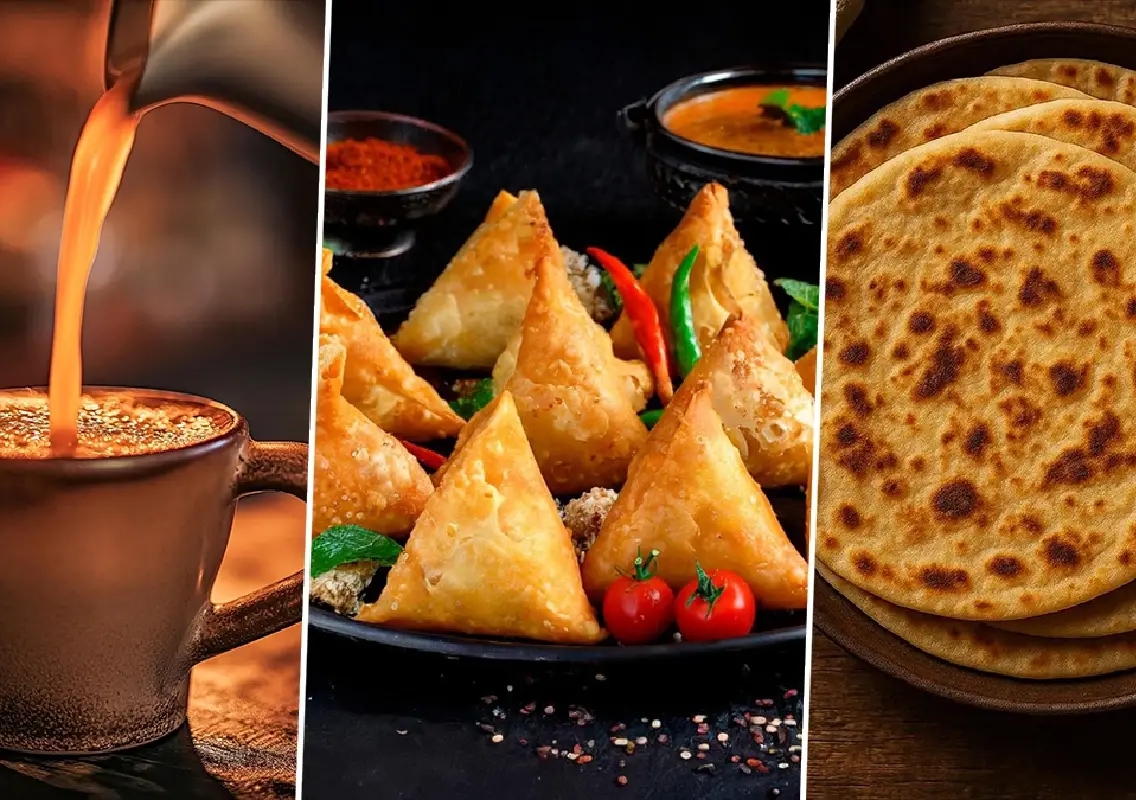


As global leaders, CEOs and policymakers navigated the snow-covered streets of Davos during the World Economic Forum Annual Meeting, Indian food emerged as one of the unexpected highlights, drawing crowds far beyond the Indian delegation.
From masala chai and samosas to pakodas, paranthas, khichdi and biryani, the aroma of Indian cuisine wafted through the icy ski-resort town, tempting both Indians and foreign nationals alike to stop and savour familiar comfort food amid freezing temperatures.
Chai and comfort on Davos streets
The Tata Group set up a tea stall called Chai Central near its lounge on the main street leading to the Congress Centre, the hub of the WEF meeting. The stall quickly became a popular pit stop for delegates seeking warmth in a cup of Indian tea.
Close by, HCLTech also put up a stall offering tea and coffee, adding to the growing Indian presence along the promenade.
Khichdi, curries and a packed food truck
At the other end of the main promenade, the Akshaya Patra foundation served hot khichdi free of cost. The simple, hearty dish proved especially popular, attracting long queues of delegates and visitors braving the cold.
For the first time, an Indian food truck — Kumar Indian Food — made its debut at Davos. Selling samosas, pakodas, rotis, rice, and a range of vegetarian and non-vegetarian curries, the truck reportedly drew more customers than neighbouring food trucks offering Chinese, Swiss and other international cuisines.
Inside the India Pavilion
Indian flavours also dominated inside the India Pavilion, which housed several Union ministries and ten Indian states. Delegates were treated to a wide spread of hot food and beverages, including samosas, tikkas, paranthas, rice, rotis, curries, biryani, tea and coffee.
As discussions on geopolitics, economics and climate change unfolded inside conference halls, Indian cuisine quietly won hearts outside — proving that even at one of the world’s most influential forums, good food remains a powerful global connector.