







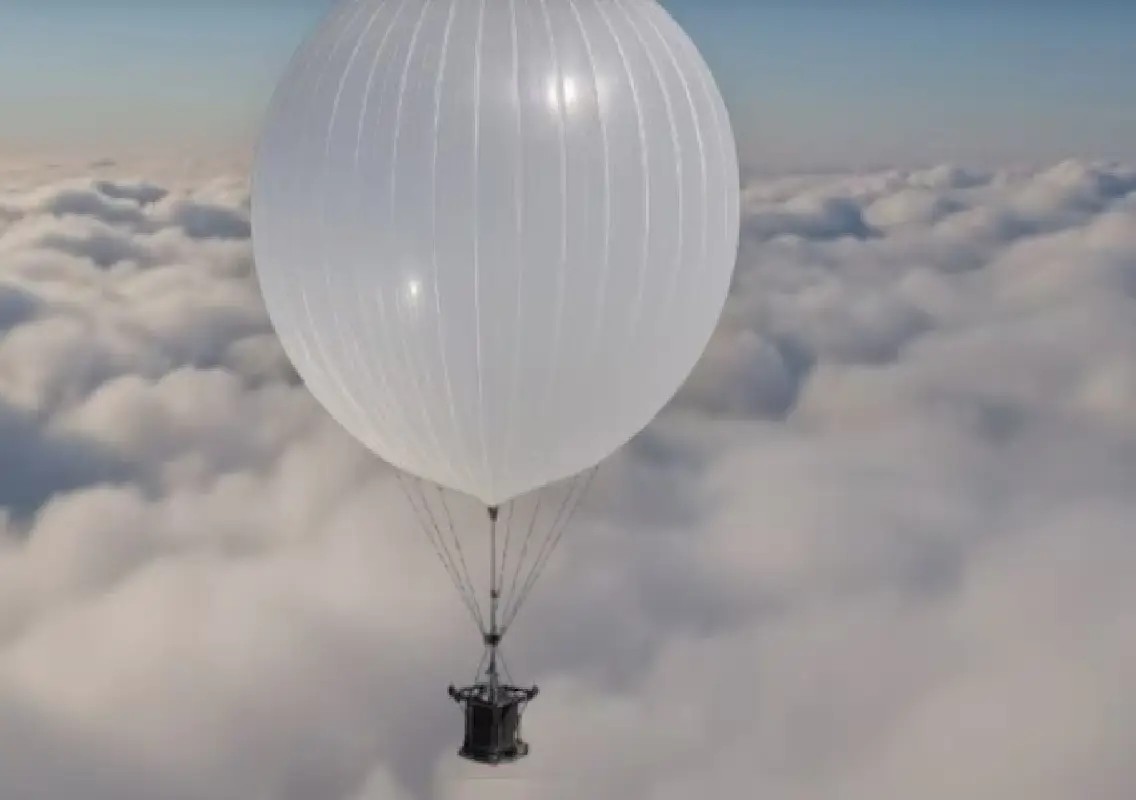


Vijayawada: A significant development in India’s aerospace sector was recorded after Hyderabad-based Red Ballon Aerospace successfully conducted a tethered trial of what it described as India’s first super-pressure balloon at Indira Gandhi Stadium on May 15.
The trial marked an important milestone for the startup as it moves towards developing indigenous high-altitude balloon technology for near-space applications.
The test was conducted as a controlled exercise with the balloon remaining anchored to the ground while teams evaluated system performance and operational readiness.
What is a super-pressure balloon?
A super-pressure balloon is a specialised high-altitude platform designed to operate near the edge of the stratosphere, at altitudes of around 25 kilometres above the Earth’s surface.
Unlike conventional balloons that gradually lose altitude, these balloons are designed to maintain pressure and remain at stable heights for extended periods.
Such systems are considered useful for multiple applications, including telecommunications, environmental monitoring, atmospheric research and earth observation.
Trial focused on system validation
According to the company, the tethered trial was aimed at validating launch procedures, testing operational systems and assessing the readiness of ground teams before conducting a full-scale flight mission.
Company officials stated that the systems performed as expected during the exercise.
The event also acted as a platform for integrating and testing payloads from several other aerospace organisations.
Officials said all payload missions conducted during the test were completed successfully.
Technology could support multiple sectors
The company stated that its VISTA platforms based on super-pressure balloon technology form the foundation for future HELIX airship platforms.
The technology is expected to help create lighter-than-air systems capable of supporting a range of applications.
Potential uses include providing internet connectivity in remote regions, assisting disaster monitoring operations, conducting atmospheric research and supporting earth observation missions.
Unlike satellites, which require larger investments and operate at much greater distances from Earth, high-altitude balloon platforms can be deployed comparatively quickly and recovered after missions.
Main launch planned for 2026
Following the successful tethered trial, the company is now preparing for its main launch planned during the second quarter of 2026.
The mission aims to send the balloon to its target altitude of approximately 25 kilometres into the stratosphere.
India currently has limited domestic capability in this area, and the programme is being viewed as an important step towards strengthening indigenous aerospace technologies.
If successful, the initiative could contribute to expanding India’s near-space infrastructure using locally developed technology.