







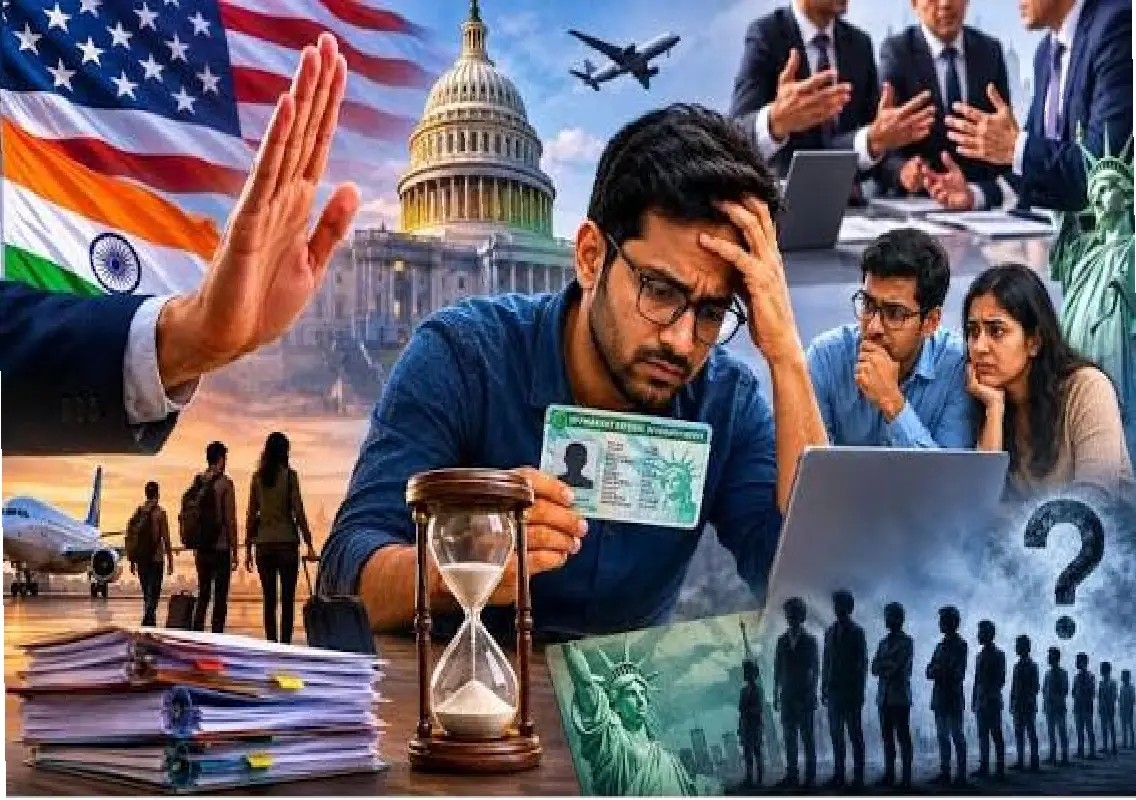


New Delhi: Indian professionals seeking employment-based green cards in the United States could face an estimated wait of up to 179 years, according to a report by the National Foundation for American Policy (NFAP).
The analysis of US Citizenship and Immigration Services data found that Indian applicants face significantly longer delays than applicants from other countries because of visa backlogs and limits on the number of employment-based green cards that can be issued to nationals of a single country.
EB-2 applicants face the longest wait
The estimated waiting period for Indian applicants could reach 179 years in the EB-2 category, while those in EB-3 could face waits of up to 38 years. EB-1 applicants could face a wait of around four to five years.
For Chinese applicants, the estimated wait could reach 25 years, the report said.
US immigration law allows around 140,000 employment-based green cards each year, with a 7 per cent country limit. This has contributed to a large backlog of Indian professionals.
Green card backlog crosses 1.2 million
The combined backlog in the EB-1, EB-2 and EB-3 categories was estimated at 1.26 million people by December 2025, up 20.6 per cent from about 1.05 million in April 2020.
Indian professionals accounted for nearly one million people in the employment-based backlog, according to the report.
The prolonged waits can leave highly skilled workers in temporary visa status for many years, creating difficulties for employees, families and US companies seeking to retain specialised talent.
Trump immigration policies add uncertainty
The development comes as President Donald Trump’s administration continues to tighten US immigration policies.
The administration has pursued measures affecting both undocumented and legal immigration, including changes involving visas and green cards.
For Indian professionals already navigating lengthy employment-based immigration queues, the latest estimates highlight the scale of the challenge facing those hoping to secure permanent residency in the US.