







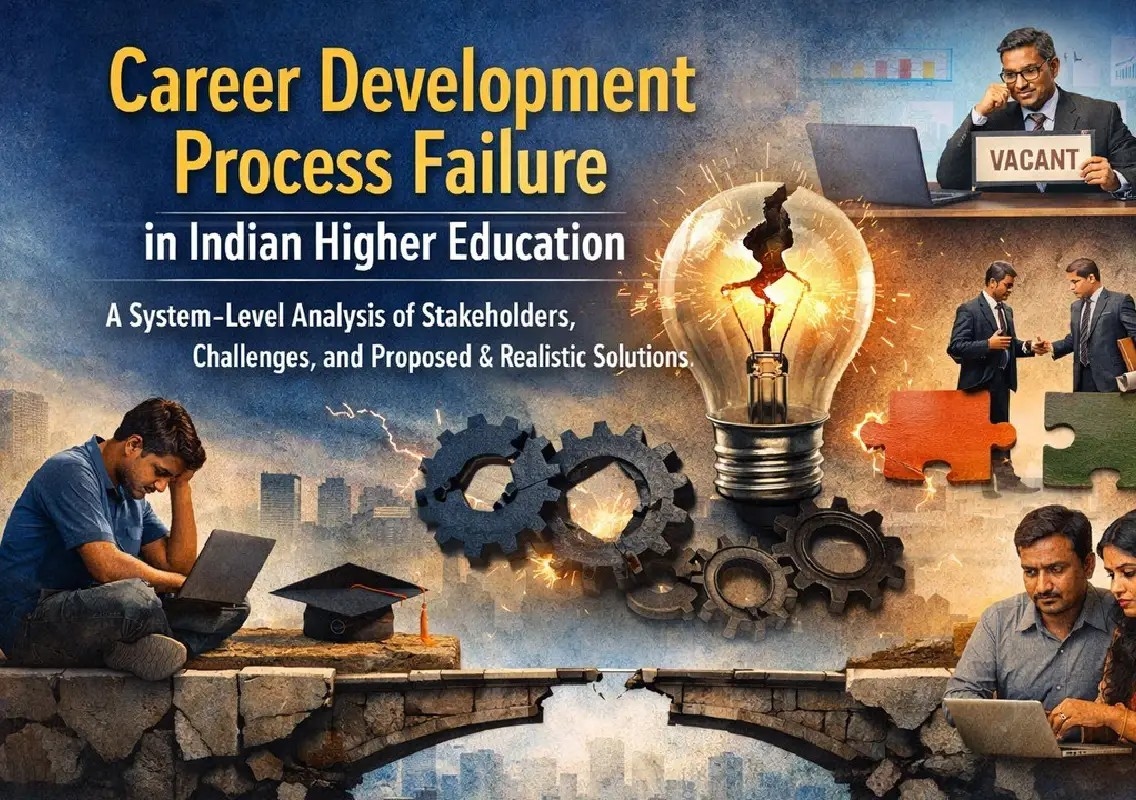


India’s higher education system is facing a growing paradox — while placement numbers, skill certifications, and industry collaborations are improving, employers continue to report that a large section of graduates remain unprepared for modern workplaces.
Experts say the problem lies not only in employability, but in how the education system itself was originally designed.
Memorisation no longer guarantees jobs
For decades, academic success in India largely depended on memorisation, written recall, and examination performance.
However, rapid technological change and the rise of artificial intelligence are reshaping what industries now expect from graduates.
Employers today increasingly prioritise practical problem-solving, adaptability, critical thinking, and the ability to apply knowledge in real-world situations rather than theoretical recall alone.
The article argues that AI has significantly reduced the value of pure information retention because technology can already retrieve and process information faster than humans.
Universities under pressure to rethink learning
The report highlights that many colleges continue to operate with rigid curricula, outdated assessment systems, and limited industry integration.
Although sectors such as technology, design, and management have shown improvement due to stronger project-based learning models, traditional academic streams have struggled to adapt at the same pace.
Experts believe curriculum reform alone may not be enough because industry transformation is occurring faster than educational institutions can revise their programmes.
Shift towards experiential learning gains importance
The analysis suggests that future-ready education must focus more on experiential learning, apprenticeships, live projects, interdisciplinary training, and practical exposure to real business challenges.
Institutions such as Symbiosis International University were highlighted for integrating applied learning directly into academic programmes.
Private universities, according to the report, have moved faster in introducing industry-linked education models, flexible programmes, and innovation-focused learning environments.
AI era demands creativity and execution
The report concludes that India’s education system must move beyond producing graduates who simply fit into existing roles.
Instead, it argues that the country needs students capable of innovation, leadership, creativity, and original problem-solving in an AI-driven economy.
Experts warn that unless creativity, execution, and critical thinking become central to education rather than optional additions, the employability gap is likely to persist despite improvements in placements and certifications