







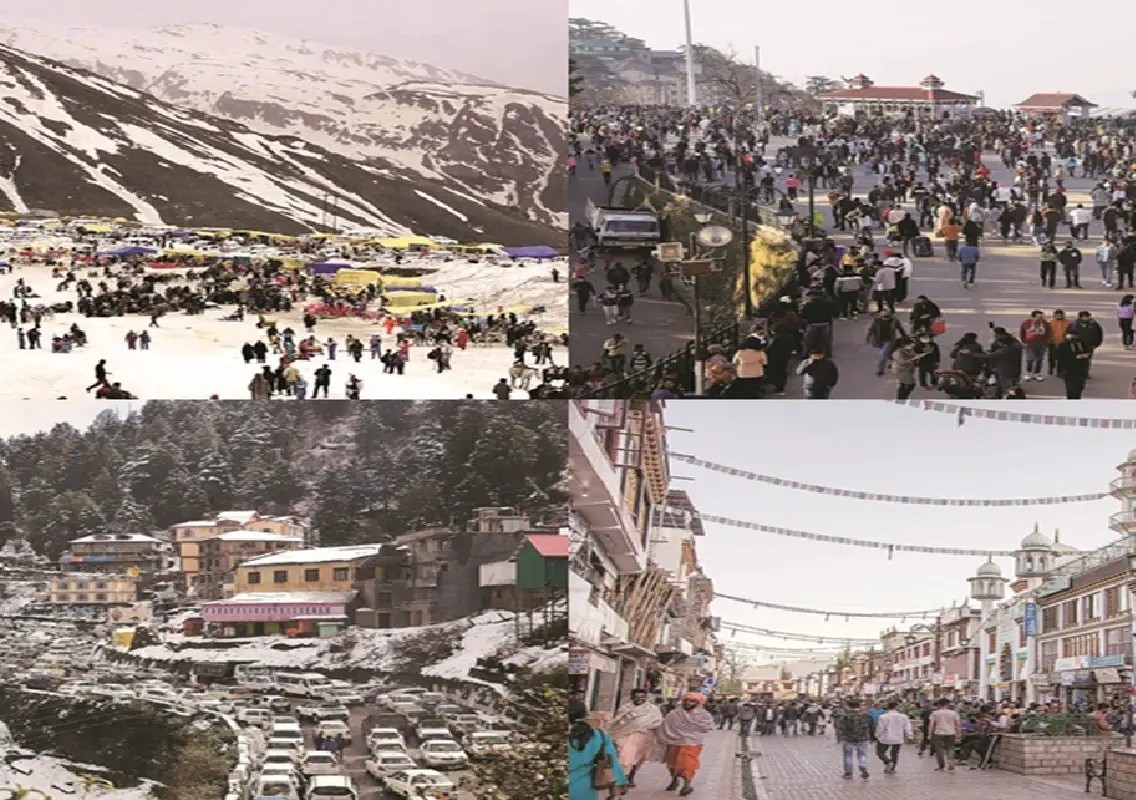


Several of India’s iconic hill towns are facing increasing risks from land subsidence, extreme weather, and uncontrolled urban expansion, raising concerns over the long-term sustainability of fragile Himalayan and Western Ghats ecosystems.
A recent report by The Economist highlighted how famous mountain destinations across India are slowly sinking due to decades of unchecked construction, tourism pressure, and climate-related environmental stress.
Rapid urbanisation worsening ecological stress
Hill stations originally built during the colonial era were designed for much smaller populations and limited infrastructure demands.
However, growing tourism, expanding real estate activity, road widening, and population growth have significantly increased pressure on fragile slopes and drainage systems.
Experts warn that excessive construction on unstable terrain, deforestation, and poor waste management are weakening the structural stability of many hill towns.
Cities such as Shimla, Mussoorie, Darjeeling, and Nainital are among locations frequently cited in discussions around environmental vulnerability.
Climate change intensifying the problem
Scientists and environmental experts say climate change is accelerating risks through erratic rainfall, flash floods, landslides, and changing groundwater patterns.
Heavy rainfall events have become more intense in many hill regions, destabilising slopes and damaging roads, homes, and public infrastructure.
Groundwater extraction and weakening natural drainage systems are also contributing to land subsidence in some areas.
Tourism-dependent economies under pressure
Many hill towns depend heavily on tourism for economic activity, making restrictions on construction and visitor growth politically and economically sensitive.
Experts argue that balancing development with ecological protection has become one of the biggest governance challenges facing mountain regions in India.
Environmental planners are increasingly calling for stricter building regulations, sustainable tourism policies, improved drainage systems, and scientific urban planning tailored for mountainous terrain.
Warning signs already visible
Recent disasters and infrastructure damage in multiple Himalayan regions have intensified public concern about ecological instability in hill towns.
Experts warn that unless urgent corrective measures are implemented, several popular mountain destinations could face worsening landslide risks, water shortages, and long-term structural instability in the coming decades.