







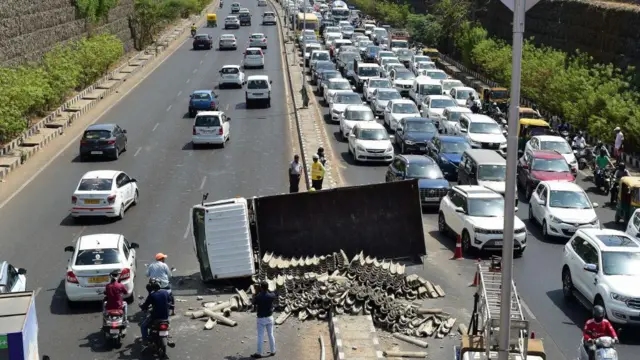


Every sunrise in India brings fresh headlines of highway horror—buses tumbling into valleys, intoxicated motorists ploughing into pedestrians, motorcycles crushed under speeding cars, and trucks smashing into halted vehicles. In 2023, these grim incidents led to over 1.72 lakh deaths, translating to nearly 474 fatalities daily, or one every three minutes.
Children weren’t spared—10,000 young lives were lost. Another 35,000 walkers perished, while two-wheeler riders remained the most vulnerable. Safety negligence played a massive role: 54,000 died without helmets, and 16,000 weren’t strapped in with seatbelts.
Driver errors, like overspeeding, wrong-way driving, and operating vehicles without proper licences, caused tens of thousands of crashes. In fact, 13% of 2021 mishaps involved unlicensed or learner drivers.
But flawed road engineering shares the blame. From misaligned crash barriers and oversized medians to uneven rural highways, these design oversights amplify the danger. Substandard construction and poor signage worsen the chaos.
Despite boasting the world’s second-longest road network, India’s traffic system is riddled with pedestrian encroachments, stray animals, and non-motorised transport, all squeezed into unsafe space.
Minister Gadkari has pointed fingers at both reckless behaviour and engineering incompetence, while experts argue that Western-style designs don’t fit India’s mixed-traffic reality.
While the government promotes the 5Es model—road and vehicle engineering, education, enforcement, and emergency response—many experts insist on locally adapted solutions and accountable implementation to prevent roads from becoming death traps.
- Bengaluru residents demand better roads with creative protests
- Haveri Roads in Disrepair After Faulty Speed Bump Removal
#FixOurRoads #SafeStreetsNow #IndiaRoadCrisis #EndTrafficDeaths