


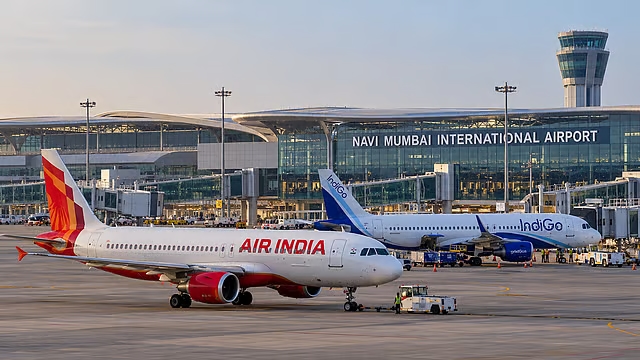


New Delhi: IndiGo and the Air India Group will progressively shift selected domestic and international flight operations from Mumbai’s Chhatrapati Shivaji Maharaj International Airport (CSMIA) to Navi Mumbai International Airport (NMIA), as the existing airport prepares for the redevelopment of Terminal 1.
The phased transition is scheduled to begin in December 2026, with Air India Express planning to introduce four daily domestic flights from Navi Mumbai. Selected international services to West Asian destinations are expected to follow from January 2027, while IndiGo plans to begin international operations at NMIA in February 2027.
IndiGo intends to transfer 12 daily international departures from CSMIA and expand its international network at the new airport to 12 destinations by July 2027. The airline will also move selected domestic services to facilitate connections for international passengers.
The plans were announced jointly by the airlines and Adani Airport Holdings Limited (AAHL) on October 25. The transition is intended to redistribute passenger traffic between Mumbai’s two airports, create room for the redevelopment of Terminal 1 and support further growth in international air connectivity.
Which IndiGo flights will move to Navi Mumbai?
IndiGo plans to progressively transfer its existing international services from CSMIA to NMIA, covering 11 destinations before adding a new route to Kathmandu.
The destinations identified for the transition are Bahrain, Riyadh, Dammam, Jeddah, Madinah, Kuwait, Ras Al Khaimah, Fujairah, Muscat, Dhaka and Jakarta.
The airline also plans to introduce a daily service to Kathmandu. With this addition, IndiGo expects to serve 12 international destinations from Navi Mumbai between February and July 2027.
Alongside the international services, the airline will transition selected domestic operations required to support connections between domestic and international flights. The arrangement is intended to allow passengers to connect through NMIA without requiring all of IndiGo’s Mumbai operations to move to the new airport.
The shift will also release capacity at CSMIA for IndiGo to expand its international network across Asia, Africa and Europe in 2027. The airline plans to use its expanding Airbus A320 and A321 fleet, including A321XLR aircraft, to support its network development.
Final operating dates and flight schedules will be confirmed after coordination between the airline and airport operator, along with the necessary operating approvals.
Air India Express to begin flights in December
The Air India Group will also move selected operations to Navi Mumbai, with Air India Express scheduled to begin the transition.
The airline plans to operate four daily domestic flights from NMIA starting in December 2026. From January 2027, it intends to operate existing services to Oman and introduce planned services to Kuwait, subject to the required approvals for the latter.
Air India Express will progressively transfer services to Jeddah, Riyadh, Dammam, Doha, Muscat and Sharjah. The transition is expected to be completed by the IATA Northern Summer 2027 season, according to the group’s announcement.
The move is part of the wider plan to distribute airline operations between CSMIA and NMIA while the existing airport undergoes redevelopment.
The Air India Group has said that operating through both airports will allow it to continue serving the Mumbai market while preserving the historical nature of its existing operating slots at CSMIA.
The airlines have emphasised that the transition will take place in phases rather than through a wholesale relocation of their Mumbai operations.
How the shift will support Mumbai airport’s Terminal 1 redevelopment
The planned flight transfers are linked to the redevelopment of Terminal 1 at CSMIA, which is targeted for completion by 2030.
The modernised terminal is expected to increase annual passenger-handling capacity from 15 million to 20 million, representing an increase of approximately 33%. The redevelopment is expected to incorporate upgraded passenger facilities, improved safety measures, digital systems and more efficient passenger-processing infrastructure.
According to the airport operator’s broader redevelopment plan, approximately five million passengers a year are expected to be temporarily shifted to NMIA during the initial phase. This represents around 9% of CSMIA’s annual traffic of approximately 55 million passengers.
The remaining 91% of passenger traffic is expected to continue operating from the existing Mumbai airport during this phase.
IndiGo and AAHL have also said that any further adjustments required to the airline’s operations at CSMIA Terminal 1 will be accommodated at Terminal 2. The arrangement is intended to support the redevelopment while allowing the airline to continue operating from Mumbai.
The airport operator has been working with airlines on the transition, although the proposed redistribution of flights has faced concerns from some carriers over capacity, scheduling and passenger convenience. The latest announcements indicate that IndiGo and the Air India Group have agreed to proceed with their respective phased plans.
Why Navi Mumbai airport is important
NMIA is being developed as an additional aviation gateway for the Mumbai Metropolitan Region. Its role is expected to grow as passenger demand increases and CSMIA faces capacity constraints.
The airport’s first terminal is designed to handle 20 million passengers annually, with future expansion planned to increase capacity substantially. Its infrastructure includes digital passenger-processing systems, Digi Yatra facilities and automated baggage-handling systems.
The airport’s development is also supported by plans to strengthen road and public transport connectivity across the region.
Bridges developed by the City and Industrial Development Corporation of Maharashtra (CIDCO), along with links to Atal Setu, Ulwe Coastal Road and other major routes, are expected to improve access to NMIA from different parts of the Mumbai Metropolitan Region.
Its proximity to industrial areas, ports and logistics hubs could also support cargo operations, including facilities for temperature-sensitive goods.
The development of NMIA is therefore intended to do more than accommodate flights diverted during the redevelopment of CSMIA. It is also expected to create additional capacity for the region’s longer-term aviation and logistics requirements.
What the transition means for passengers
The phased shift will give passengers access to international flights from Navi Mumbai while allowing airlines to retain operations at CSMIA.
Travellers using IndiGo’s affected international routes will need to check their tickets carefully to confirm whether their flights depart from CSMIA or NMIA. The two airports serve the same metropolitan region but are separate facilities, and passengers should not assume that a booking from Mumbai automatically means departure from the existing airport.
Air India Express passengers travelling on affected domestic and international services should also check their departure airport and schedule as the transition progresses.
For airlines, operating from both airports could provide greater flexibility in planning networks and managing capacity during the Terminal 1 redevelopment. For passengers, the benefits will depend on the final schedules, connectivity and ease of access to the new airport.
A phased transition for Mumbai’s dual-airport system
The planned shift by IndiGo and the Air India Group represents a significant step towards establishing Navi Mumbai as a second major aviation hub for the Mumbai region.
Air India Express is scheduled to begin with four daily domestic flights in December 2026, followed by selected international services from January 2027. IndiGo plans to begin international operations in February and progressively transfer 12 daily international departures by July 2027.
The transition is expected to help CSMIA undertake its Terminal 1 redevelopment while creating opportunities for airlines to expand their networks through NMIA.
However, the final schedules and operating arrangements will depend on coordination between the airlines and airport operator, as well as the required approvals. Passengers should therefore rely on airline notifications and booking details for confirmation of individual flight changes.