







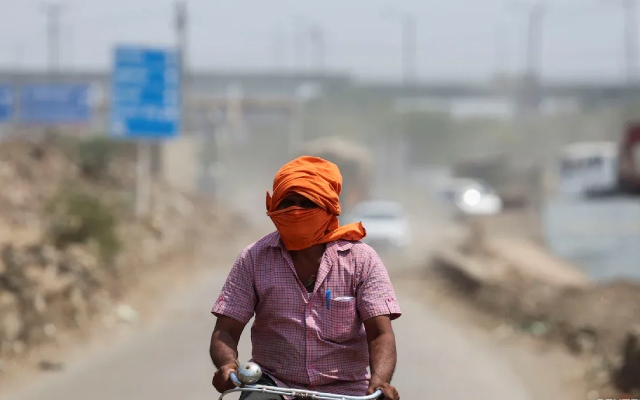


India is currently experiencing a devastating heatwave, with 39 suspected heatstroke deaths in Uttar Pradesh during the seventh and final phase of the 2024 Lok Sabha elections, 39 suspected heatstroke deaths in Odisha, and severe water shortages in some areas of the nation’s capital, Delhi.
In Odisha, the districts of Bolangir, Sambalpur, Jharsuguda, Keonjhar, Sonepur, Sundergarh, and Balasore have been the main sources of reported deaths. Heatwave advisories and preventative measures should be implemented immediately, according to the state government. Home guards, sanitation workers, and other poll workers were among the 33 poll workers who passed away in UP. Furthermore, a voter passed away at a polling place in the Ballia Lok Sabha constituency’s Sikandarpur neighborhood.
Delhi is not spared from the soaring temperatures. Last week, Delhi’s Mungeshpur area recorded a maximum temperature of 52.3 degrees Celsius, the highest ever in the city, though this was later corrected to 49.3 degrees Celsius by the weather office due to a faulty sensor. The Delhi High Court, alarmed by the severe temperature spike, warned that the city could turn into a “barren desert” if deforestation continues unchecked. The court has directed the Delhi government to provide the necessary infrastructure to support the committee overseeing forest protection, now renamed the ‘Special Empowered Committee.’
“This could be the worst summer in the last 120 years, at least for north India. Never have temperatures gone so high – more than 45-47 degrees Celsius – for such a vast region, which is also densely populated. This is a record in itself,” Vimal Mishra, Vikram Sarabhai Chair Professor, Civil Engineering and Earth Sciences, IIT Gandhinagar, told PTI.
Prime Minister Narendra Modi, in a series of meetings yesterday, reviewed the heatwave conditions and stressed the importance of regular fire and electrical safety audits in hospitals and other public places. Forecasts indicate that the heatwave will persist in parts of Rajasthan, Gujarat, and Madhya Pradesh. PM Modi also reviewed the impact of Cyclone Remal, particularly in the northeast, and assured continuous support from the Centre to the affected states.
India’s heatwave has impacted various regions, including Odisha, UP, Punjab, Rajasthan, Chandigarh, and Delhi. In some areas, the combination of high temperatures and humidity has made it unbearable for residents to step outside. The critical ‘wet-bulb temperature’, which measures the combined effect of heat and humidity on the human body, has reached dangerous levels, posing severe health risks. Research indicates that a wet-bulb temperature of 31 degrees Celsius at humidity levels above 50 per cent can be lethal, as the human body can no longer cool itself through sweating.
The extreme heatwave has had a broader environmental impact. Water shortages in Delhi have exacerbated the crisis, with people scrambling for water in various parts of the city.
However, a slight respite is expected over the next three days, according to the India Meteorological Department (IMD). This forecast brings some relief to regions experiencing extreme temperatures, with Fatehpur in Uttar Pradesh recording the highest at a scorching 46.2 degrees Celsius.
The IMD has predicted a gradual reduction in heatwave intensity, with maximum temperatures expected to drop below 45 degrees Celsius in the coming days. Light rain accompanied by thundershowers has already been observed in parts of Rajasthan, offering some relief. Further light to moderate rainfall is anticipated in regions including Bikaner, Jaipur, Bharatpur, Ajmer, and Jodhpur.
From June 2-4, isolated areas of Bihar are expected to see hot and muggy weather; Goa and Odisha are expected to see similar conditions on June 2-3 and June 5–6.
The hot, dry weather in Jammu is predicted to last until June 4, at which point light to moderate rain is predicted, along with the possibility of thunderstorms and gusty winds. June 8–9 is expected to have partly cloudy weather.
The maximum temperature recorded in Srinagar was 30.3 degrees Celsius, which is significantly higher than the average of 27.5 degrees Celsius.