









Ever since the British created the problem of Kashmir to India and Pakistan, during the granting of independence for both, the city as well as the state has also been creating information for headlines and consequential emotional disturbances. Religiosity is generally perceived to be the faithful practice of the beliefs and dogmas of a particular religion and irreligiosity is just the opposite. However, the practitioners of religiosity perform unforgivable practice of irreligiosity.
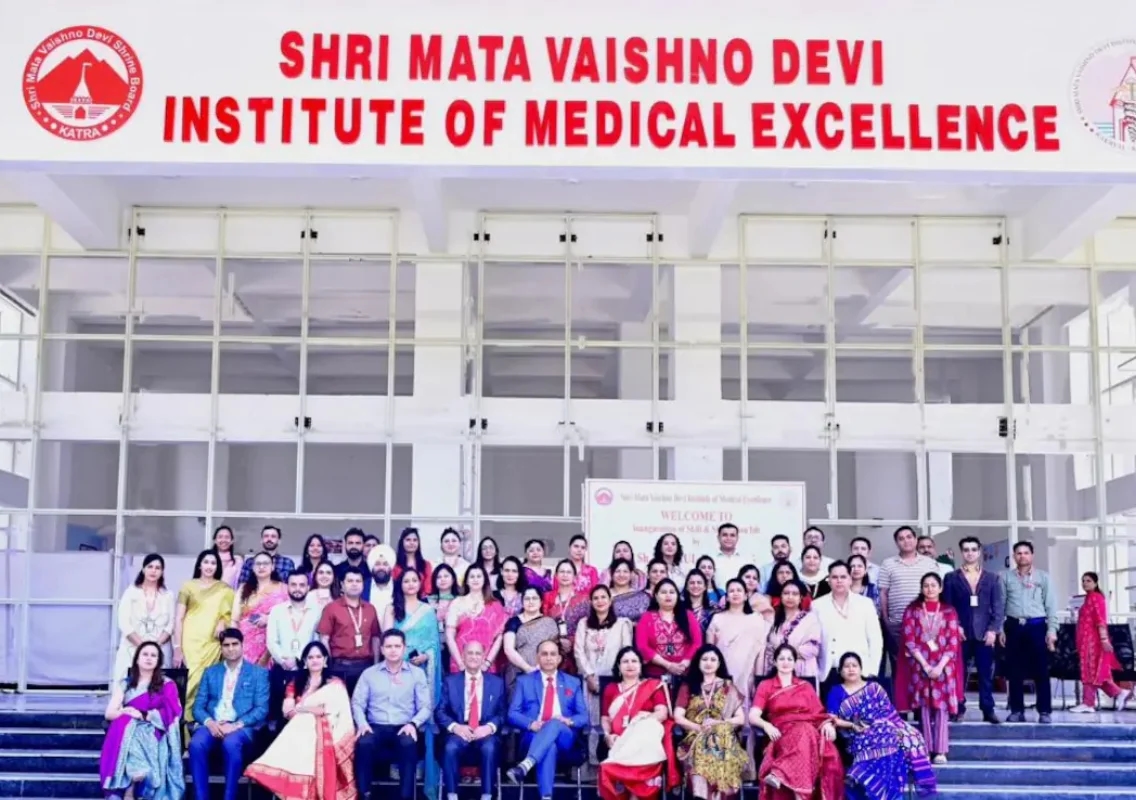
The story of Shri Mata Vaishno Devi Institute of Medical Excellence, located at Katra in Kashmir is a new medical college established by the Shri Mata Vaishno Devi Shrine Board to provide quality medical education, and is affiliated with Shri Mata Vaishno Devi University, must be narrated in the light of the above mentioned phenomenon of religiosity. It started its first MBBS batch for the year 2025-26 and had students mostly from Kashmir itself. It so happened that the fifty MBBS students, who started their education in October, had the misfortune of the closure of the college within three months of the commencement of the first batch of MBBS students. Each of them, mostly from poor classes of Kashmir, paid four and half lakhs towards the course fee for one year. They were all selected because each of them had qualified themselves by passing NEET. The Trust which administers draws funds from the corpus of the Shri Mata Vaishno Devi temple management.
Though the assembly passed a resolution to start a university in 1999, with the Lieutenant Governor as the chancellor, it is only recently, a medical college was started. It was a chance that the NEET qualified students who were admitted happened to be demographically very different from those in other medical colleges. Out of the fifty, forty four were from a local minority community, five from majority community and one from a different minority community from outside the state. It attracted the attention of the so called religious people who responded to it very irreligiously.
The teachers and students were very happy with their appointments and admissions respectively when the actual course of study started in October 2025. The college was in full swing when there were demonstrations against the admission because of the community tag attached to the admissions though they were done as per the rules of the country. The Medical Council of India which permitted the new batch had not stated anything to be added to administer the course of study.
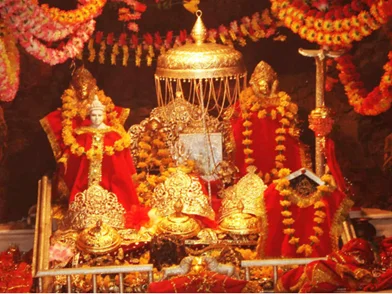
A couple of religion centric organisations started an agitation against the admissions, in which students from one community were large in number, even though the institution brought it to their notice that they were all admitted as per the rules and regulations and by the quality of merit through NEET examination. However, these organisations were not willing to allow the college to function. They said that only those who are devotees of Shri Vaishno Devi could be admitted as students. The opposition leader in the assembly of the union territory declared publicly that the funding is done by the Vaishno Devi temple, and therefore, only her devotees can be admitted. He did not listen to the fact that the state government had already funded the university to the tune of one hundred and twenty crores.
Agitators appealed to the chancellor who is the Lieutenant Governor of Jammu and Kashmir and to the Medical Council of India. The inspections by MCI ‘identified’ several ‘inadequacies’ and recommended the closure of the medical college, leaving the fifty students to get transferred to other medical colleges in the country because they were admitted based on their merit. However, the course fee they paid was not refunded; neither would anybody make a promise when it would be refunded. It was surprising for those who got admitted and their parents how a medical college, which started and admitted students after inspections by the same Medical Council of India, could be closed down within three months by quoting ‘inadequacies’.
The normal practice in all institutions affiliated to any university is to instruct the college to make necessary changes or add facilities and give them a stipulated time to submit the compliance report after making changes and providing facilities. However, this was not done, instead the college was closed. More gravely, it was evident that there was a sinister move to scuttle the admissions provided to students from one community. The irreligiosity of the religious people is evident and also stands out as a classic example of communal politics that receives unlawful support from powers which are functioning equally unlawful in this case too. The sad fact is the complicity of the Indian Medical Council, whose members are nominated by the government in power. People on the ground become very powerful to act irreligiously in the name of religiosity, when such people are supported by religious people in power.
One more similar case of irreligiosity of religion political people from the ground level that was reported recently is worth an analysis. On 14 January 2025, the Delhi High Court came down heavily on an NGO for repeatedly filing PIL petitions alleging encroachments by a place of worship of a minority community. A division bench of Chief Justice Devendra Kumar Upadhyaya and Justice Tejas Karyazz, while hearing two different petitions filed by the Save India Foundation, considered it a misuse of a facility. The court said it was ‘disturbing’ to find frequent filing of such petitions.
People who follow and act on their beliefs associated with religion form a critical component in a democratic society for preserving both the religion and its impact on the society for the general good of people. However, the irreligiosity shown by these religious people can destroy religiosity itself, particularly when the irreligiosity is aimed at those who are in the minority, guaranteed with equal civil rights in a democratic country. Practicing irreligiosity under the guise of religiosity may be the first disgrace of a democratic country, next to indulging in corrupt practices.