







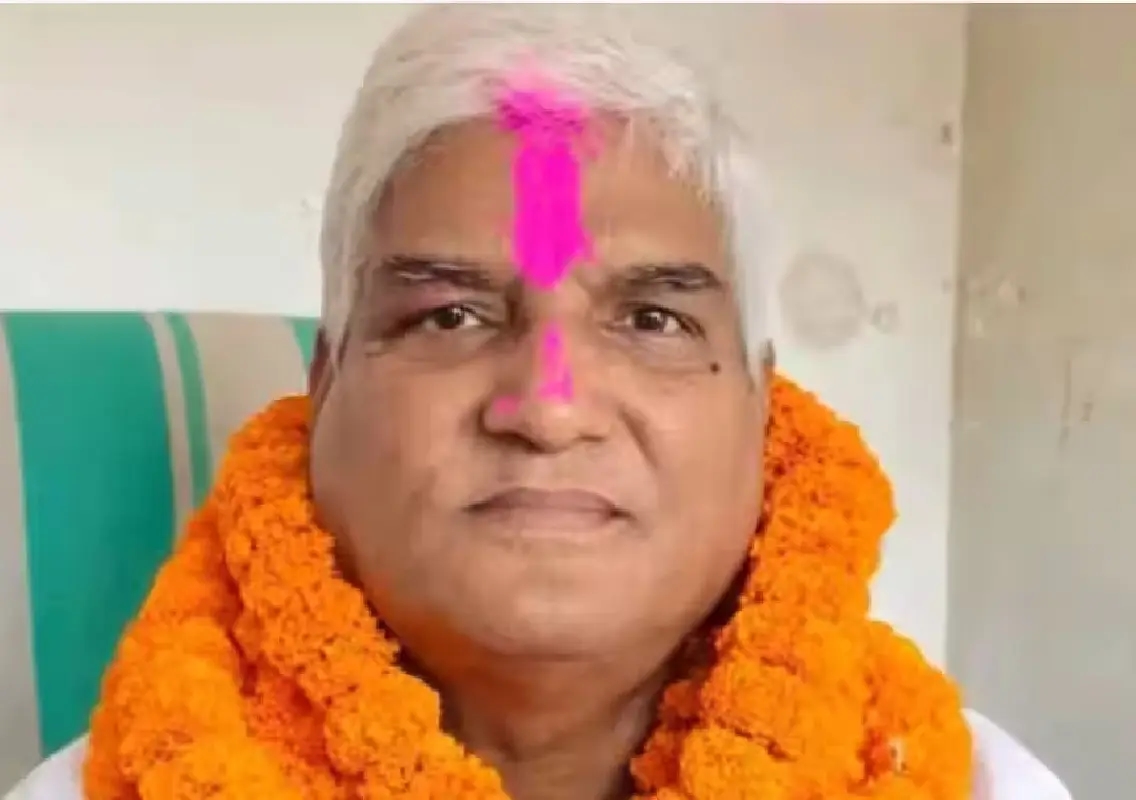


The Jan Suraj Party suffered a major loss on Friday after its Tarari Assembly candidate, Chandrashekhar Singh, passed away following a second heart attack. His death came on the same day the Bihar Assembly election results were declared, adding an unexpected tragedy to an already high-stakes political moment.
Second cardiac episode proves fatal
Singh, who was undergoing treatment at a private hospital in Patna, had been recovering from a previous cardiac arrest suffered on 31 October during campaigning. Despite receiving medical attention, he reportedly suffered another heart attack around 4 pm on Friday, which proved fatal. Hospital sources confirmed that his condition had been fragile since his first attack.
According to the Election Commission’s data, Singh secured 2,271 votes in the Tarari constituency. BJP candidate Vishal Prashant emerged victorious from the seat, while Singh’s passing overshadowed political conversations in the region and triggered a wave of condolences.
A respected educator and community figure
A retired headmaster from Kurmuri village, Singh was widely known and respected in his community. Unlike many political aspirants, he did not hail from a political family. Instead, his public goodwill was rooted in his long career in education and his active involvement in social causes. He was drawn to politics after being inspired by Prashant Kishor’s Jan Suraaj movement, which emphasised grassroots engagement and governance-focused reforms. Seeing his popularity and credibility, the party gave him a ticket to contest from Tarari.
Locals described Singh as a humble, approachable man who worked tirelessly for education and rural development. News of his death plunged his village into mourning, with many residents gathering to pay tributes and express shock at the sudden loss. Family members were en route from Patna to Ara with his remains at the time of reporting.
A tough election for Jan Suraj Party
For Prashant Kishor’s Jan Suraaj Party, Singh’s death came at the end of a disappointing debut Assembly election. Despite high visibility and an energetic statewide campaign, the party failed to secure a single seat in the 243-member Bihar Assembly.
The Jan Suraaj Party contested 238 constituencies—among the highest for any outfit in the election—but struggled to translate its outreach into electoral success. EC figures show that a majority of its candidates received less than 10 per cent of the votes in their respective seats, failing even to retain their deposits.
The poll outcome was a setback for the party, which had entered the electoral arena promising a new model of governance, development-centric politics, and an end to traditional caste-driven election dynamics.
Buzz fails to convert into votes
The party’s strongest performance came in Marhaura, where Naveen Kumar Singh, also known as Abhay Singh, finished second. However, he lost by a substantial margin of 27,928 votes to RJD’s Jitendra Kumar Rai. Even in constituencies where Jan Suraaj had built considerable buzz, this gap reflected the limited traction it gained at the booth level.
Political analysts noted that Jan Suraaj’s messaging, though widely discussed in urban circles and on social media, may not have penetrated deeply enough into rural segments of the electorate. Issues highlighted by the party—such as unemployment, migration, poor infrastructure, and lack of industrial growth—remain deeply relevant to Bihar. However, voters appeared reluctant to shift away from more established political formations.
A moment of grief amid political setbacks
Singh’s demise added a deeply emotional dimension to what was already a challenging day for the party. Leaders and supporters expressed grief over the loss of a committed member who had entered politics with the intent to serve society.
While the political implications of the election results will continue to be analysed in the days ahead, for many in Tarari and Kurmuri village, Singh’s absence now represents a personal and irreplaceable void.