







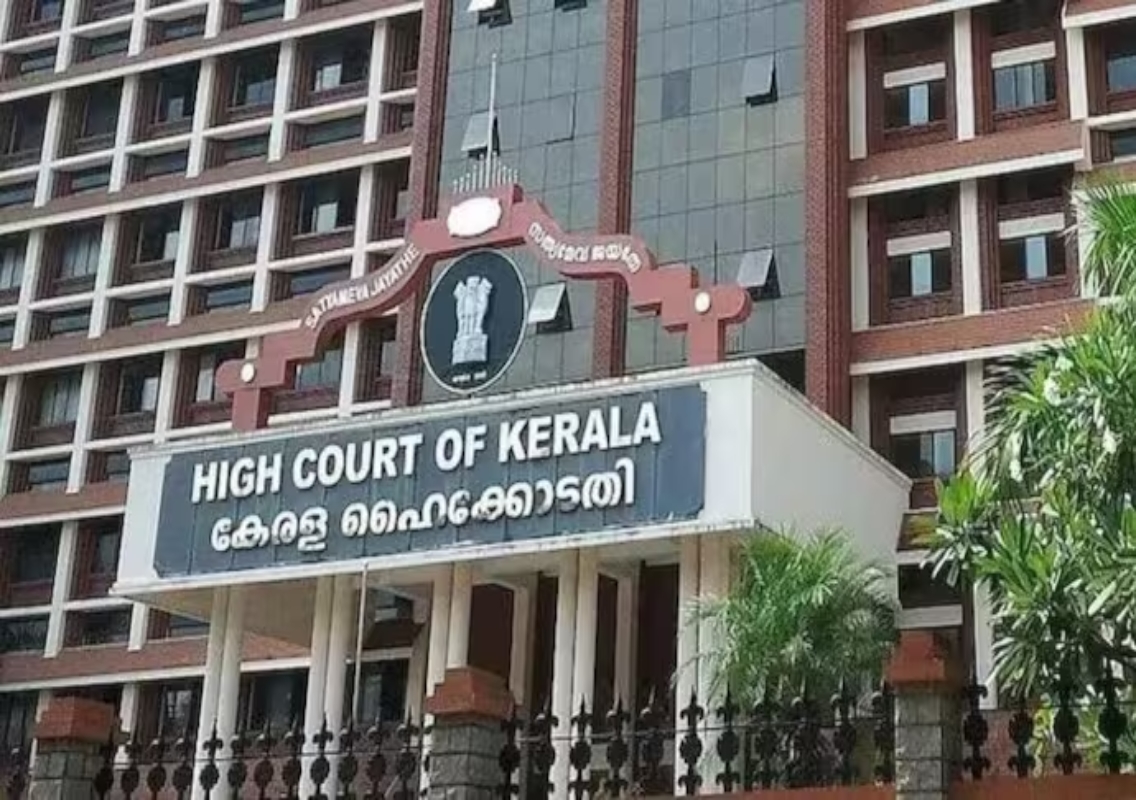


Kochi: The Kerala High Court has directed the Enforcement Directorate (ED) to produce records relating to its findings in the alleged CMRL-Exalogic bribery case involving former Kerala Chief Minister Pinarayi Vijayan, his daughter T Veena and son-in-law PA Mohammed Riyas.
The court’s intervention comes as it considers an important legal question: whether the Kerala Police must register a First Information Report (FIR) when the ED forwards information under Section 66(2) of the Prevention of Money Laundering Act (PMLA), or whether the state police can first conduct a preliminary inquiry.
The matter was heard by Justice A Badharudeen on a petition filed by political activist KM Shajahan seeking registration of an FIR based on material shared by the ED.
Court seeks ED communication to state police
During the hearing, the Kerala High Court directed the ED to produce the communication and related records that it had forwarded to the Kerala Police.
The ED has agreed to submit the material in a sealed cover at the next hearing, citing the confidential nature of the information gathered during its investigation. The court is expected to examine the material while considering whether the state police were legally entitled to conduct a preliminary inquiry before registering an FIR.
The legal issue is significant because the ED and the Kerala government have taken different positions on the next step.
The ED has argued that the material it shared with the state police disclosed offences that require investigation by the police or the Vigilance and Anti-Corruption Bureau. The state government, however, has maintained that a preliminary inquiry can be conducted before an FIR is registered.
What is the CMRL-Exalogic case?
The case relates to financial transactions involving Cochin Minerals and Rutile Ltd (CMRL) and Exalogic Solutions, a company associated with Veena Vijayan.
The ED’s investigation into the financial transactions allegedly found payments from CMRL to Exalogic. In September, the agency asked the Kerala Police to register a case against Vijayan, Veena and Riyas, along with others, based on material gathered during its investigation.
According to material reported from the ED’s submissions, the agency has alleged that Vijayan received around ₹3.28 crore from CMRL through his daughter between March 2017 and May 2019 under an agreement that the agency characterised as a sham arrangement.
These are allegations made in the course of the investigation and proceedings. They have not been established as criminal findings by a court.
The ED has also examined transactions involving CMRL and Exalogic as part of its wider money-laundering investigation. The Kerala High Court had earlier allowed the ED’s investigation into the company’s affairs to continue after rejecting a challenge to the probe.
ED and state government differ over FIR
The immediate dispute before the High Court concerns procedure rather than a final determination of guilt.
The ED has contended that once information about scheduled offences is forwarded to the state police under Section 66(2) of the PMLA, the police should register an FIR and investigate the alleged offences.
The Kerala government’s position, as conveyed to the court by Advocate General Jaju Babu, is that the authorities can conduct a preliminary inquiry before deciding whether an FIR should be registered.
Justice Badharudeen has identified this as the central legal question requiring consideration.
The court will therefore examine whether the state police have discretion to undertake a preliminary inquiry or whether the ED’s communication requires an FIR to be registered immediately.
Petition seeks action against Vijayan and family
The proceedings originated from a petition by KM Shajahan, who approached the High Court seeking directions for registration of a case under relevant provisions, including the Prevention of Corruption Act.
The petition concerns allegations arising from the financial transactions examined by the ED.
The ED’s counsel told the court that the agency had communicated information to the state police chief after its investigation allegedly disclosed transactions that could constitute a predicate or scheduled offence requiring investigation by another law-enforcement agency.
The court’s decision on the procedural question could determine how the material forwarded by the ED is dealt with by the Kerala authorities.
Political response to the ED probe
The case has also triggered political exchanges in Kerala.
Pinarayi Vijayan and leaders of the CPI(M) have rejected the allegations and questioned the ED’s actions. Vijayan has described the proceedings involving his daughter as politically motivated, while CPI(M) state secretary MV Govindan has also criticised the ED’s approach. These are political claims and remain separate from the legal proceedings before the High Court.
The ED, meanwhile, has proceeded with its investigation and has maintained that its findings warrant examination by the appropriate state authorities.
The wider case has also involved scrutiny by other investigative agencies. The Serious Fraud Investigation Office (SFIO) has separately registered a case involving alleged offences under the Companies Act, according to submissions reported during the High Court proceedings.
What happens next?
The Kerala High Court will examine the records supplied by the ED and hear arguments on whether the state police can conduct a preliminary inquiry before registering an FIR.
The court has not, at this stage, made a finding that Vijayan, Veena or Riyas committed the alleged offences. The immediate issue before it is whether the procedure followed by the state government after receiving the ED’s information is legally permissible.
The ED is expected to submit the relevant records in sealed cover at the next hearing. The court’s eventual ruling on the FIR question could determine the next procedural step in the CMRL-Exalogic matter.
For now, the allegations remain under investigation and judicial consideration, while the High Court focuses on the legal question of how information forwarded by the ED under the PMLA should be acted upon by the state police.