







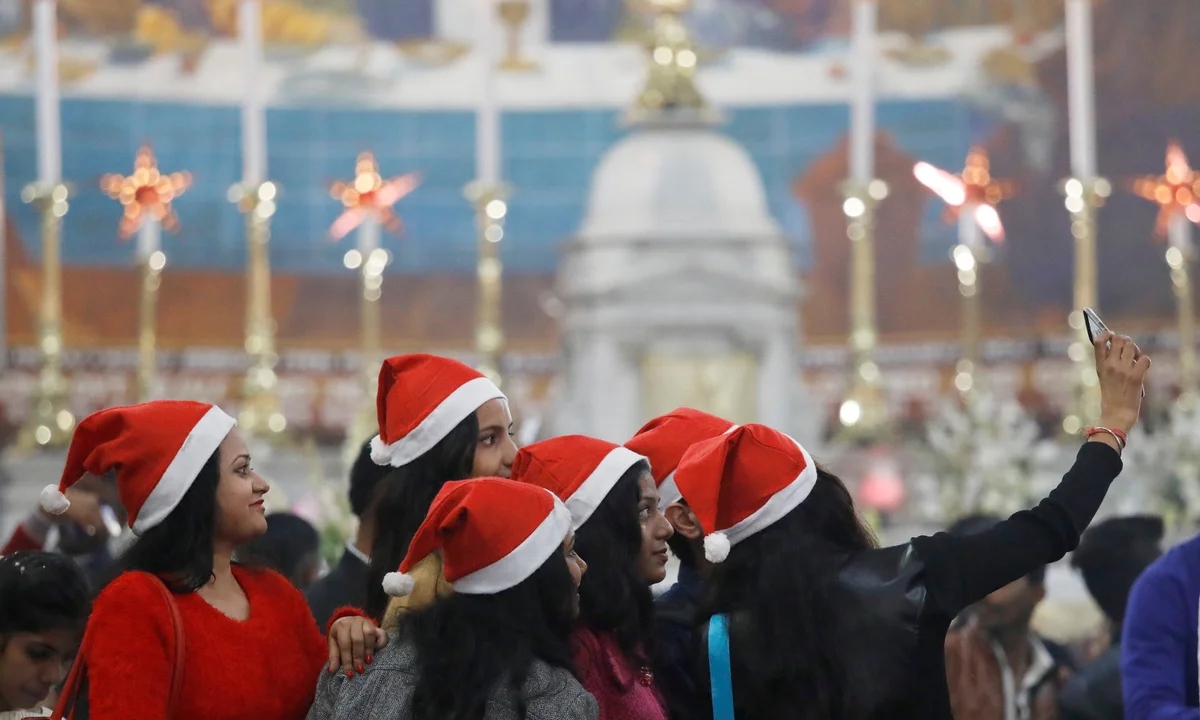


The decision to deny a Christmas holiday to staff at Kerala Lok Bhavan has triggered a nationwide debate on religious accommodation, secularism and the growing unease among India’s Christian community.
Staff at the state-run guest house were instructed to attend official programmes marking Good Governance Day, commemorating the birth anniversary of former prime minister Atal Bihari Vajpayee. While officially framed as a routine administrative directive, the move drew criticism for disregarding the religious significance of Christmas, the holiest day for Christians.
Symbolism beyond administration
The controversy gained further momentum following an earlier incident involving Lok Bhavan’s official calendar, which featured V. D. Savarkar on one of its pages. Critics viewed this as an ideological signal rather than a neutral historical reference. Taken together, these episodes were seen by many as part of a broader pattern rather than isolated decisions.
Church leaders and civil society groups argued that making attendance compulsory on December 25, particularly in an institution representing Kerala — a state with a significant Christian population — undermined the spirit of pluralism.
Concerns echoed beyond Kerala
Similar concerns were raised earlier this year in Uttar Pradesh, where schools were directed to remain open on December 25 for programmes marking Vajpayee’s birth anniversary. Christian organisations and rights groups warned that such measures marginalise minorities and weaken India’s secular framework, especially in public institutions.
Even in Kerala, long regarded as a model of communal harmony, bishops and ecumenical bodies have reported increasing objections to public Christmas celebrations and carol-singing events. Political leaders across party lines cautioned that such disruptions threaten the state’s pluralistic ethos.
Rising attacks on Christians
The debate unfolds against a troubling national backdrop. According to the Evangelical Fellowship of India’s Religious Liberty Commission, documented incidents of violence and harassment against Christians rose from 601 in 2023 to over 830 in 2024. States such as Uttar Pradesh, Chhattisgarh and Rajasthan accounted for a large share of reported cases.
These incidents range from physical assaults and church vandalism to alleged misuse of anti-conversion laws, creating what rights groups describe as a climate of fear and legal vulnerability.
A constitutional question
Observers warn that when denial of religious holidays and disruptions to worship become normalised, it signals deeper democratic erosion. India’s Constitution guarantees freedom of religion and equality before law, but critics say recent developments suggest these rights are increasingly conditional.
For many, the Lok Bhavan episode is no longer just about a holiday — it has become a symbol of a larger struggle to preserve India’s secular and inclusive character.