







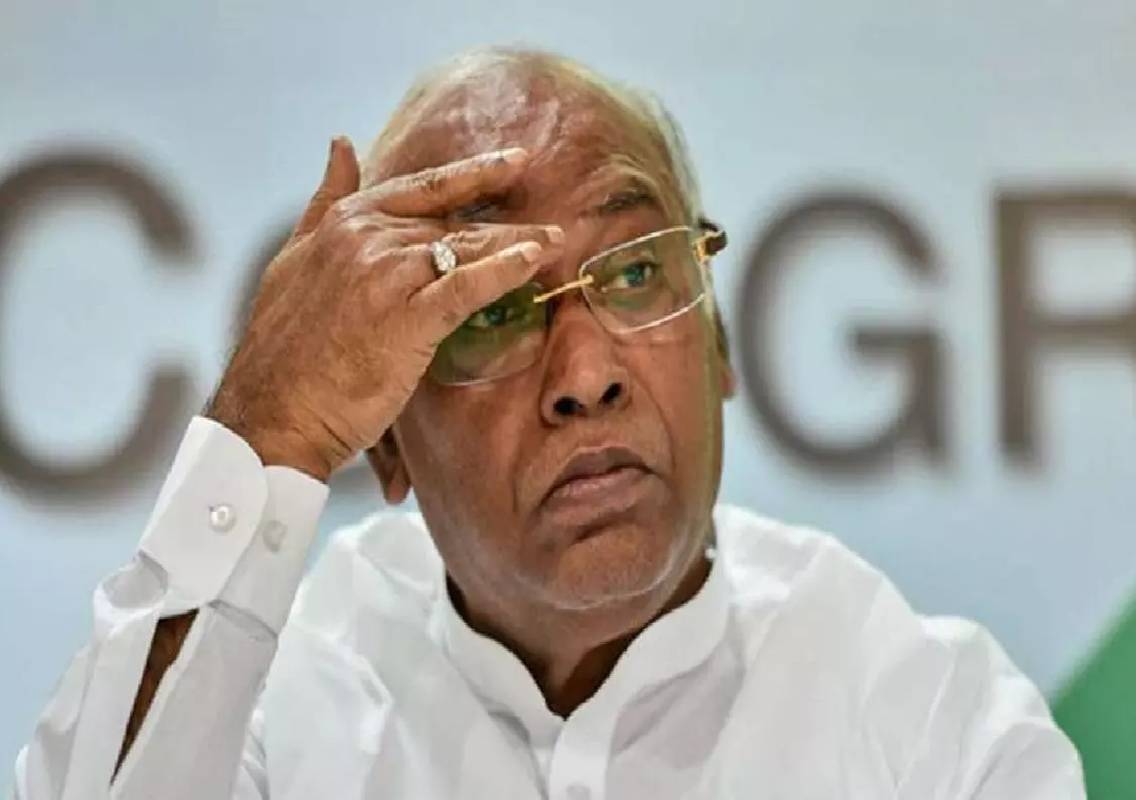


New Delhi: Congress president Mallikarjun Kharge has urged the Centre to take immediate steps to trace Indians missing or stranded in flood-hit Nepal and provide financial assistance to families who have lost relatives in the disaster. His appeal came after devastating flash floods struck Nepal’s Rasuwa district near the Tibet border, leaving hundreds dead or missing and affecting several Indian tourists and pilgrims.
The disaster has triggered a major rescue and relief operation involving Nepalese authorities, the Indian government and other agencies. Many Indians were in the affected region as part of the Kailash Mansarovar pilgrimage, while others were travelling or working in the area.
Kharge has called for assistance not only for people from Karnataka but for affected Indians from across the country. He has also urged the Centre to extend humanitarian support to Nepal, which has suffered extensive damage to roads, bridges, settlements and other infrastructure.
Kharge seeks help for missing Indians
Kharge expressed concern over reports of Indians who remained untraced following the flash floods. He said the Centre should make every possible effort to locate those missing, ensure the safety of survivors and assist their families.
On Thursday, he said he would write to Prime Minister Narendra Modi seeking special relief for families whose relatives were missing or had died in the disaster. He stressed that assistance should cover affected people from Karnataka as well as other parts of India.
Kharge also emphasised that Nepal is a close and friendly neighbouring country and that thousands of Indian pilgrims and tourists travel there every year.
His appeal came as the scale of the disaster continued to become clearer, with rescue agencies struggling to reach several remote areas cut off by floodwaters, landslides and damaged roads.
Hundreds of Indians remain unaccounted for
The number of Indians whose whereabouts were initially unknown increased as authorities gathered information from different groups.
According to the Ministry of External Affairs, 288 Indian nationals remained untraced in Nepal as of August 27, while around 200 Indians were reported to be stranded on the Chinese side of the border. The figures remained subject to verification as rescue teams continued locating survivors and checking the status of missing people.
The missing Indians include pilgrims travelling towards Mount Kailash and other people who were in the region when the flash floods struck.
The situation has been particularly difficult because communication networks and transport links in several affected areas have been disrupted.
Kailash Mansarovar pilgrims among those affected
The disaster has caused serious concern among families of Indians who travelled to the region for the Kailash Mansarovar pilgrimage.
Several pilgrimage groups were in or near the affected areas when the floods struck. Some survivors have managed to reach safety, while the whereabouts of others remained unknown.
Families across India have been waiting for information from authorities and travel operators as rescue operations continue.
The affected region is located along an important route used by pilgrims and tourists travelling between Nepal and Tibet. Damage to roads and border infrastructure has made movement particularly difficult.
Flash floods devastated Nepal-Tibet border region
The flash floods struck on August 26 near the Nepal-China border, causing extensive destruction in parts of Nepal’s Rasuwa district and across the border in Tibet.
The disaster followed a sudden surge of water that swept through settlements and damaged bridges, roads and infrastructure.
The floodwaters also affected areas along the Bhote Koshi and Trishuli river systems.
Rescue officials have faced significant challenges because mountainous terrain, debris and damaged infrastructure have restricted access to some locations.
As of August 28, reports indicated that hundreds of people had died across Nepal and Tibet, with more than 1,000 people still missing. The figures have continued to change as authorities verify information from affected areas.
India steps up rescue and relief efforts
The Indian government has been working with Nepalese authorities to determine the whereabouts of Indian nationals affected by the floods.
The Ministry of External Affairs has established mechanisms to track missing Indians and coordinate with officials in Nepal and China.
External Affairs Minister S Jaishankar also held a high-level review meeting with senior officials and India’s ambassadors in Kathmandu and Beijing to assess the situation and efforts to trace Indians caught in the disaster.
India has also sent humanitarian assistance to Nepal as part of the relief response.
The priority remains locating missing people, evacuating stranded survivors and ensuring that those requiring medical or other assistance receive support.
Families face uncertainty
For families of missing Indians, the disaster has created an agonising wait for information.
Several families have been attempting to establish contact with relatives who were travelling through affected areas when the floods struck.
The destruction of communication networks and roads has made it difficult for some travellers to contact their families directly.
Authorities are therefore relying on information from rescue teams, local officials, travel groups and diplomatic channels to establish the status of missing people.
The situation is expected to remain fluid until rescue teams can access more isolated locations.
Kharge calls for financial assistance
Apart from tracing missing Indians, Kharge has asked the Centre to provide financial assistance to families who have lost relatives in the disaster.
He said the losses suffered by affected families were extremely difficult to bear and called for government support.
His demand includes assistance for families from Karnataka as well as those from other states.
The Congress president has also called for support to be extended to Nepal itself, given the scale of the devastation.
Karnataka connection draws attention
Kharge, who is from Karnataka, specifically highlighted the impact on people from the state while stressing that the crisis affects Indians across the country.
Karnataka has a large number of people who travel to Nepal for religious and tourism purposes, including pilgrims visiting important Hindu sites and those travelling towards Kailash Mansarovar.
The appeal for assistance therefore has particular significance for families in Karnataka who may be waiting for information about relatives in the affected region.
However, Kharge made it clear that relief should not be restricted to one state.
Nepal faces major infrastructure damage
The human toll has been accompanied by extensive damage to infrastructure.
Roads and bridges have been washed away or damaged, leaving some settlements difficult to access. Power and other essential infrastructure have also been affected.
The disaster has disrupted an important route between Kathmandu and Tibet.
Rescue teams are using helicopters and other resources to reach isolated communities and deliver essential supplies.
The difficult terrain and continuing risk of flooding have made the rescue operation particularly challenging.
Fresh flood risk adds to concerns
Authorities have also been monitoring the possibility of further flooding in the region.
A barrier lake formed by debris has raised concerns about another potential surge of water if the natural obstruction gives way.
The possibility of additional flooding has complicated rescue operations because teams must balance efforts to reach missing people with the safety of rescuers and survivors.
Officials are therefore closely monitoring water levels and the stability of the affected areas.
India and Nepal coordinate closely
India and Nepal have longstanding ties, with large numbers of Indians travelling to Nepal every year for tourism, pilgrimage, business and other purposes.
The current disaster has therefore required close coordination between the two countries.
Indian diplomatic officials have been working with Nepalese authorities to identify affected nationals and assist those who have survived.
The Indian government has also been monitoring the situation of people who may have crossed into Tibet or remained stranded on the Chinese side.
Rescue operations continue
Rescue teams in Nepal are continuing their search for people who may have survived the floods or become trapped in remote locations.
Helicopters are being used where roads and bridges have become inaccessible.
Search teams are also examining areas covered by mud, debris and floodwater.
The rescue effort is expected to continue as authorities receive more information about missing people.
The number of confirmed deaths and missing persons could change further as teams reach previously inaccessible areas and reconcile information from different sources.
Humanitarian crisis extends beyond Nepal
The disaster has affected people from several countries, not just Nepal and India.
Foreign tourists and pilgrims from countries including the United States, Australia, Britain, Canada and Malaysia were among those reported missing or stranded.
This has turned the disaster into a wider international humanitarian emergency.
Governments are coordinating with Nepal and China to establish the whereabouts of their citizens and arrange evacuation or assistance where required.
Kharge urges support for Nepal
Alongside his appeal concerning Indians, Kharge has called for India to provide maximum possible assistance to Nepal.
He said that Nepal, being a friendly neighbouring country, deserved India’s support during the crisis.
India has already begun providing humanitarian assistance, while rescue and diplomatic teams continue working to help affected Indians.
The scale of destruction means that Nepal is likely to require substantial support for both immediate relief and longer-term recovery.
Need for accurate information
With casualty and missing-person figures changing rapidly, authorities have stressed the importance of verifying information.
Early reports provided different numbers of missing Indians because several groups were initially uncontactable.
The latest MEA information put the number of untraced Indian nationals in Nepal at 288 as of August 27, while around 200 Indians were reported stranded on the Chinese side.
These figures could change as communication is restored and more survivors are located.
Families are therefore being advised to rely on official government and diplomatic updates rather than unverified information circulating online.
A race against time
For rescue teams, the immediate priority is to reach areas where people may still be alive.
The mountainous terrain and continuing flood risk mean that every hour is important.
At the same time, authorities must provide food, shelter and medical assistance to people who have already been rescued.
For families in India, the focus remains on receiving confirmation about their relatives.
Kharge’s appeal has added political pressure on the Centre to ensure that every possible resource is used to trace missing Indians and support affected families.
Relief efforts likely to continue
Even after rescue operations end, Nepal will face a long recovery process.
Rebuilding roads, bridges and damaged infrastructure will require significant resources.
Communities that have lost homes, livelihoods and family members will also require long-term assistance.
India’s support could therefore extend beyond the immediate evacuation and relief phase.
Kharge’s call for humanitarian assistance to Nepal reflects the broader need for international cooperation following the disaster.
Conclusion
New Delhi: Congress president Mallikarjun Kharge has urged the Centre to intensify efforts to trace Indians missing or stranded in Nepal and provide financial assistance to families affected by the devastating flash floods. He has also called for maximum humanitarian assistance to Nepal as rescue teams continue working across the disaster-hit region.
The disaster has affected several Indian tourists and pilgrims, with the Ministry of External Affairs reporting 288 Indians untraced in Nepal and around 200 stranded on the Chinese side as of August 27. The figures remain fluid as authorities verify information and locate survivors.
With large areas still difficult to access and the risk of further flooding adding to the challenges, the immediate priority remains the safe recovery of missing people and evacuation of those stranded. Kharge’s appeal has also highlighted the need to support families facing uncertainty and loss while India continues its humanitarian response to the crisis.