







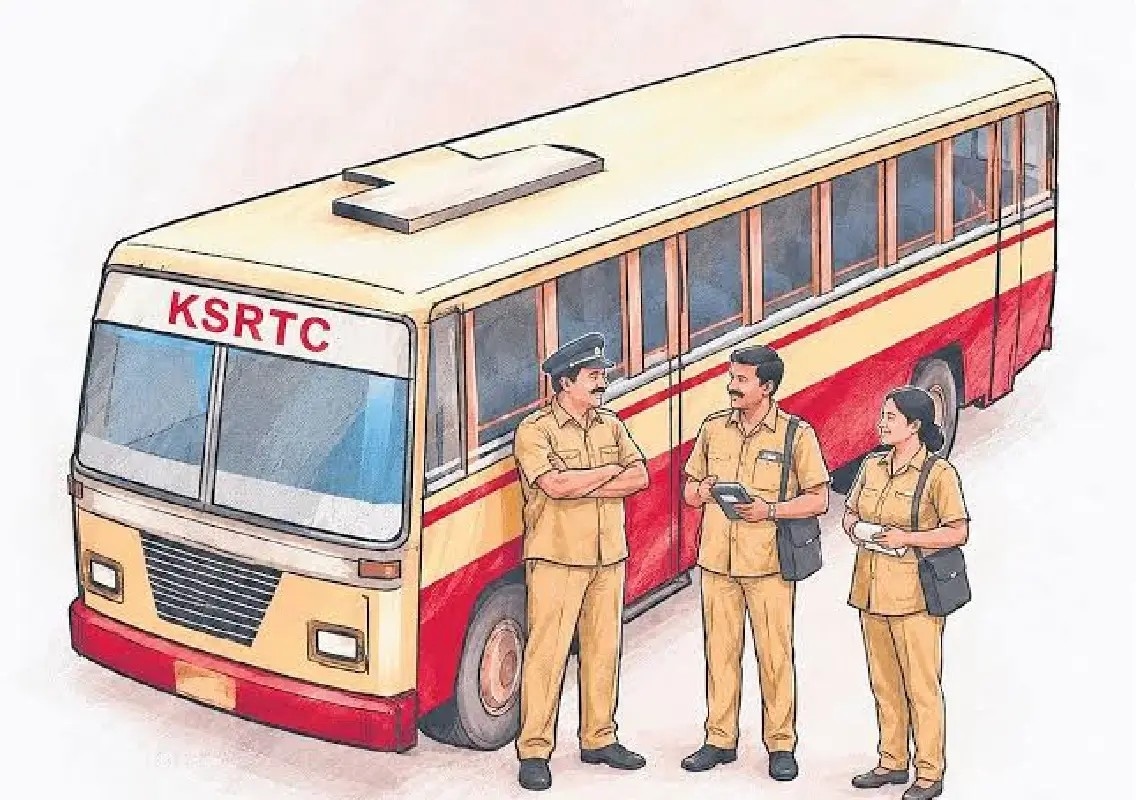


Thiruvananthapuram : The Kerala State Road Transport Corporation (KSRTC) is set to collaborate with the Indian Institute of Management Kozhikode (IIM-K) to improve the efficiency of its operations and raise the quality of services offered to passengers.
The partnership is aimed at providing specialised training to KSRTC personnel, including officers, drivers and conductors. The initiative is also expected to explore the use of artificial intelligence and other technology-based solutions to strengthen the corporation’s services.
The move comes as the Kerala government seeks to modernise KSRTC and improve the experience of passengers using its extensive public transport network.
Training for officers, drivers and conductors
Under the proposed collaboration, employees across different levels of KSRTC will receive training designed to strengthen their professional skills and improve the way services are delivered.
The programme will cover officers as well as frontline employees such as drivers and conductors. Since drivers and conductors interact directly with passengers every day, their communication, conduct and service approach are expected to form an important part of the training.
For a public transport organisation serving thousands of passengers every day, the quality of these interactions can have a direct impact on public perception.
The training is therefore intended not merely to improve administrative efficiency but also to encourage more passenger-friendly services.
Focus on passenger experience
KSRTC’s decision to work with one of Kerala’s leading management institutions reflects an effort to bring professional management practices into the transport sector.
The collaboration is expected to address operational efficiency and service quality while helping employees respond more effectively to the changing expectations of passengers.
For daily commuters, improvements could potentially be reflected in areas such as communication, service delivery, workplace practices and the overall travel experience.
The initiative comes at a time when public transport organisations are increasingly expected to combine efficient operations with customer-oriented services.
Artificial intelligence to support modernisation
Technology is another significant component of the proposed partnership.
Reports indicate that the collaboration will examine ways of using artificial intelligence to improve KSRTC services.
AI-based tools are increasingly being explored by organisations for areas such as data analysis, planning, customer support and operational decision-making.
For a large transport corporation, the use of technology could help management analyse passenger demand, improve planning and identify operational challenges.
However, the effectiveness of any such technology will depend on how well it is integrated with existing systems and how effectively employees are trained to use it.
Learning from management experts
The partnership with IIM Kozhikode comes after the institute recently hosted Kerala’s Council of Ministers for a two-day strategic leadership retreat called ‘Reimagining Keralam’.
The retreat focused on areas including transformational leadership in the age of artificial intelligence, climate resilience, disaster management and fiscal reforms. The programme was intended to encourage data-driven decision-making and long-term strategic planning.
The KSRTC initiative similarly seeks to draw on academic and management expertise to strengthen the functioning of a major public institution.
By bringing management professionals and transport personnel together, the government hopes to identify practical approaches that can be applied within the corporation.
Better service through employee development
Training frontline employees can be particularly important for a transport organisation because drivers and conductors represent the public face of the corporation.
Passengers often interact with them during ticketing, boarding, route-related queries and other situations throughout a journey.
Improving communication skills and professional conduct could help reduce misunderstandings and create a more positive environment for commuters.
It could also help employees deal more effectively with challenging situations while maintaining professionalism.
The training initiative therefore has the potential to benefit both KSRTC employees and the passengers they serve.
A wider effort to strengthen KSRTC
KSRTC has been working towards improving its operations and financial and service performance. The collaboration with IIM Kozhikode forms part of the wider effort to modernise the corporation.
The involvement of an established management institution could provide KSRTC with access to specialised expertise in organisational management, leadership and technology.
Rather than relying only on conventional internal training, the partnership could expose employees and officials to new approaches to management and service delivery.
The initiative also signals the government’s willingness to involve academic institutions in the reform of public-sector organisations.
What the partnership could mean for passengers
For ordinary passengers, the success of the initiative will ultimately be measured by what changes on the ground.
Better-trained staff, improved communication, smoother operations and more effective use of technology could contribute to a more reliable and comfortable public transport experience.
The use of AI and data-driven systems could also help KSRTC make better-informed operational decisions if implemented effectively.
At the same time, training alone cannot resolve every challenge faced by a large public transport corporation. Infrastructure, fleet maintenance, scheduling, staffing and financial sustainability will continue to play important roles.
The new partnership can nevertheless provide an additional mechanism for addressing some of these challenges through professional training and modern management practices.
Towards a more passenger-focused KSRTC
The proposed collaboration between KSRTC and IIM Kozhikode represents an attempt to combine public transport experience with management expertise.
With training planned for officers, drivers and conductors and a focus on technology-driven improvements, the initiative is aimed at creating a more efficient and passenger-focused organisation.
If implemented effectively, the programme could help KSRTC employees adapt to changing passenger expectations while equipping the corporation to make greater use of modern technology.
For Kerala’s large community of public transport users, the real test will be whether the partnership eventually translates into better service, more responsive staff and smoother journeys.