


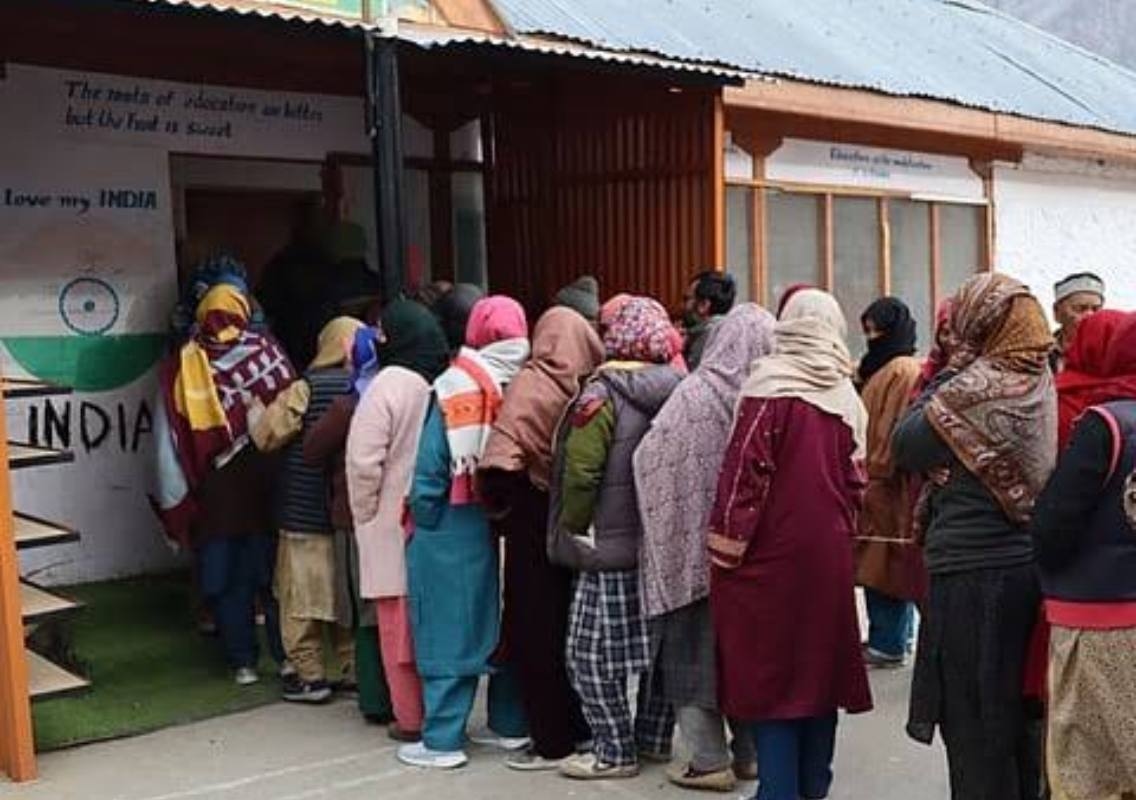


Leh: Voting began across Ladakh at 8 am on Saturday for panchayat and municipal elections, marking a major grassroots democratic exercise in the Union Territory amid freezing temperatures and ongoing political unrest.
The elections are being held against the backdrop of demands for statehood, constitutional safeguards and protection of land and jobs. Officials said elaborate security and logistical arrangements had been made to ensure peaceful polling despite the challenging winter conditions.
The elections are particularly significant as Ladakh was carved out as a separate Union Territory in 2019. The polls mark an important exercise in local governance, with voters choosing representatives for village-level bodies and municipal councils.
Voting for 137 Sarpanch and 242 Panch seats
Of the 192 Sarpanch seats in Ladakh, 55 candidates have already been elected unopposed. Polling is being held for the remaining 137 seats.
Similarly, 1,186 candidates have been elected unopposed for Panch positions out of a total of 1,428 seats. Voters are casting their ballots for the remaining 242 positions.
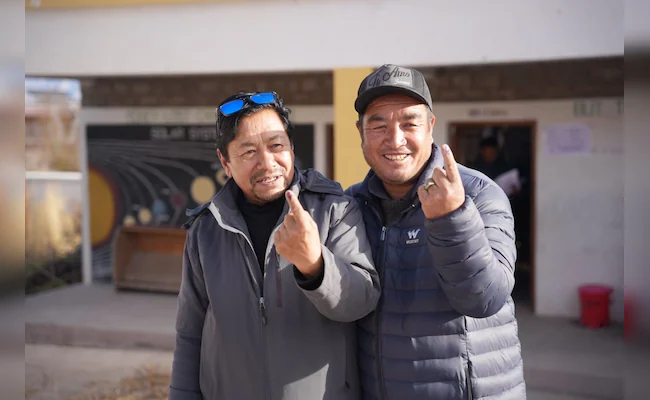
The contest is largely between the BJP and Congress, although several independent candidates are also in the fray.
The BJP has faced protests in Ladakh over the past five years, with political groups and local organisations demanding statehood and inclusion under the Sixth Schedule of the Constitution.
The results of the local elections will be closely watched amid the region’s continuing political debate over its administrative and constitutional future.
Municipal voting across Leh and Kargil
Polling is also taking place for municipal bodies in the region.
In Leh, voters are casting ballots across all 21 wards of the Leh Municipal Council. In Kargil, candidates in four of the 17 wards of the Kargil Municipal Council have already been elected unopposed.
The municipal elections form part of the wider exercise to strengthen local representation and governance across Ladakh.
With several candidates elected without contest, polling is being conducted only in wards and constituencies where candidates remain in the race.
Security tightened across polling stations
The Ladakh administration has deployed police personnel, the Central Reserve Police Force (CRPF) and the Indo-Tibetan Border Police (ITBP) to maintain law and order during the elections.
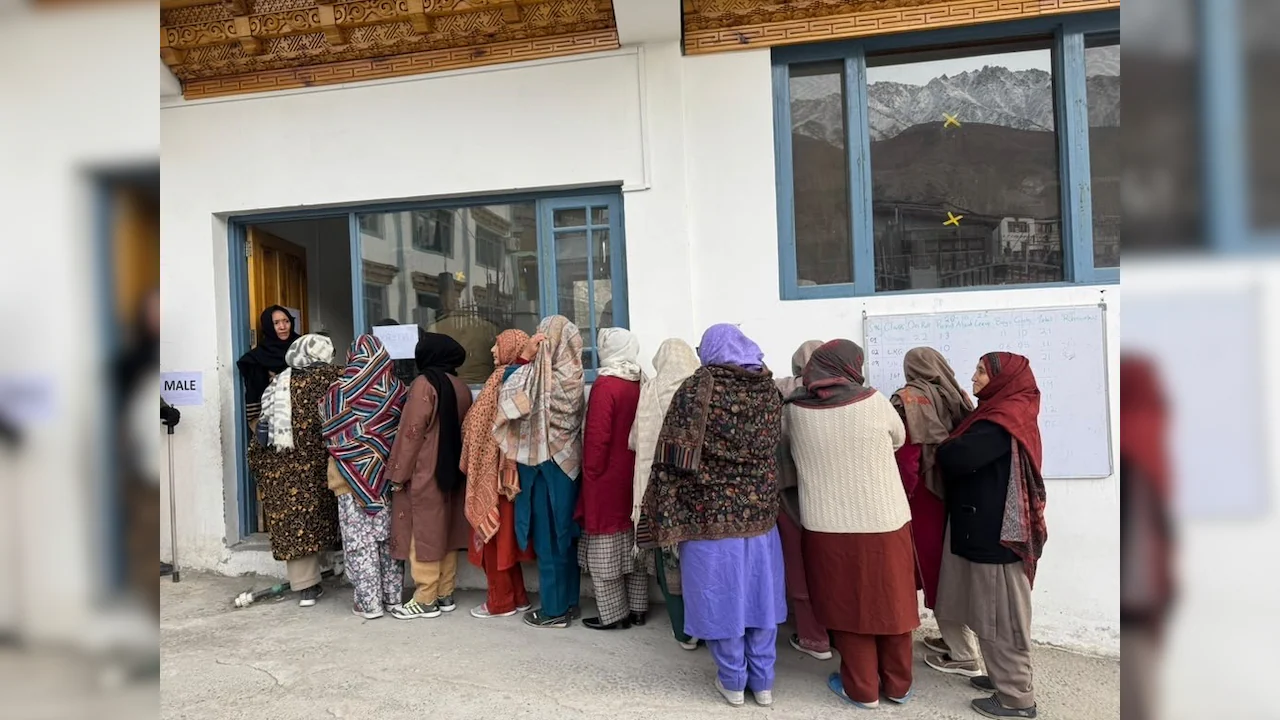
Officials said adequate arrangements had been made for transportation and heating facilities to help polling personnel and voters cope with the harsh winter conditions.
CCTV cameras have also been installed at polling stations to enable web monitoring from designated locations.
The administration has focused on security as well as logistical support, given the region’s low temperatures and difficult terrain. Officials said the arrangements were intended to ensure that polling could proceed smoothly across the Union Territory.
Elections held amid statehood and Sixth Schedule protests
The polls are taking place amid continuing political unrest and protests led by the Leh Apex Body (LAB) and the Kargil Democratic Alliance (KDA).
The two groups have been spearheading an agitation seeking constitutional safeguards for Ladakh, protection of land and employment opportunities, statehood and greater political representation.
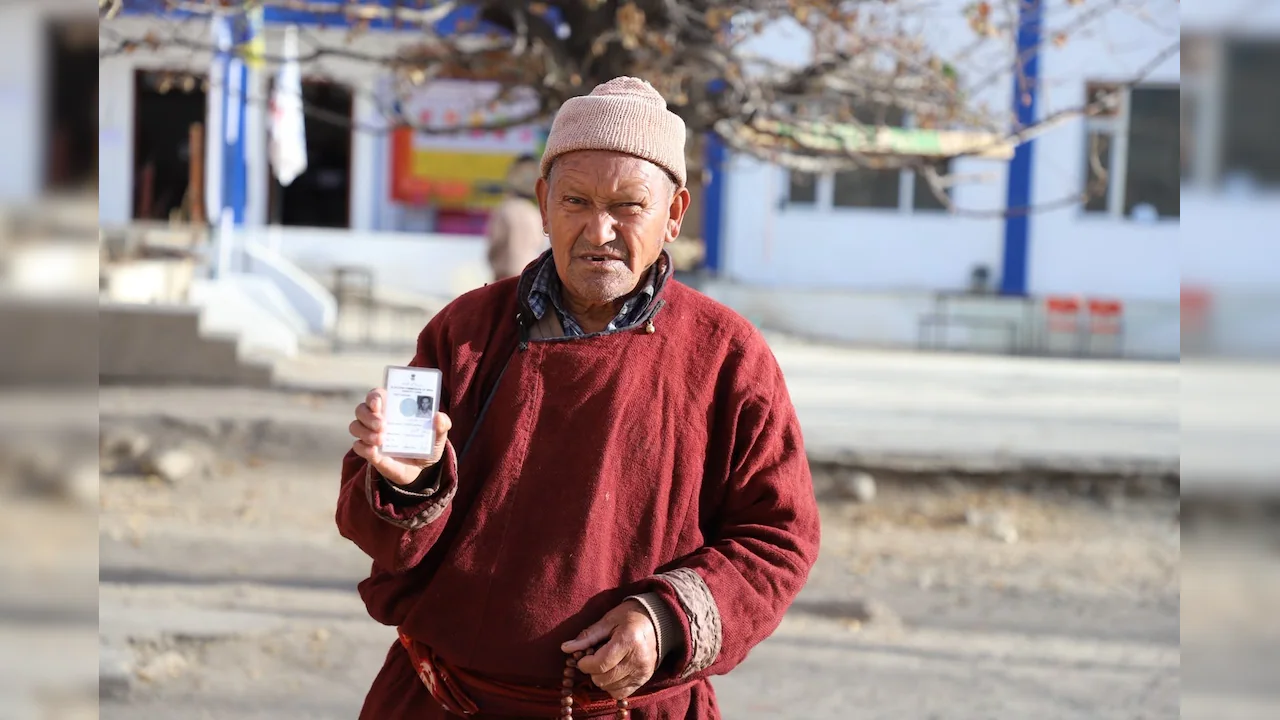
Their demands have remained central to political discussions in the Union Territory since its separation from the erstwhile state of Jammu and Kashmir in 2019.
The BJP has faced protests over the demands, particularly the call for inclusion under the Sixth Schedule, which provides constitutional protections for tribal areas in certain parts of the country.
The election exercise is therefore taking place at a time when political groups are pressing the Centre and the Ladakh administration for a clearer framework to protect the region’s interests.
Political groups question timing of winter elections
In Leh, political groups have strongly objected to the timing of the elections, raising concerns about holding polls during the winter season.
They have argued that freezing temperatures and seasonal migration could affect voter participation. Harsh weather conditions can make travel difficult in remote areas, while some residents may be away from their usual places of residence during the winter months.
The concerns have added another dimension to the election process, with questions being raised about whether the timing would allow all eligible voters to participate effectively.
Despite the objections, polling began as scheduled, with officials maintaining that the necessary arrangements had been made.
Panchayat process to conclude by November 30
According to an official notification, the panchayat election process in Ladakh will conclude by November 30.
The Union Territory is also preparing for another important electoral exercise shortly afterwards. On December 4, Ladakh will vote in the Hill Councils elections across all eight districts.
The Hill Councils play an important role in local administration and representation in the region. The upcoming polls are expected to draw attention amid continuing demands for greater autonomy and constitutional protection.
With panchayat and municipal voting underway, followed by the Hill Councils elections, Ladakh is entering a significant period of local democratic activity against the backdrop of its wider political demands.