







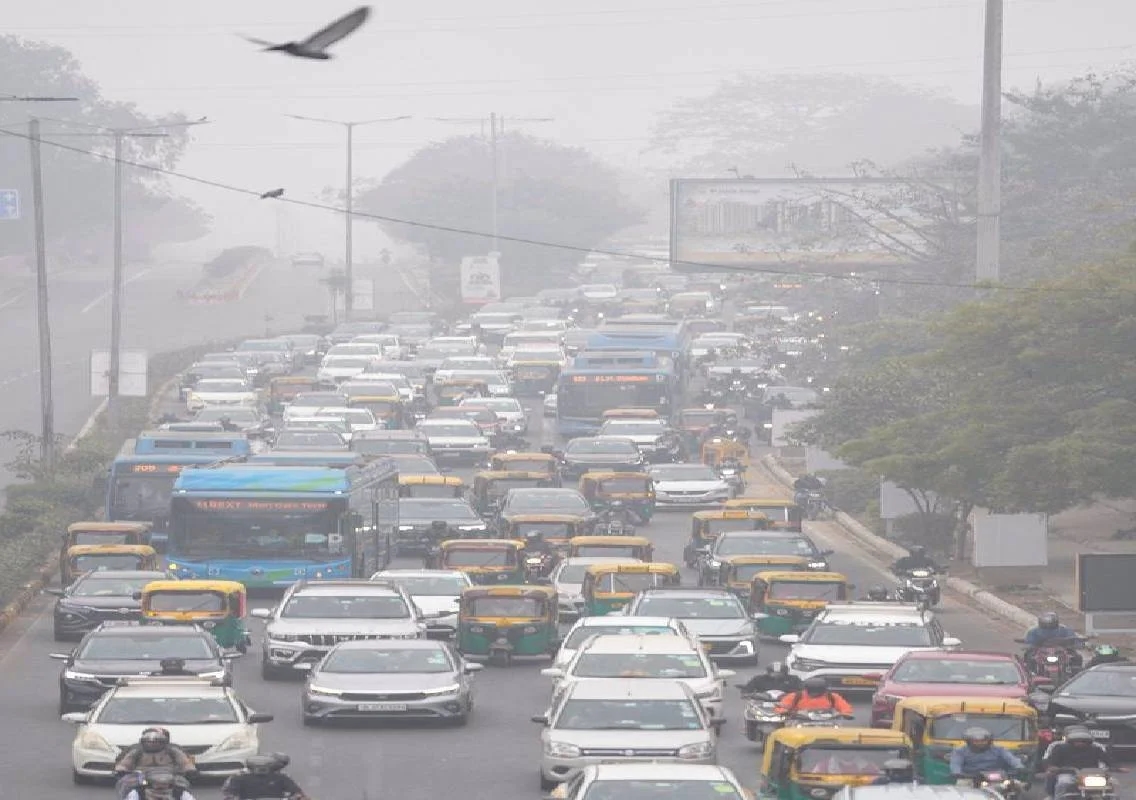


With an alarming mix of industrial emissions, vehicular exhaust, and construction dust, residents say daily life has become increasingly difficult, with even basic breathing turning into a challenge.
Toxic air reaches dangerous levels
According to IQAir, Loni recorded an average PM2.5 concentration of 112.5 in 2025 — nearly 22 times higher than the safe limit set by the World Health Organization.
PM2.5 refers to extremely fine particulate matter that can penetrate deep into the lungs and bloodstream. Prolonged exposure is linked to serious health issues, including asthma, heart disease, lung conditions, cancer, and even cognitive impairment in children.
Residents describe the air quality as persistently hazardous. Manoj Kumar, an e-rickshaw driver, said breathing itself feels like an effort, while others report wearing masks round the clock to cope with the pollution.
Health crisis on the rise
Medical professionals in Loni are witnessing a surge in respiratory illnesses, particularly among children.
Dr Anil Singh, a local practitioner, noted a sharp rise in early asthma cases over the past five years. He attributed the trend largely to environmental exposure, highlighting the long-term impact of polluted air on public health.
Families are also feeling the burden at home. Residents report constant dust accumulation, requiring frequent cleaning, while children suffer from allergies, coughs, and infections.
India dominates pollution rankings
The IQAir report reveals that India continues to feature prominently among the world’s most polluted cities. In 2025, three of the top five most polluted cities globally were in India.
Alongside Loni, cities like Byrnihat and Delhi ranked among the worst, with the capital once again topping the list of the world’s most polluted capitals.
Other cities in the top 10 include locations in China and Pakistan, reflecting a broader regional air quality crisis across South Asia.
Seasonal factors worsen pollution
Air quality in northern India, including Loni, deteriorates significantly during winter months due to a phenomenon known as temperature inversion. This traps pollutants close to the ground, preventing dispersion.
Additional factors such as crop residue burning, industrial emissions, vehicle pollution, and construction dust further aggravate the situation.
Events like dust storms also contribute to sudden spikes in pollution, making conditions even more hazardous, particularly for vulnerable groups like children and the elderly.
Efforts to tackle air pollution
India launched the National Clean Air Programme in 2019, aiming to reduce particulate matter levels by 40% by 2025-26. Measures include stricter regulations on coal-based plants, improved monitoring systems, and bans on biomass burning.
However, experts point out that enforcement challenges and lack of coordination have slowed progress.
Attempts such as cloud-seeding experiments in Delhi have also failed to deliver meaningful results, highlighting the complexity of tackling air pollution at scale.
Regional comparison and challenges
While India continues to grapple with pollution, neighbouring China has made measurable progress through sustained investment and strict enforcement, significantly reducing PM2.5 levels over the years.
Meanwhile, Pakistan ranked as the most polluted country globally in 2025, with several of its cities also featuring in the top 10 list.
Conclusion
For residents of Loni, the pollution crisis is not just a statistic but a daily reality affecting health and quality of life. Despite policy initiatives and awareness, tangible improvements remain limited.
As the city continues to battle toxic air, many residents feel that leaving may be the only escape, underscoring the urgent need for stronger, coordinated action to ensure cleaner air and a healthier future.