







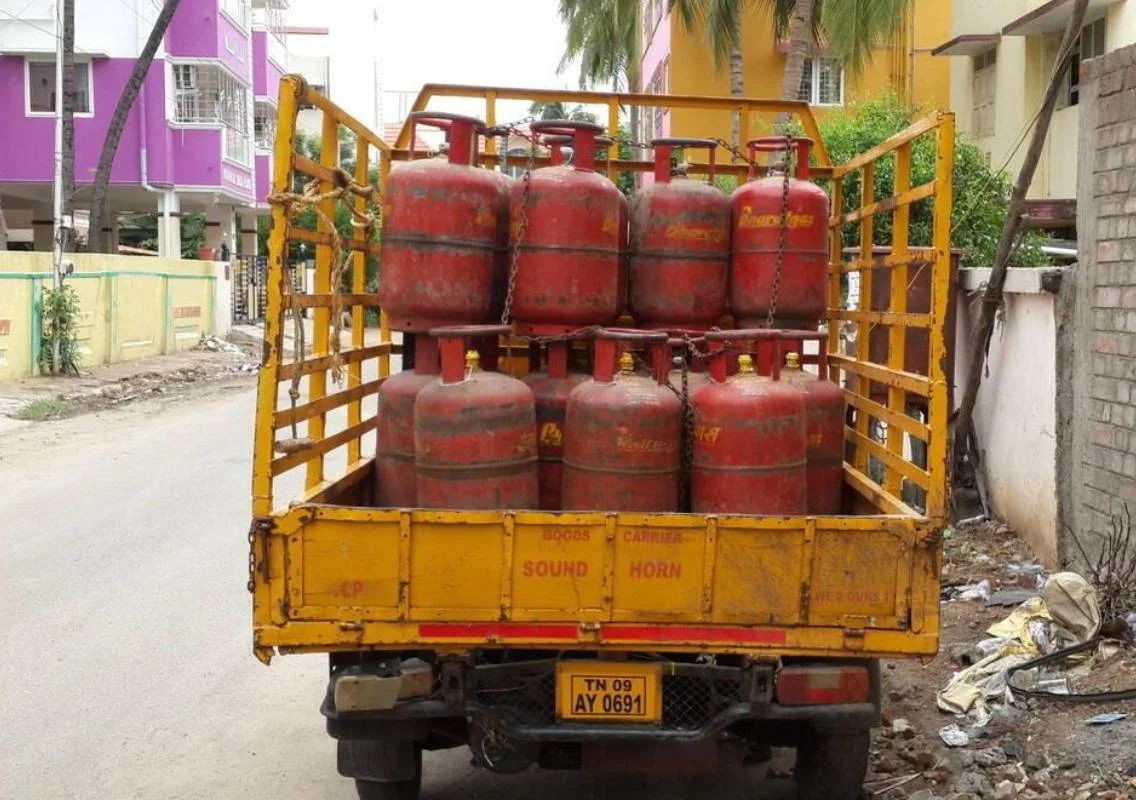


For many families, the crisis is no longer abstract. In Delhi’s Karol Bagh, a resident preparing for a traditional tehravi bhoj following a family bereavement found himself struggling to arrange enough cooking gas to feed nearly 400 guests. With LPG supplies tightening and delivery timelines stretching, he was forced to persuade his halwai to switch to coal for cooking, reserving limited LPG cylinders for essential use.
This situation reflects a wider trend across the country, where the ongoing geopolitical tensions have begun to affect everyday life.
The disruption is largely attributed to the impact of the Middle East war on global oil and gas logistics. A key factor is the bottleneck at the Strait of Hormuz, through which nearly 90% of India’s LPG imports pass.
With supply routes affected, delivery timelines have increased significantly. Households that previously received LPG cylinders within one or two days are now reporting delays of a week or more.
While the government has maintained that refill booking rules remain unchanged — allowing bookings after 25 days in urban areas and 45 days in rural regions — the ground reality suggests a widening gap between demand and supply.
Delhi-NCR sees longer waiting periods
In the national capital region, the impact has been particularly visible among lower and middle-income households and migrant communities.
Although around 23% to 31% of Delhi’s approximately 62 lakh households have access to Piped Natural Gas (PNG), a large population still depends on LPG cylinders. Residents in unauthorised colonies and villages, many without formal documentation, are especially vulnerable.
Reports indicate that delivery timelines have stretched to over a week in many cases. Some consumers have had to visit gas agencies multiple times to follow up on bookings, while others have reported discrepancies such as delivery confirmations without actual receipt of cylinders.
Black market prices have also surged sharply. A domestic LPG cylinder that typically costs around ₹914 is reportedly being sold for as much as ₹6,000 in some areas.
Mixed situation across states
The situation varies across different states, with some regions experiencing acute shortages while others report moderate delays.
Northern and eastern India
In Uttar Pradesh, delays range from four to over 15 days, forcing some households to turn to the black market. In extreme cases, prices have risen by ₹2,000 or more above the standard rate.
In Bihar and Jharkhand, the shortage has pushed several families back to traditional cooking methods using firewood and cow dung cakes. Delivery times have increased from three to eight days on average, with poorer households bearing the brunt of the crisis.
West Bengal has reported relatively smooth booking processes, but delivery delays of up to 10–12 days have become common. Black market activity continues to persist.
Southern India
In Karnataka, the situation is uneven. While Bengaluru residents report delays of over 25 days in some areas, rural regions have seen less disruption but experienced initial panic buying.
In coastal areas such as Mangaluru, delivery timelines have stretched to 30–45 days, prompting households and small businesses to revert to firewood stoves.
Tamil Nadu has also witnessed delays, with some areas reporting a complete absence of LPG delivery vehicles for over a month. Commercial users, including small eateries, have been particularly affected, with many temporarily shutting down or switching to alternative fuels.
Western India
Cities with wider PNG coverage, such as Ahmedabad, have been relatively unaffected due to lower dependence on LPG cylinders.
Mumbai has reported long queues at gas agencies, but supplies remain available. Residents say that although the process may take longer, cylinders are still being delivered.
Rajasthan and Punjab
These states have seen comparatively less panic, though delays of around 7–10 days and black market sales persist. Some regions, however, report only minor disruptions of one to two days.
Rising reliance on black market and traditional fuels
One of the most concerning aspects of the crisis is the growing reliance on black market LPG cylinders, particularly among urban households without formal connections.
At the same time, economically weaker sections are increasingly reverting to traditional cooking methods such as wood-fired stoves and coal. This shift not only reflects the severity of the shortage but also raises concerns about health and environmental impacts.
Impact on small businesses
The crisis has also affected commercial establishments. In the early phase of the disruption, fresh supplies of commercial LPG cylinders were halted, forcing many small eateries and dhabas to shut down temporarily.
Those unable to switch to alternative fuels have faced significant financial strain, further highlighting the broader economic impact of the shortage.
Conclusion
A month into the Middle East conflict, India is not facing a complete LPG crisis, but the strain on supply chains is evident. While booking systems remain functional, delayed deliveries, rising costs and uneven access are creating significant challenges for households across the country.
The burden is particularly heavy on low-income families, who are unable to afford black market prices and are forced to rely on traditional fuels. Meanwhile, cities with PNG infrastructure are coping better, underscoring the importance of diversified energy access.
As the global situation evolves, ensuring stable and equitable LPG distribution will remain critical to safeguarding daily life for millions of Indian households.