


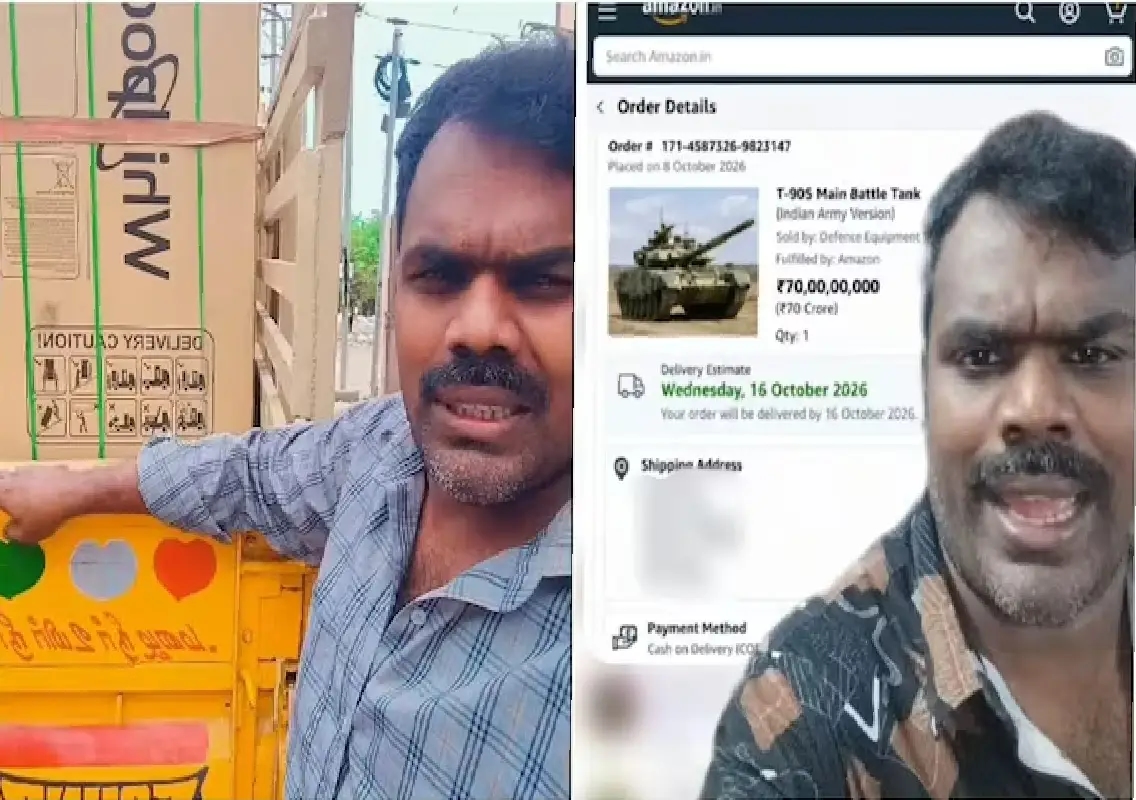


Madhurai: A social media influencer from Tamil Nadu’s Madurai has reportedly left his home after becoming the target of online harassment involving fake cash-on-delivery (COD) orders worth lakhs of rupees. Veeramani, who had shared his phone number and home address on social media in the hope of receiving Diwali sweets from followers, has appealed to people to stop sending unwanted deliveries.
What began as a festive request quickly turned into a distressing experience, with televisions, refrigerators, washing machines and other household appliances reportedly ordered in his name without his consent. One of the alleged orders was for a television worth Rs 1.69 lakh.
The repeated deliveries and calls left Veeramani struggling to manage the situation. In videos shared on Instagram, he pleaded with those responsible to stop placing fake orders, explaining that delivery workers were also being inconvenienced by the prank.
Diwali sweets request turns into online harassment
According to reports, Veeramani shared his contact details and residential address online ahead of Diwali, hoping that his followers would send him boxes of sweets as festive gifts.
However, instead of receiving the treats he had hoped for, he allegedly became the target of a series of prank orders placed using the cash-on-delivery payment option.
The unwanted orders reportedly included expensive electronic appliances and household goods, with their combined value running into lakhs of rupees. A television priced at Rs 1.69 lakh was among the items mentioned in reports about the incident.
Social media posts also circulated claims that a Rs 70-crore T-90 military tank, an ambulance and even a rocket had been ordered in his name. These claims were shared online as part of the wider episode, although the reports did not establish that such deliveries were genuine orders.
The use of COD made the situation particularly difficult because the recipient could be asked to pay for parcels he had never requested. Veeramani said the repeated deliveries and calls were causing him considerable distress.
Influencer appeals to people to stop fake orders
As the unwanted deliveries continued, Veeramani posted videos on Instagram asking those responsible to stop the harassment.
In one video, he expressed frustration over the number of orders arriving within a short period and highlighted the difficulties faced by delivery personnel who had travelled to his address.
“Why are you guys doing this? The delivery boys are coming from long distances. Stop doing this. Fifteen orders came in half an hour, and I don’t have money for all of that,” he said.
His appeal highlighted how the prank was affecting not only him but also delivery workers who had to transport the parcels and attempt to complete the transactions.
In another video, Veeramani questioned why he should face confrontations with delivery personnel over products he had never ordered.
“Why should I get scolded by them? They’re working and are unnecessarily involved. I don’t have money, I am only begging. Stop doing this,” he said.
His repeated appeals reflected the mounting pressure caused by the deliveries and the difficulty of stopping orders placed by unidentified individuals using his details.
Expensive appliances add to the trouble
The unwanted orders reportedly included televisions, refrigerators, washing machines and other household products. The high value of some of the items added to the anxiety surrounding the episode.
Under the COD model, customers generally pay when an item is delivered. When orders are placed fraudulently using another person’s name and address, recipients can find themselves dealing with repeated delivery attempts, calls from logistics personnel and pressure to accept or pay for parcels they never requested.
Veeramani’s experience also placed delivery workers in an uncomfortable position. They had to travel to the address and attempt delivery despite the recipient’s insistence that he had not placed the orders.
The influencer repeatedly urged those responsible to consider the consequences of their actions, pointing out that delivery personnel were simply doing their jobs.
The incident illustrates how personal information shared publicly can potentially be misused to cause distress, waste resources and disrupt the lives of both individuals and service workers.
Veeramani says he is leaving town
Despite his appeals, Veeramani said the harassment continued. In a subsequent Instagram video, he announced that he was leaving town because of the pressure and criticism he was facing following the expensive orders.
“I’m going out of town. So many people are after me after people ordered in lakhs. They are scolding me,” he said.
His statement suggested that the situation had escalated beyond unwanted deliveries, leaving him distressed by the reactions and confrontations surrounding the incident.
The episode has drawn attention to the potential consequences of online pranks when they involve personal details, expensive purchases and repeated deliveries.
While sharing contact information and an address to receive gifts may appear harmless, the incident highlights the risks of making such details publicly accessible, particularly when they can be used to place orders without the person’s knowledge.
Incident raises concerns over misuse of personal information
Veeramani’s experience serves as a reminder that online harassment can extend beyond abusive comments and messages. Misusing someone’s contact details to place fraudulent orders can create practical difficulties, financial anxiety and unnecessary work for delivery personnel.
The incident also highlights the need for responsible behaviour on social media, where seemingly harmless pranks can have consequences for people who become their targets.
Consumers who receive COD parcels they did not order should avoid paying for or accepting unauthorised purchases and contact the relevant delivery company to report the issue. Platforms and sellers can also play a role in addressing repeated fraudulent orders.
For Veeramani, a request for Diwali sweets from followers reportedly resulted in expensive unwanted orders and enough distress to prompt him to leave home temporarily.
His appeals have underscored the importance of respecting personal information and recognising that online actions can have real-world consequences for individuals and workers who have no involvement in the prank.