







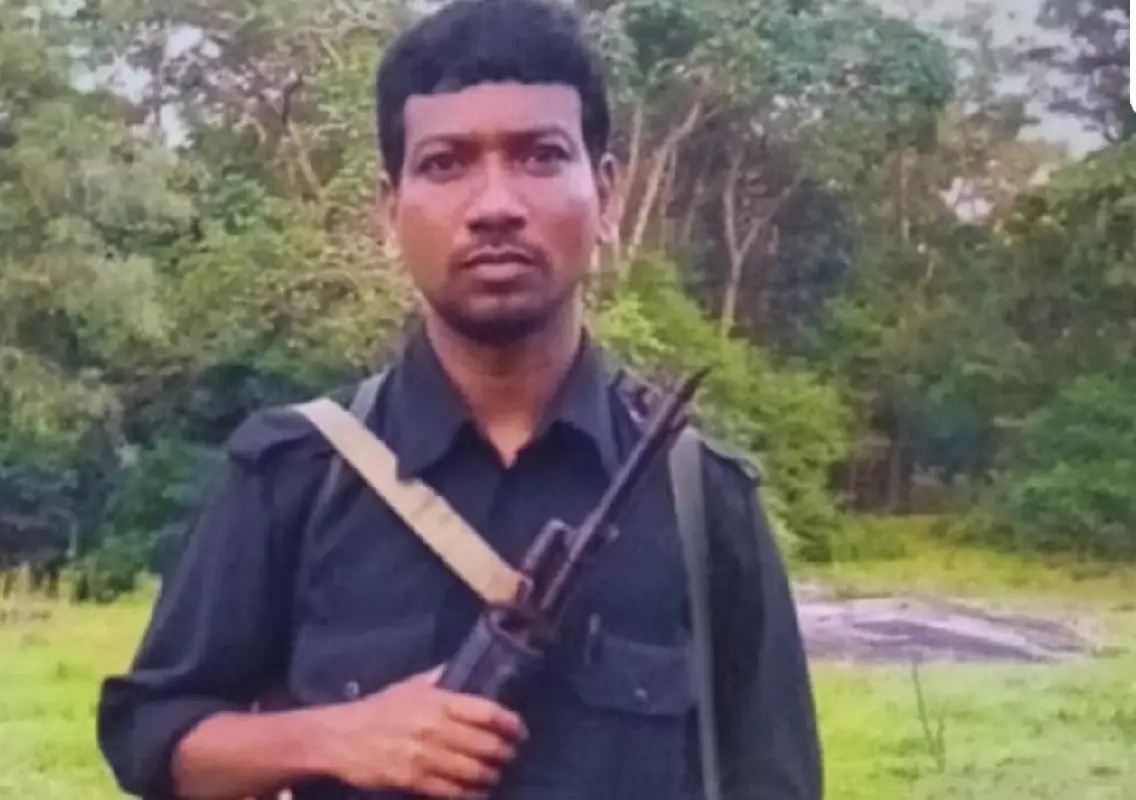


The neutralisation of Madvi Hidma, the youngest central committee (CC) member of the CPI (Maoist) and its most feared military strategist, has delivered a major breakthrough for India’s counter-Naxal operations. His killing, which occurred 12 days before the 30 November 2025 deadline set by Union home minister Amit Shah, is being described as one of the most significant successes in the decades-long campaign against left-wing extremism.
A key milestone in the march towards March 2026
Sources told TOI that Shah, after declaring that Naxalism will be wiped out by 31 March 2026, has been providing counter-insurgency forces with smaller milestones—such as clearing specific regions of Maoist influence or targeting key leaders through surrenders or intelligence-driven operations. Hidma was among the most high-value targets on this list.
Security officials say his elimination brings the government much closer to achieving its 2026 goal. The CPI (Maoist) central committee has now shrunk to seven members, including three politburo leaders—Thippiri Tirupathi alias Devji, Muppalla Laxman Rao alias Ganapathy and Misir Besra. Ganapathy, now in his seventies, has significantly reduced operational control, while Besra is restricted to a limited pocket in Jharkhand.
The remaining four active CC members are Ganesh Uikey, Anal Da, Malla Raji Reddy alias Sangram and Ramder. With Hidma gone, the organisational and operational capabilities of the Maoist movement have suffered a severe setback.
Hidma: From elusive commander to historic target
Hidma, a Bastar tribal who rose to command the dreaded Battalion No. 1 of the People’s Liberation Guerrilla Army (PLGA), had long evaded security forces despite years of pursuit. His elevation to the CPI (Maoist) central committee made him the youngest CC member—a rare rise for someone from Bastar.
Even as the forces closed in on him, political leaders attempted to secure his surrender. Chhattisgarh deputy chief minister Vijay Sharma met Hidma’s mother on 10 November, urging her to convince him to lay down arms. She complied, sending an emotional appeal to her son. Telangana Police later revealed that Hidma had dropped several hints indicating he was willing to surrender. A Bastar-based journalist even claimed to have received a letter from Hidma last week, stating he was considering surrender and wanted help in negotiating with the government.
However, despite these signals, security forces moved ahead with their intelligence-led operation. His death, according to officials, became inevitable in the course of the encounter.
Security forces hail “historic milestone”
Terming the operation a turning point, IG Bastar Range Sundarraj P told TOI that Hidma’s elimination is “a historic milestone in the fight against left-wing extremism.” He added that only a handful of senior leaders remain of concern—Devji, Sangram, Ganesh Uikey, Ramder, as well as commanders Barse Deva and Pappa Rao.
Security agencies estimate that no more than 100–150 armed and uniformed Maoist cadres are still active. Most are believed to be operating in pockets of Abujhmad, Gariyaband, the National Park region or the border zones connecting Chhattisgarh, Telangana, Andhra Pradesh and Odisha. Officials anticipate that Hidma’s death may trigger further surrenders. Those unwilling to surrender “shall be confronted,” Sundarraj said.
2025: A devastating year for Maoist leadership
This year has seen unprecedented losses for the CPI (Maoist). Several top leaders were either killed in encounters or surrendered due to sustained, high-intensity operations.
The most notable politburo member to be neutralised in 2025 was general secretary Nambala Keshav Rao, while senior leader Mallujola Venugopal Rao alias Sonu surrendered. A long list of CC leaders were eliminated, including Kadari Satyanarayan Reddy, Katta Ramchandra Reddy, Chalapati, Gajrala Ravi, Vivek Chandri Yadav and Thentu Laxmi. Others like Sujata, Chandranna and Rupesh surrendered earlier in the year.
With these losses and the removal of Hidma—a commander deeply feared for masterminding some of the deadliest attacks in Bastar—the Maoist structure appears significantly weakened.
Conclusion
Madvi Hidma’s death is being viewed as a major strategic blow to the CPI (Maoist), one that accelerates the government’s roadmap to eradicate left-wing extremism by March 2026. While pockets of resistance remain, the insurgency’s leadership is at its weakest in decades. Officials believe this moment could mark the beginning of the final phase in India’s war against Maoist violent