







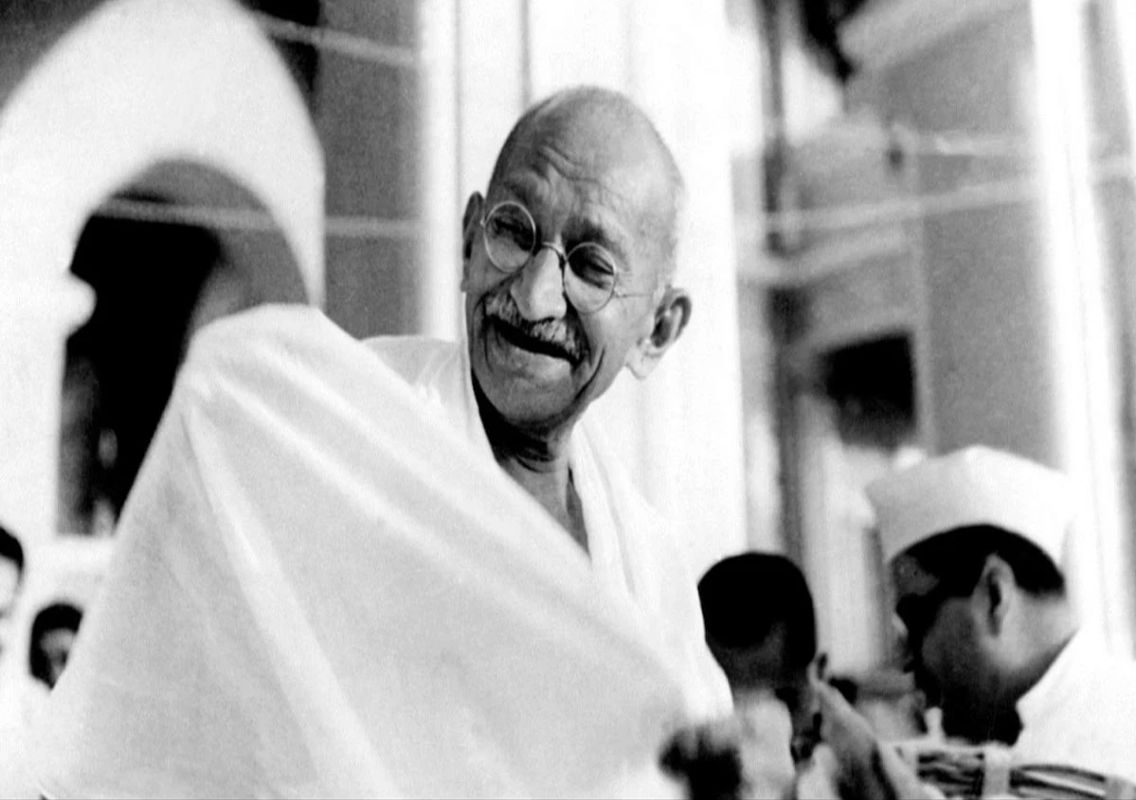


Mahatma Gandhi‘s three-year residence in London, from 1888 to 1891, marked a significant turning point in his life, influencing the principles that would later guide his leadership during India’s independence movement. At the tender age of 19, Gandhi ventured to London to study law at University College London, marking his first major departure from India and setting the stage for his future as a global leader.
Upon his arrival in London in September 1888, Gandhi faced considerable challenges in adapting to a drastically different culture, lifestyle, and diet. A strict vegetarian, he found it particularly difficult to navigate a culinary landscape dominated by meat. Instead of compromising his values, Gandhi actively sought vegetarian restaurants and became a member of the London Vegetarian Society. This involvement allowed him to connect with like-minded individuals and introduced him to influential thinkers, which would later reinforce his lifelong commitment to simplicity and ethical living.
During his time as a law student, Gandhi engaged in lectures on legal theory, studied Roman law, and participated in moot courts. Although he did not excel as a student, the experience broadened his understanding of justice and governance within the context of the British legal system. This knowledge would later prove invaluable in his quest for India’s independence.
Gandhi’s London experience also significantly enhanced his English language skills and familiarised him with Western customs, which would facilitate his political interactions in the future. However, the most profound aspect of his stay was the spiritual exploration he embarked upon. Raised in a devout Hindu family, he began to delve into other religious philosophies, including Christianity, Buddhism, and Theosophy.
His readings of the Bible and conversations with devout Christians greatly influenced his belief in the universality of truth that transcends religious boundaries. These ideas resonated deeply with him and contributed to the formation of his ethical beliefs.
By the time Gandhi departed London in June 1891, he had undergone a remarkable transformation. The fusion of Western philosophical ideas with his Hindu upbringing laid the groundwork for his core beliefs in truth, non-violence, and justice—principles that would define his philosophy of satyagraha.
Gandhi’s years in London were instrumental in shaping the ethical framework that guided him in leading India’s independence movement. This formative period of intellectual and spiritual development left an indelible mark on his life and would ultimately influence the world, establishing him as a symbol of peaceful resistance and moral integrity.
In conclusion, Gandhi’s London experience was not just about legal education; it was a comprehensive journey of self-discovery, ethical formation, and philosophical exploration, shaping the future of a nation.