







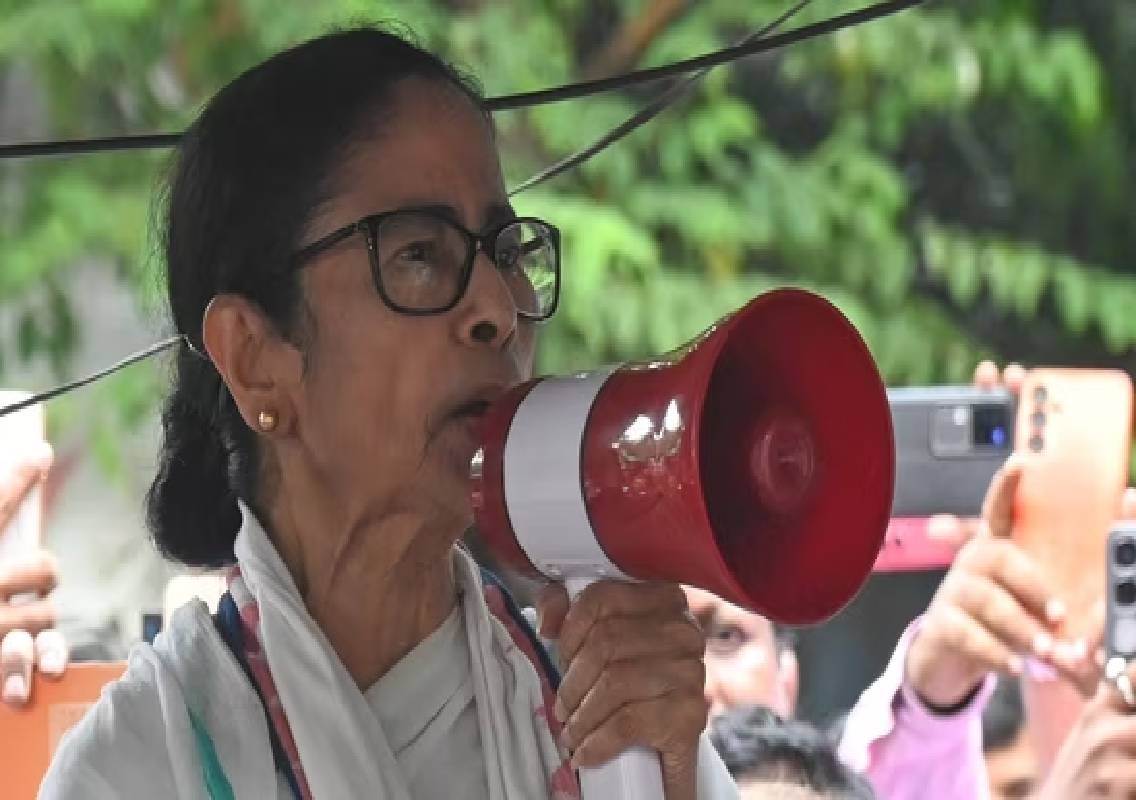


Kolkata: Trinamool Congress (TMC) founder and former West Bengal Chief Minister Mamata Banerjee has intensified efforts to prevent further defections within the party as it grapples with the first major split in its 28-year history. Facing an unprecedented internal rebellion after the party’s defeat in the recent Assembly elections, Banerjee has personally reached out to legislators and convened a crucial meeting at her Kalighat residence in Kolkata in an attempt to restore unity.
The outreach comes at a critical time for the TMC, which has witnessed a growing revolt among its elected representatives. Party insiders say Banerjee has spent the past few days contacting several MLAs individually, particularly from districts such as Howrah, Murshidabad and North Dinajpur, urging them to attend the meeting and engage in discussions aimed at resolving differences.
Leadership challenge deepens crisis
The current turmoil escalated after a rebel faction led by expelled legislator Ritabrata Banerjee claimed control of the TMC legislature party. According to the rebel camp, 58 out of the party’s 80 MLAs supported Ritabrata Banerjee’s appointment as Leader of the Opposition, a move reportedly accepted by Assembly Speaker Rathindra Bose.
The controversy was triggered by allegations that signatures of several legislators were forged on a letter supporting Mamata Banerjee’s preferred candidate for the Leader of Opposition post. The claims have added a new dimension to the political crisis and have become the subject of an ongoing investigation.
A senior TMC leader indicated that Banerjee’s current strategy focuses on maintaining dialogue with dissatisfied legislators and exploring possibilities for reconciliation before divisions become irreversible.
Political observers believe attendance at the Kalighat meeting could serve as an important indicator of Banerjee’s continuing influence over party legislators.
Concerns extend beyond the Assembly
The crisis facing the TMC is not limited to its legislative wing. More than 100 municipal councillors have reportedly resigned from the party in recent weeks. Several senior leaders have also stepped down, including former transport minister Snehasish Chakraborty.
The leadership is particularly concerned that the rebellion could spread to Parliament, where the TMC currently holds 28 seats in the Lok Sabha and 13 seats in the Rajya Sabha.
Party sources suggest that trusted parliamentarians have been assigned the task of contacting MPs and discouraging them from joining what rebel leaders describe as a “new Trinamool” movement.
The concerns gained further traction after veteran Rajya Sabha MP Sukhendu Sekhar Roy publicly suggested that a similar revolt could emerge within the party’s parliamentary ranks. He warned that the organisation risked further fragmentation if the internal crisis remained unresolved.
However, rebel leader Ritabrata Banerjee has denied actively engaging with MPs regarding defections, maintaining that his focus remains on organisational reforms within the party.
Loyalists rally behind Mamata Banerjee
Despite the growing rebellion, several senior TMC leaders have publicly expressed support for Mamata Banerjee. Party veterans argue that the organisation’s identity remains closely linked to its founder and that many leaders owe their political careers to her leadership.
Senior MPs have dismissed claims that the rebellion represents a broader rejection of Banerjee’s leadership. Instead, they have portrayed the crisis as an attempt by a section of leaders to reshape the party’s future direction following its electoral setback.
Supporters also point out that Banerjee has successfully navigated political challenges in the past, including periods of intense opposition and organisational pressure.
Abhishek Banerjee’s role under scrutiny
One of the most significant aspects of the ongoing revolt is the rebels’ insistence that their disagreement is not with Mamata Banerjee herself. Instead, many dissidents have raised concerns about the growing influence of her nephew, Abhishek Banerjee, within the party structure.
Several rebel MLAs have publicly stated that they want Mamata Banerjee to remain the undisputed leader of the party while seeking changes in its organisational functioning.
This distinction has complicated the situation for the TMC leadership. While rebels continue to express respect for Mamata Banerjee, their criticism of Abhishek Banerjee reflects deeper concerns regarding succession, internal democracy and decision-making processes within the party.
Political analysts believe this internal power struggle may shape the future direction of the organisation in the years ahead.
Electoral setback intensifies pressure
The crisis comes just one month after the TMC lost power in West Bengal to the BJP. The BJP secured 207 seats in the 294-member Assembly, while the TMC was reduced to 80 seats.
Although the BJP’s seat tally was significantly higher, the vote share difference was comparatively narrower. The BJP secured 45.84 per cent of the vote, while the TMC received 40.8 per cent.
The electoral defeat has intensified internal debates regarding leadership, strategy and organisational structure. Many within the party believe the loss exposed underlying tensions that have now surfaced in the form of an open rebellion.
Conclusion
For Mamata Banerjee, the immediate challenge extends beyond electoral politics. Having founded the TMC in 1998 and led it for nearly three decades, she now faces the difficult task of preserving party unity amid one of the most serious crises in its history. As legislators, councillors and senior leaders weigh their future political options, the outcome of her outreach efforts could determine whether the TMC remains a cohesive political force or faces further fragmentation in the months ahead.