









It began with an unexpected phone call. One morning, a filmmaker I had long known as both a colleague and a friend rang me with the familiar tone of someone holding back a surprise. After a brief exchange, he asked, “Would you like to write a biography?”
I responded instinctively: “Whose?”
“An IPS officer. Prashant Kumar,” he said.
I paused. “Prashant Kumar, you mean…?”
Clarifying instantly, he added, “He is in the UP Police. That big moustache.”
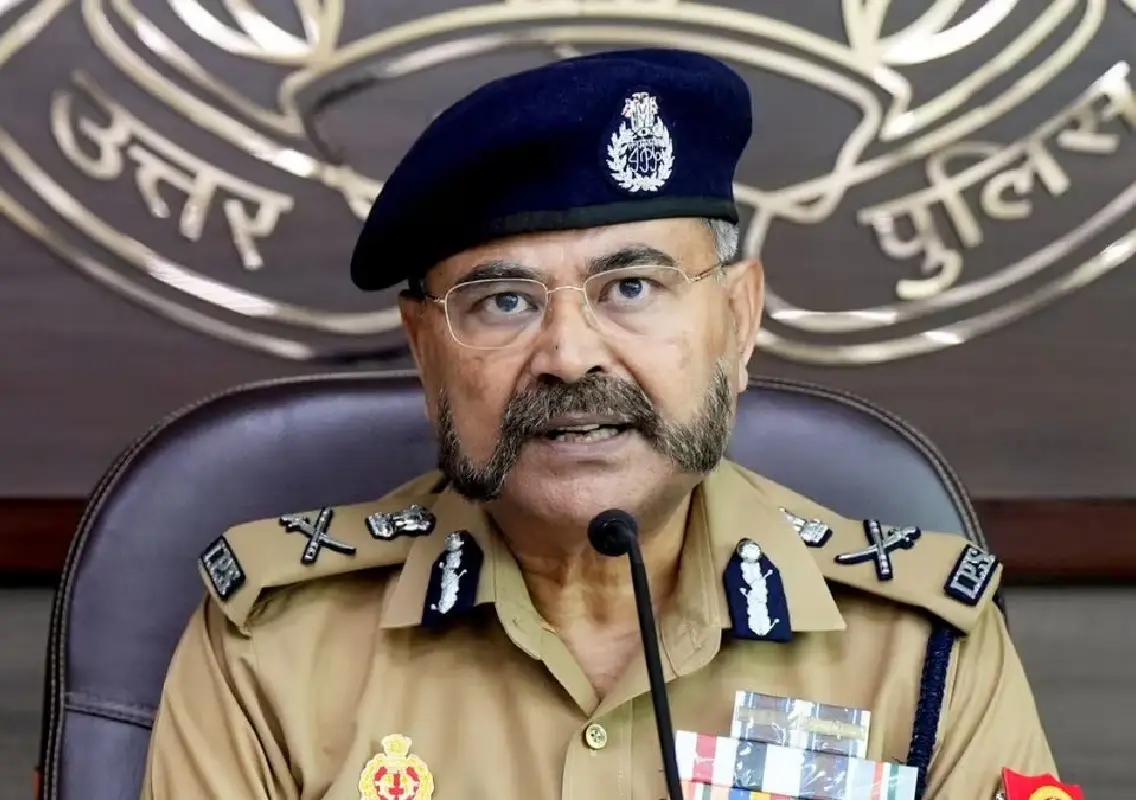
And immediately the image formed. Of course I knew him — or at least the version of him that lived on television screens. Whenever a major encounter took place in Uttar Pradesh, the cameras would inevitably turn towards him: Prashant Kumar, the formidable IPS officer whose sharp eyes and firm voice conveyed absolute authority. His on-screen presence alone seemed enough to unsettle those who believed themselves above the law. He carried an aura that suggested he belonged firmly on the frontlines, confronting the criminals who had long shaped UP’s underworld.
Television persona vs the man in the room
So when the offer came to write his biography, the answer was immediate. Yes. But nothing prepared me for the man behind the familiar face.
It was mid-October when I arrived at his office for our first meeting. I had expected the uniform, the badges, the unmistakable imagery of power. Instead, he walked in wearing steel-grey trousers and a crisp white half-sleeved bush shirt. No pomp, no theatrics. The stern figure who dominated news debates now greeted me with a warm, almost disarming smile.
“How are you, sir?” he said with surprising politeness, extending his hand for a firm, gentle handshake.
For a moment, I was thrown off. In years of meeting top police officers as a crime reporter, I had never seen someone of his stature greet a journalist with such genuine warmth. I waited for him to take his seat first out of habit, but he gestured with old-world courtesy and said, “Pehle aap.” You first.
That was the moment I understood that whatever I thought I knew about him, the real story was going to be very different — and far more layered.
A man who refuses grandeur
In Uttar Pradesh, symbols of power matter. Senior officers live in sprawling official residences, complete with staff quarters, lush gardens and courts for badminton and tennis. The Director General of Police house in Lucknow is one such emblem of authority, spread across seven acres and envied by many.
Yet, Prashant Kumar does not live there.
He chose instead to build his own home, on land he bought with his own money. “A man should build his own house, not live in something borrowed,” his father had told him years earlier. When I asked why he didn’t shift to the grand DGP residence like nearly every officer before him, he replied dismissively:
“Aadat bigad jaati hai.”
It spoils you.
Few senior officials turn down comfort; fewer do so without making it a statement. For him, it was simply a matter of principle.
The message that revealed the man
One afternoon, while I was typing at my computer, a WhatsApp message from Prashant Kumar appeared on my screen. It contained an African proverb:
“Until the lion learns to write, every story will glorify the hunter.”
I told him it was intriguing but asked what he meant by sending it. True to his nature, he did not waste words. He explained that he wondered why I had agreed to write his story at all when the media rarely showed interest in understanding a police officer’s perspective deeply.
The remark lingered with me. It revealed more about him than any formal interview could. After decades at the forefront of law enforcement, he had watched narratives about policing being shaped — sometimes fairly, sometimes inaccurately, and often without the voices of those who risked their lives every day.
This wasn’t a man seeking praise. It was someone seeking balance in the telling of the truth.
A story full of contradictions — and revelations
As I spent more time with him, I realised that the man behind the moustache was a tapestry of contrasts: fierce yet courteous, authoritative yet humble, deeply private yet sharply aware of public perception. The image of the lionhearted officer remained true, but so did the quiet restraint and surprising gentleness.
Writing his biography would not simply be the recounting of a police officer’s exploits. It would mean navigating the life of a man shaped by discipline, humility, risk, and an unwavering belief in justice — told finally, perhaps for the first time, in the lion’s own voice.