







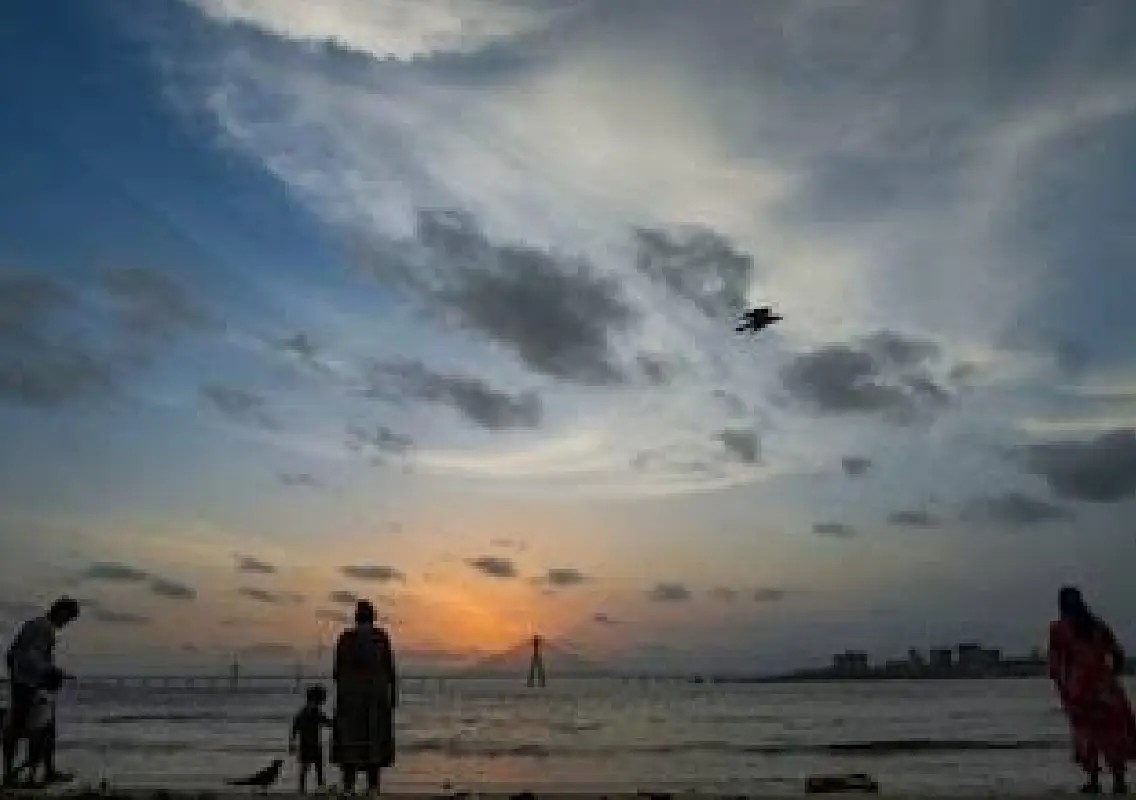


Millions of people living in Kolkata and Mumbai could face the loss of their homes as rising sea levels increase the risk of permanent inundation, according to a new United Nations report.
The danger is already here
The UN Secretary-General’s report on sea level rise warned that rising seas are no longer a distant climate threat. Global sea levels are increasing rapidly, putting coastal communities, infrastructure and livelihoods under growing pressure.
The report said more than 14 million people in low-lying South Asian deltas, including Kolkata and Mumbai in India and Dhaka in Bangladesh, are at “immediate risk” of losing their homes to permanent inundation.
While wealthy coastal cities face enormous financial risks, the UN stressed that the most serious consequence in parts of South Asia could be human displacement.
Water and health could suffer too
The impact could extend well beyond homes. Rising seas are already threatening roads, transport networks, energy systems, buildings, water supplies and groundwater resources.
As saltwater moves further inland, freshwater wells and soils can become increasingly saline. This could affect drinking water, farming and irrigation, while contaminated water may also increase the risk of water-borne diseases.
The report also warned of rising health risks, injuries and deaths, along with greater mental health stress among affected communities.
The sea is rising faster
Global sea levels rose by an average 4.7 mm a year between 2014 and 2023. In 2024, the increase reached 5.9 mm, a record driven mainly by exceptional ocean warming.
The UN said nearly 770 million people worldwide live in coastal areas less than five metres above the high-tide line, leaving them particularly exposed.
Early action could protect communities
The report called for long-term adaptation planning, stronger scientific data, better institutions and predictable financing. It stressed that vulnerable communities need support before rising seas cause irreversible displacement and permanent loss of land.