


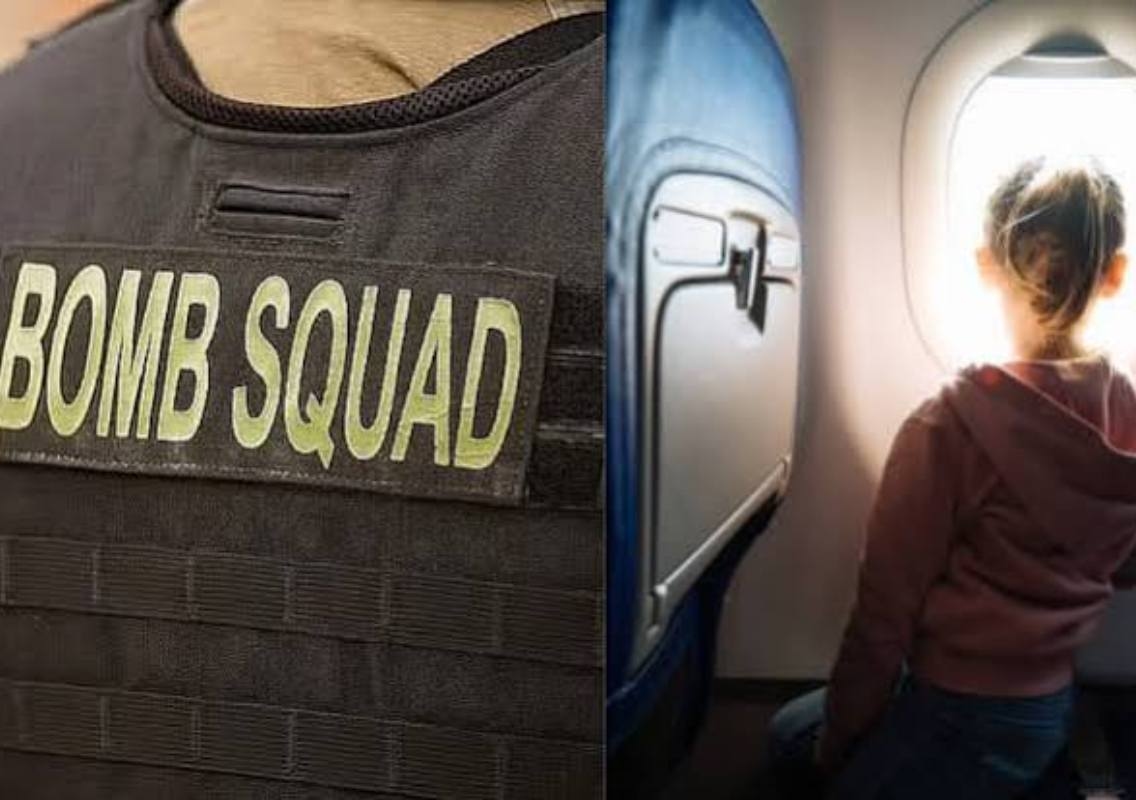


Hyderabad: A bomb threat allegedly made as a prank by a 12-year-old girl aboard a flight from Ahmedabad to Hyderabad triggered a security alert at Rajiv Gandhi International Airport (RGIA) on Saturday. A subsequent inspection of the aircraft found nothing suspicious, and officials later determined that the threat was a prank.
The Class 7 student was travelling back to Hyderabad with other students and teachers after a school trip when she reportedly told a fellow student that there was a bomb on the flight. A cabin crew member overheard the remark and alerted the pilot, prompting the security response, according to a police official.
The incident led to the aircraft being thoroughly checked after it landed in Hyderabad. Officials said no suspicious object was found during the inspection.
As the girl is a minor, no case was registered in connection with the incident. Her teachers counselled her about the seriousness of making such statements, the police official said.
How the bomb threat triggered a security alert
The incident occurred on Saturday as the flight was travelling from Ahmedabad to Hyderabad with a group of school students and their teachers.
During the journey, the 12-year-old girl allegedly told another student that there was a bomb on board. The remark was reportedly heard by a cabin crew member, who informed the pilot.
Any reported bomb threat aboard an aircraft is treated as a security concern, even when the statement is made casually or appears to be a joke. Flight crews are required to alert the appropriate authorities so that the necessary precautions can be taken.
In this case, the information was passed on to the pilot, and the relevant security procedures were followed after the aircraft arrived at RGIA.
The incident was subsequently found to have been a prank, according to officials. No further details about the conversation between the students or the circumstances in which the remark was made were provided.
Aircraft inspected after landing in Hyderabad
Following standard security protocols, the aircraft underwent a thorough inspection after landing at Rajiv Gandhi International Airport.
Security personnel checked the aircraft for any suspicious object or material that could pose a threat to passengers and crew members. The inspection did not reveal anything suspicious, the police official said.
The checks were carried out as a precaution after the crew reported the alleged threat. Such procedures are intended to establish whether a reported threat has any basis and to ensure that passengers can disembark safely.
Officials later said the incident had turned out to be a prank. The available information did not indicate that any explosive device or other suspicious item had been found.
The incident highlights how even an unverified remark can trigger a security response when it concerns aviation safety.
No case registered as the student is a minor
Police said no case was registered against the girl because she was 12 years old.
Instead, the student was counselled by her teachers about the implications of making a bomb threat, even as a joke.
The police official said the girl had made the remark without understanding its seriousness and had no intention of issuing an actual threat.
The incident was therefore handled through counselling rather than the registration of a case, according to the official account.
The response also reflects the importance of distinguishing between a deliberate threat and a remark made by a child without fully understanding its possible consequences. However, statements about explosives or threats to aircraft must still be taken seriously until security personnel have established that there is no danger.
Why bomb threat reports are taken seriously
Air travel operates under strict security procedures because a potential threat can affect passengers, crew members, airport operations and aircraft safety.
A statement about a bomb cannot simply be dismissed as a joke at the time it is made. Crew members must report such remarks so that the appropriate authorities can assess the situation and determine what action is necessary.
The inspection in Hyderabad was part of that precautionary response. Once the aircraft had been checked and no suspicious object was found, officials concluded that the reported threat was a prank.
The incident also underscores the need for students to understand that jokes involving bombs or other threats can have serious consequences. Even when no harmful intent is involved, such statements can prompt emergency procedures and require security personnel to investigate.
School trip ends with an unexpected security incident
The students were returning to Hyderabad with their teachers after a school trip when the incident occurred.
The girl’s remark to a fellow student brought the journey under scrutiny after a cabin crew member heard it and informed the pilot. The aircraft was then subjected to the required checks following its arrival in Hyderabad.
The available information does not specify the school involved, the airline operating the flight or whether the incident caused any wider disruption at the airport.
Officials have said the aircraft inspection found nothing suspicious and that no case was registered against the student. Her teachers counselled her after the incident.
A reminder about responsible behaviour during air travel
The incident serves as a reminder that comments about bombs or threats aboard an aircraft are not treated as ordinary jokes.
Aviation security teams must respond to such reports until they can establish that passengers and crew are not at risk. That process can require aircraft inspections and coordination between flight crews, airport personnel and security authorities.
In this case, the threat was found to be a prank, and officials said the student did not intend to cause harm. The response was limited to the security checks and counselling described by the authorities.
The episode nevertheless highlights the importance of educating children about the seriousness of statements involving public safety, particularly in settings such as aircraft where precautionary procedures are essential.