







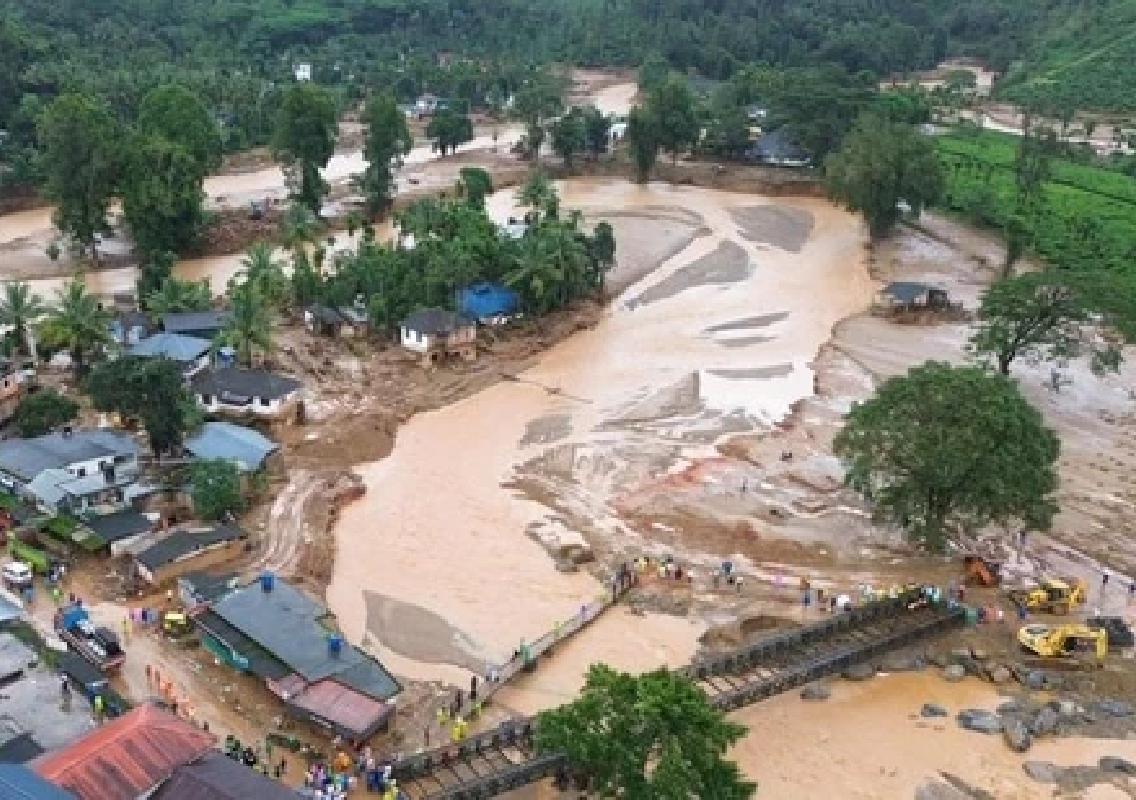


A small beacon of hope has emerged from the tragic landslides that struck Wayanad in Kerala on Tuesday. The natural disaster, which devastated the region, led to the miraculous survival of a 40-day-old baby and her six-year-old brother amidst the chaos. According to Onmanorama, the siblings, Anara and Muhammed Hayan, narrowly escaped death while losing six family members to the floods.
On the fateful day, the torrential rain that fell between July 29 and 30, measuring a staggering 572 mm within just 24 hours, triggered the catastrophic landslides. The floodwaters surged relentlessly, resulting in widespread destruction. In the midst of this devastation, their mother, Tanzeera, exhibited extraordinary courage. To protect her infant daughter Anara, she clung to the terrace of a neighbouring house. Despite her desperate efforts, Tanzeera was eventually swept away, but not before she managed to grasp onto Anara’s arm, which was injured during the ordeal.
As the floodwaters overwhelmed Tanzeera, her six-year-old son Hayan was carried away. He was found 100 meters from their location, hanging precariously on a wire near a well by rescue workers. His dramatic rescue was a testament to the intense efforts of the emergency teams working in the area.
Tanzeera’s relief at being reunited with her children was tempered by the heart-wrenching loss of her own mother, Amina, and grandmother, Pathumma. The tragedy has left the family in profound grief, and the emotional toll is immeasurable.
The landslides have been described as one of the most severe natural disasters to hit Kerala since the devastating floods of 2018, which claimed over 500 lives. The current calamity has resulted in the loss of up to 308 lives, with rescue operations still ongoing. The impact on the state has been catastrophic, with entire communities displaced and vital infrastructure destroyed.
Climate scientists have pointed to several contributing factors behind the severity of the landslides. The warming of the Arabian Sea, combined with environmentally damaging activities such as mining and a significant loss of green cover, has rendered the region increasingly vulnerable to such extreme weather events. The interplay of these factors has exacerbated the impact of the heavy rainfall, leading to the disastrous landslides.
In response to the crisis, a coordinated effort involving the Indian Armed Forces, the National Disaster Response Force (NDRF), the State Disaster Response Force (SDRF), and the Coast Guard has been mobilised. These teams are working tirelessly to clear debris, repair damaged infrastructure, and conduct rescue operations. Their efforts are crucial in managing the immediate aftermath and aiding in the recovery process.
The Indian government has also stepped in to support the affected families. Prime Minister Narendra Modi has announced a compensation of ₹2 lakhs for the families of those who have lost their lives in the landslides. In addition to financial aid, the state has established a Mental Health Disaster Management Team to offer psychosocial support to survivors, addressing the mental health impacts of such traumatic events.
This latest disaster underscores the urgent need for improved disaster management strategies and a greater focus on environmental conservation. As Kerala grapples with the aftermath, the resilience and solidarity of its people, along with the concerted efforts of rescue and relief teams, will play a vital role in recovery and rebuilding.
The Wayanad landslides serve as a stark reminder of the escalating climate crisis and its tangible effects on vulnerable communities. The focus now turns to ensuring that effective measures are put in place to prevent such tragedies in the future and to support those affected in their time of need.