







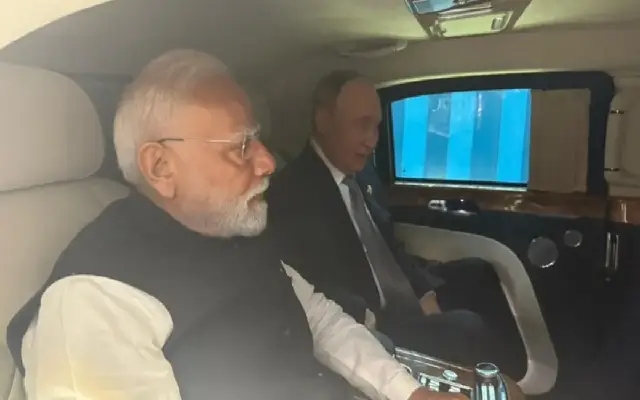


Tianjin, China – Prime Minister Narendra Modi and Russian President Vladimir Putin chose an unusual setting for their one-on-one discussion on the sidelines of the Shanghai Cooperation Organisation (SCO) Summit – the Russian President’s Aurus limousine.
Sources revealed that President Putin waited nearly 10 minutes for PM Modi before the two embarked on their journey to the venue of their bilateral meeting. The leaders engaged in a private discussion during the drive and continued their conversation for nearly 50 minutes inside the car, even after arriving at the hotel.
According to Russian broadcaster VestiFM, Kremlin spokesperson Dmitry Peskov confirmed that the dialogue was a “tête-à-tête” lasting about an hour, underscoring the importance of confidentiality.
Key issues discussed
While details of the conversation remain undisclosed, diplomatic sources suggest that global strategic concerns and the Ukraine conflict were primary topics. PM Modi emphasised that “it is the call of humanity to end the Ukraine conflict at the earliest” and stressed the need for lasting peace in the region.
Additionally, PM Modi extended a warm invitation to President Putin for his upcoming visit to India. The Russian leader is scheduled to travel to India in December for summit-level discussions.
Symbolic message of camaraderie
Sharing the limousine was more than a matter of convenience; it symbolised the close strategic partnership between India and Russia. Analysts in Moscow noted that the extended private meeting indicated discussions on sensitive issues “not meant for other ears”.
PM Modi later shared a photo of the ride on social media, describing his conversation with Putin as “insightful and productive”.
Growing global attention
The unusual diplomatic gesture has drawn international attention, particularly as global leaders closely monitor India’s stance on the Russia-Ukraine conflict. Both nations are expected to follow up on Monday’s discussions during Putin’s December visit to New Delhi, which will likely include trade, defence cooperation, and energy security agreements.