







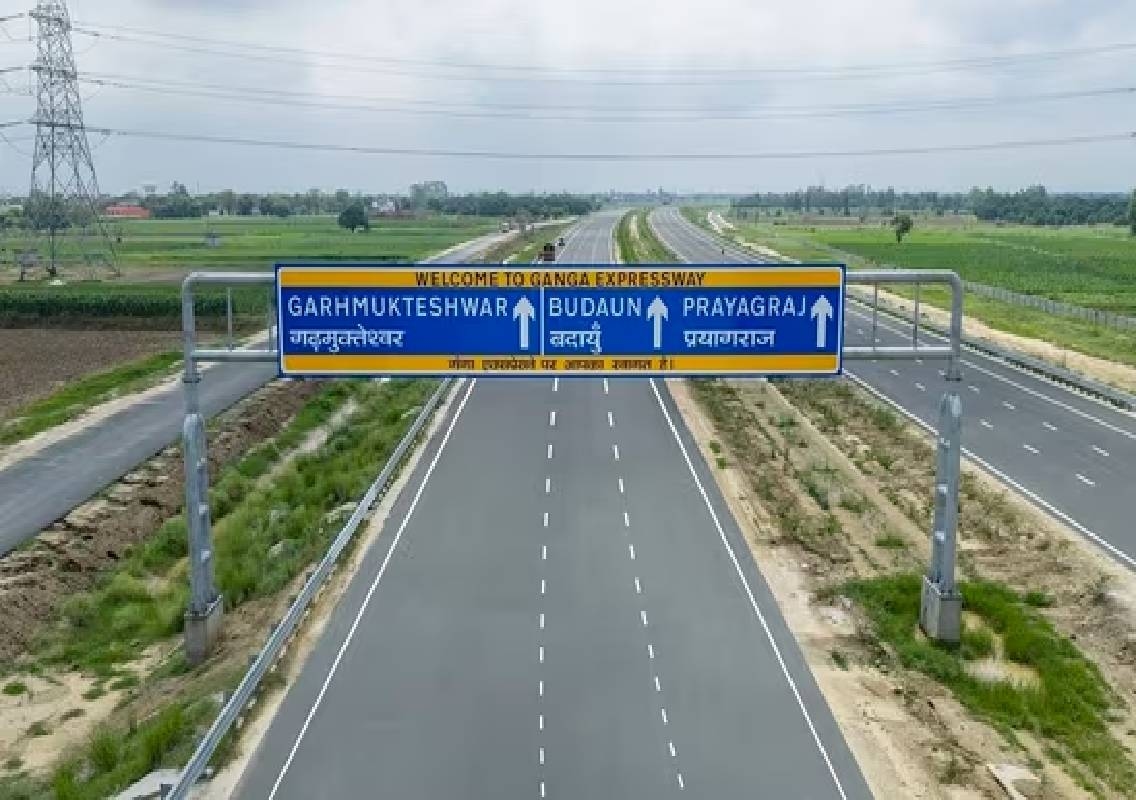


Hardoi: Prime Minister Narendra Modi on Wednesday inaugurated the 594-km-long Ganga Expressway, one of India’s longest high-speed corridors, connecting Meerut to Prayagraj and significantly boosting connectivity across Uttar Pradesh.
Major boost to connectivity and travel efficiency
The expressway, developed as a six-lane corridor with provision for expansion to eight lanes, is designed for speeds of up to 120 kmph. Officials said it will drastically reduce travel time between western and eastern parts of the state, ensuring faster and safer movement of passengers and goods.
The project connects 12 districts, including Hapur, Bulandshahr, Amroha, Sambhal, Badaun, Shahjahanpur, Hardoi, Unnao, Rae Bareli and Pratapgarh, strengthening economic linkages across regions.
Equipped with advanced infrastructure
A key highlight of the expressway is a 3.2-km-long airstrip near Shahjahanpur, designed for emergency landings by the Indian Air Force. The corridor is also equipped with modern infrastructure, including an Intelligent Traffic Management System (ITMS), CCTV surveillance, emergency call boxes, ambulances, and regular patrolling units.
These features aim to enhance road safety and ensure efficient traffic management along the route.
Economic and industrial impact
The expressway is expected to act as a catalyst for economic growth by facilitating faster logistics and attracting investment. Integrated industrial and logistics clusters are planned along the route, including warehouses, cold storage units, and food processing facilities.
Officials believe the project will benefit farmers, entrepreneurs, and businesses by improving market access and reducing transportation costs.
Leadership highlights development push
Uttar Pradesh Chief Minister Yogi Adityanath described the expressway as a “lifeline” for the state, stating that it would accelerate development and bridge regional disparities.
Union Minister Pankaj Chaudhary also termed the project a landmark initiative, highlighting its role in modernising the state’s road infrastructure.
During his visit, Prime Minister Modi inaugurated the expressway, visited an exhibition organised by the Uttar Pradesh Expressways Industrial Development Authority (UPEIDA), planted saplings, and addressed a public gathering.
Part of a larger expressway network
The Ganga Expressway will be integrated with other major corridors, including the Purvanchal Expressway, Agra-Lucknow Expressway, Bundelkhand Expressway, and Gorakhpur Link Expressway.
This interconnected network is expected to transform road connectivity across Uttar Pradesh and support the state’s ambition of becoming a trillion-dollar economy.
Conclusion
The inauguration of the Ganga Expressway marks a significant milestone in India’s infrastructure development. By improving connectivity, boosting logistics efficiency, and enabling industrial growth, the project is set to play a crucial role in driving economic progress in Uttar Pradesh and beyond.