







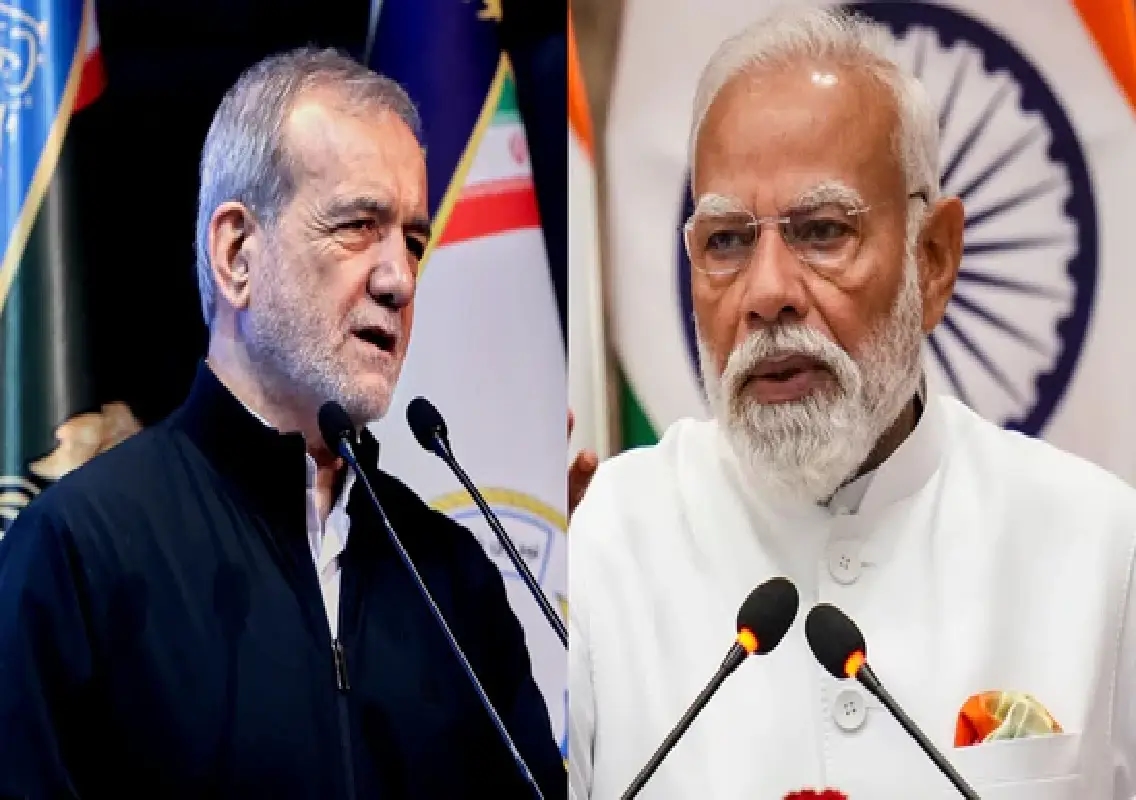


New Delhi: Prime Minister Narendra Modi on Saturday held a telephonic conversation with Masoud Pezeshkian, discussing the evolving situation in West Asia while extending greetings on the occasions of Eid and Nowruz.
Greetings and message of peace
During the call, the Prime Minister conveyed festive greetings and expressed hope that the season would bring peace, stability, and prosperity to the region. The conversation comes at a time when tensions in West Asia have escalated significantly due to ongoing conflict and attacks on critical infrastructure.
This marks the second interaction between the two leaders since the conflict began on February 28, reflecting continued diplomatic engagement between India and Iran.
India condemns attacks on infrastructure
In his remarks, Modi strongly condemned recent attacks targeting key infrastructure in the region. He noted that such incidents pose a serious threat to regional stability and disrupt global supply chains.
The Prime Minister emphasised that safeguarding infrastructure is essential not only for the countries directly involved but also for maintaining global economic balance.
Focus on maritime security
A major point of discussion was the importance of ensuring freedom of navigation, especially in critical maritime routes. Modi reiterated that shipping lanes must remain open and secure to facilitate uninterrupted global trade.
The concern comes amid disruptions in the Strait of Hormuz, a vital route for global oil and gas shipments. Recent tensions have led to delays and uncertainty for several vessels passing through the region.
Indian vessels and energy transit concerns
Reports indicate that more than 20 Indian vessels are currently stranded in the Persian Gulf region due to the volatile situation. Despite the challenges, two Indian-flagged LPG carriers—Shivalik and Nanda Devi—recently managed to transit the Strait, carrying over 92,000 metric tonnes of LPG.
External Affairs Minister S. Jaishankar has stated that there is no blanket agreement with Iran for the passage of Indian ships, and each transit requires individual coordination.
He added that ongoing diplomatic discussions with Iranian authorities are helping facilitate safe movement through the crucial waterway.
Continued diplomatic engagement
India has maintained active communication with countries in the Gulf region amid the crisis. Jaishankar has also held multiple discussions with his Iranian counterpart to address concerns related to regional stability and the safety of Indian nationals.
The Indian government has consistently highlighted the need to protect civilian lives, secure infrastructure, and ensure uninterrupted movement of goods and energy supplies.
Broader regional implications
The conversation between the two leaders comes against the backdrop of escalating conflict that has impacted global energy markets, trade routes, and geopolitical stability.
Disruptions in West Asia have far-reaching consequences, particularly for countries like India that rely heavily on energy imports and maritime trade through the region.
Conclusion
The latest interaction between Narendra Modi and Masoud Pezeshkian underscores India’s diplomatic efforts to navigate a complex and volatile situation in West Asia. With growing concerns over security, trade, and energy supply, continued dialogue remains crucial to maintaining stability and safeguarding global interests.