







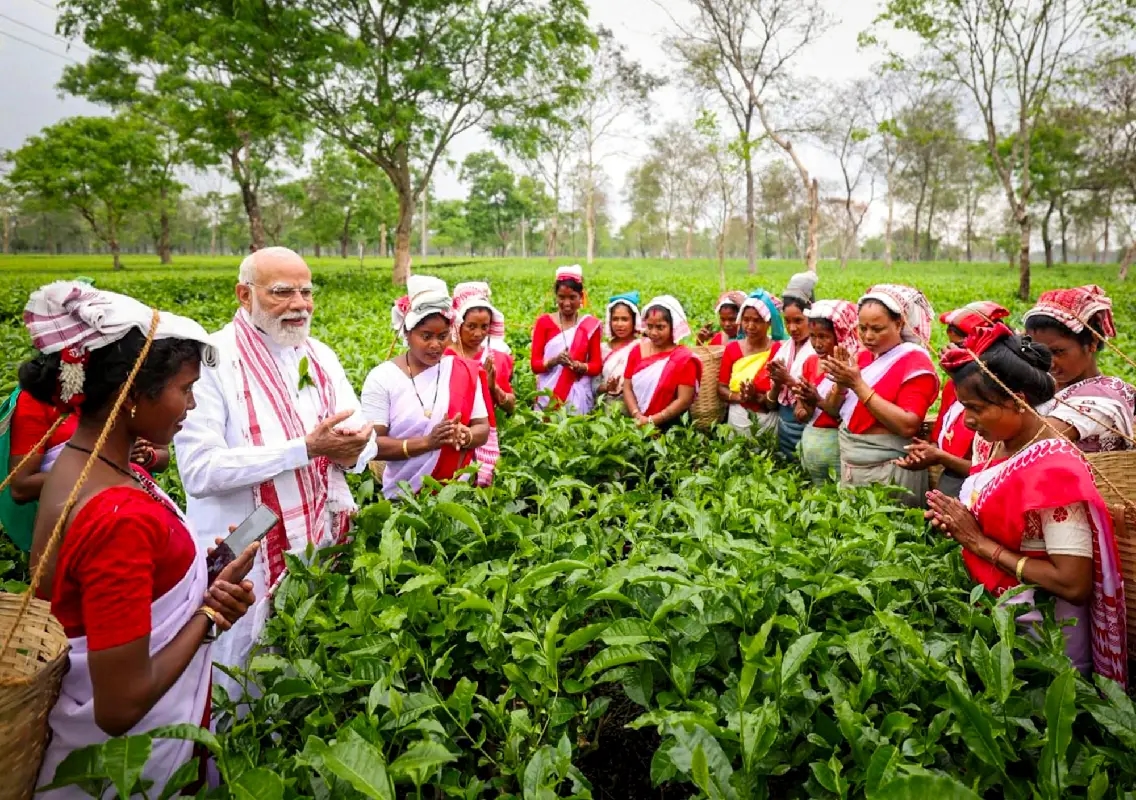


Dibrugarh: Narendra Modi visited a tea garden in Assam’s Dibrugarh district on Wednesday, interacting with women workers and highlighting the importance of the tea industry in the poll-bound state.
During his visit to the Manohari Tea Estate, the Prime Minister spent time with workers, discussing their daily lives, challenges, and aspirations. The visit is part of his campaign tour ahead of the Assam Assembly elections scheduled for April 9.
Interaction with tea workers
Modi engaged with a group of women workers dressed in traditional white sarees with red borders, a cultural symbol of Assam. He was seen plucking tea leaves alongside them and placing them into traditional baskets.
The Prime Minister also took photographs and shared moments from the visit on social media, describing the experience as memorable.
“We are very proud of the efforts of each and every tea garden family. Their hard work and perseverance have enhanced Assam’s pride,” he said in a post.
Focus on welfare and livelihoods
Spending nearly half an hour at the estate, Modi listened to concerns raised by the workers, including issues related to wages, healthcare, and education.
He emphasised the government’s efforts to improve the lives of tea garden workers through welfare schemes, land rights, and social security measures.
“Tea is the soul of Assam,” he said, underscoring the cultural and economic significance of the industry.
Campaign push ahead of elections
The visit comes as part of Modi’s day-long campaign in Assam, where he is scheduled to address two rallies in support of BJP candidates.
At a rally earlier, the Prime Minister highlighted the state’s transformation under the current government, pointing to peace agreements and development initiatives.
He also urged party workers to focus on grassroots engagement, voter awareness, and showcasing governance achievements.
Key political messaging
Modi stressed the importance of protecting Assam’s identity and raised concerns about illegal infiltration, calling it an issue linked to security, culture, and justice.
He appealed to party workers to work at the booth level and ensure that government schemes reach every eligible beneficiary.
The Prime Minister also highlighted initiatives aimed at empowering tea garden communities, describing them as a step towards dignity and long-term economic stability for lakhs of families.
Importance of Assam’s tea industry
Assam remains one of the world’s largest tea-producing regions, with over 1,000 tea estates contributing more than half of India’s total tea output.
The sector plays a crucial role in the state’s economy and provides livelihoods to a significant portion of the population, especially in districts like Dibrugarh and across the Brahmaputra Valley.
Conclusion
Modi’s visit to the tea garden reflects both a symbolic and strategic outreach to a key workforce ahead of elections. By engaging directly with workers and addressing their concerns, the Prime Minister aimed to reinforce the government’s focus on grassroots development and welfare in Assam.