







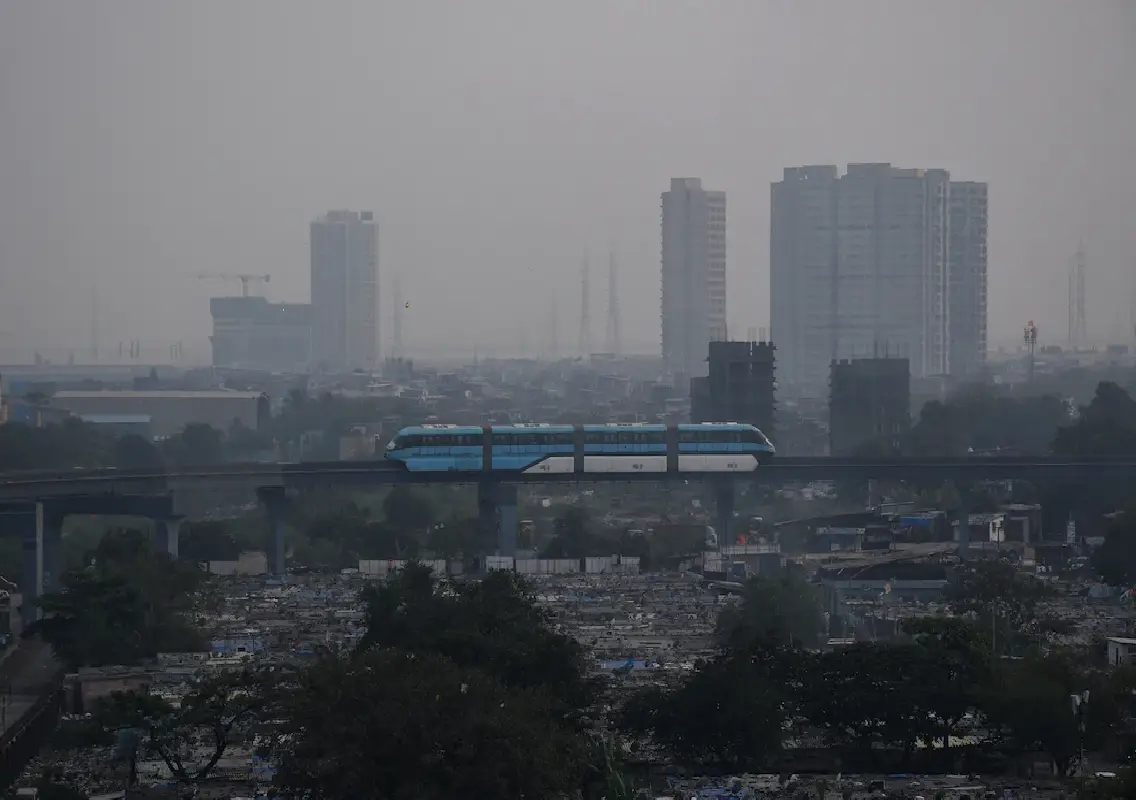


MUMBAI: Mumbai’s air quality has shown a significant improvement since November 26, with the Brihanmumbai Municipal Corporation (BMC) attributing the positive shift to a combination of intensified pollution-control measures and favourable weather conditions. At the same time, the civic body has issued show-cause notices to 482 construction sites across the city and suburbs for allegedly violating pollution-mitigation norms, of which 264 have received stop-work orders. According to BMC officials, the action forms part of an ongoing crackdown on dust-emitting activities that have contributed to frequent spikes in the city’s Air Quality Index (AQI) this season.
BMC issues notices, denies GRAP-4 applicability
Civic officials clarified that Graded Response Action Plan Stage-4 (GRAP-4) — the most stringent stage of pollution-control measures used in Delhi-NCR — is not applicable to Mumbai at present. However, the municipal commissioner and BMC administrator Bhushan Gagrani has instructed teams to intensify surveillance and enforcement across private, government and non-government project sites. The BMC’s 28-point dust and pollution-mitigation guidelines mandate measures such as barricading of sites, regular water sprinkling, and the use of anti-smog guns. Violations of these rules attracted immediate action, officials said.
Wind speed rise aids drop in pollution levels
According to the civic body, meteorological conditions have also contributed to cleaner air. Before November 28, the wind speed in the city hovered between 3–4 kmph, coupled with high humidity, resulting in poor dispersion of pollutants. Over the past 48 hours, wind speed has increased to 10–18 kmph, improving pollutant dispersal significantly. The BMC reported that alongside enforcement measures, improved ventilation conditions have helped lower AQI readings across multiple monitoring stations.
Multiple mitigation steps enforced across city
The civic body highlighted that measures such as misting, water sprinkling, mechanised road washing, awareness campaigns, and the transition of bakeries and crematoria to cleaner fuels have supported efforts to curb pollution. These steps, combined with enforcement at construction sites, have played a critical role in improving air quality. The BMC noted that the city has seen heightened vigilance this winter, especially after a phase earlier in the month when AQI touched “poor” and “very poor” categories at several locations.
94 flying squads monitoring violations
To ensure compliance, the BMC has deployed 94 ward-level flying squads. These teams are conducting surprise inspections at construction sites, roadwork zones and metro-rail project stretches. According to the civic body, the squads have been actively issuing stop-work notices wherever serious violations are found. They are also examining sensor-based air-quality monitoring devices installed at major construction sites to ensure real-time compliance with pollution norms. Officials added that stricter penalties may follow if repeat violations are identified.
AQI categories and Mumbai’s current situation
AQI, or Air Quality Index, is a standardised measure used by pollution-monitoring agencies to indicate pollution levels. The six AQI categories are: good (0–50), satisfactory (51–100), moderately polluted (101–200), poor (201–300), very poor (301–400) and severe (401–500). While some pockets of Mumbai recently slipped into the “poor” category, improved weather and enforcement have helped the city return to more tolerable levels.
Conclusion
The BMC maintains that city-wide enforcement, stricter action against violators and improved wind conditions have collectively contributed to the improvement in Mumbai’s air quality. With ongoing construction activity remaining a major source of dust emissions, officials assert that vigilance will continue in the coming weeks. The civic body also reiterated that GRAP-4 restrictions are not in force in Mumbai, but proactive measures will remain crucial as the city heads further into the winter season.