







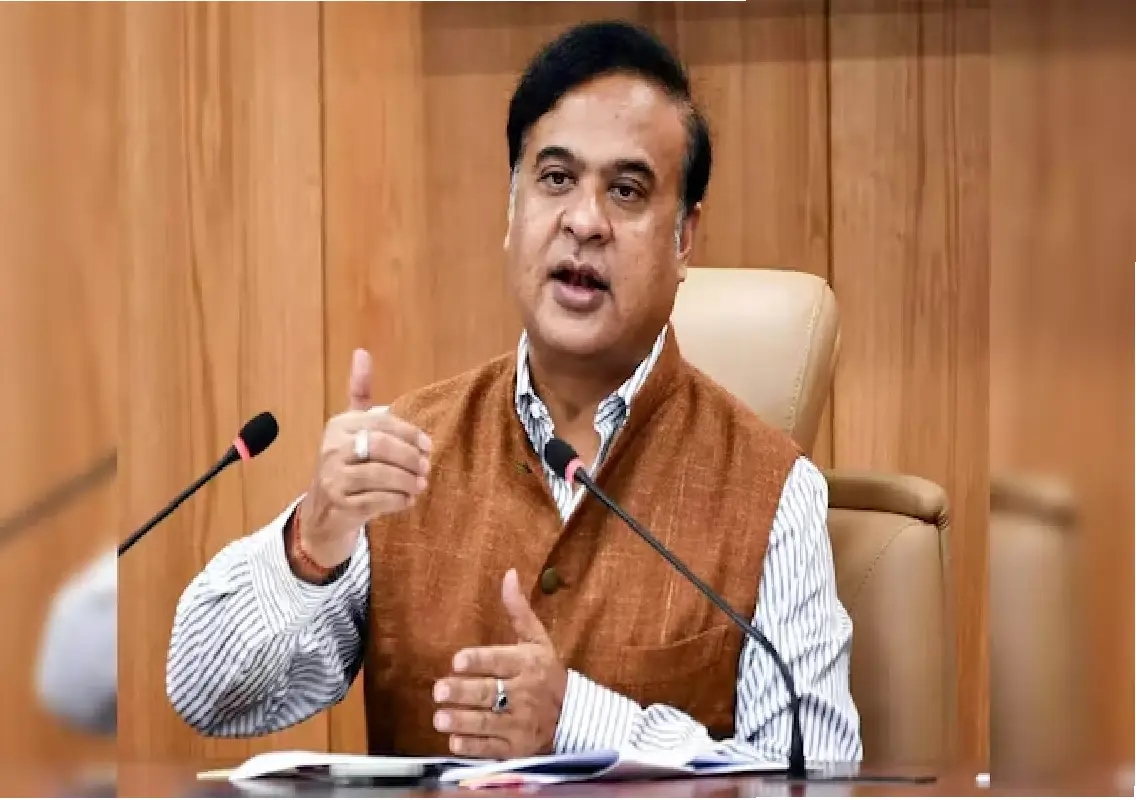


Patna: The Mukhyamantri Mahila Rojgar Yojana, under which Rs 10,000 was deposited as the first instalment into the bank accounts of 1.5 crore women in Bihar during the election period, is being widely regarded within the NDA as one of the key reasons behind the alliance’s sweeping victory. Senior leaders in the NDA say much of the credit goes to Assam Chief Minister Himanta Biswa Sarma, whose team helped shape the scheme’s core design months before the polls.
Assam’s role in shaping Bihar’s landmark scheme
According to Sarma, the Bihar government approached him nearly five months ago seeking guidance on a model that could financially empower women before the Assembly elections. Sarma told The Indian Express that he sent a group of Assam bureaucrats to Patna, where they made a presentation before then Chief Secretary Amrit Lal Meena and Development Commissioner Pratyaya Amrit.
The presentation drew from Assam’s ‘Jeevika Rs 10,000 model’, which was later woven into what became the Mukhyamantri Mahila Rojgar Yojana. Sarma said the initiative aligned closely with Prime Minister Narendra Modi’s vision of empowering “3 crore lakhpati didis” across the country.
JD(U) leaders, while acknowledging Sarma’s contribution, maintain that the final scheme was developed through “collective ideation” involving both political leaders and senior officials.
Inspiration from previous welfare initiatives
Sarma also stated that Madhya Pradesh’s popular Ladli Behna scheme was itself inspired by Assam’s Arunoday initiative. The Ladli Behna Yojana, introduced ahead of the Madhya Pradesh Assembly polls in 2023, provided Rs 1,000 per month to eligible women and played a crucial role in the BJP’s return to power.
A BJP leader who attended the Assam team’s presentation in Patna said the core recommendation was that Rs 10,000 should be provided as a non-refundable seed amount to women, enabling them to develop business ideas. Bihar officials later expanded the scheme, deciding that an additional amount of up to Rs 2 lakh could be provided to each eligible woman—provided neither she nor her husband was a taxpayer—based on the viability of the proposed business.
Political backdrop and competition over women voters
A JD(U) leader said the NDA began exploring a robust women-centric model soon after RJD leader Tejashwi Yadav announced the proposed ‘Maa Bahin Maan Yojana’, under which every woman in Bihar would receive Rs 2,500 per month if the Mahagathbandhan came to power. Since women have been a key support base for Chief Minister Nitish Kumar, NDA strategists were reportedly concerned that the RJD’s proposal could shift the electoral momentum.
Nitish was also under pressure to deliver on an earlier promise made during the Mahagathbandhan government in 2023. After the release of the Bihar caste survey, he had committed that one member from each of the 94,000 extremely poor families earning less than Rs 6,000 per month would receive Rs 2 lakh annually. Opposition parties repeatedly questioned him over the unfulfilled assurance.
Within this competitive political environment, the NDA accelerated work on the new women-focused scheme, drawing from Assam’s State Rural Livelihoods Mission—an initiative similar to Bihar’s Jeevika network. Assam’s model includes community cadres and self-help group structures similar to the Jeevika Sakhis in Bihar.
NDA says scheme is collective effort; Opposition raises concerns
JD(U) chief spokesperson Neeraj Kumar said the “das-hazari’’ plan emerged through a collaborative process within the party and government machinery. He pointed out that Bihar already had comparable schemes, including the Satat Jeevikoparjan Yojana, which provides Rs 10,000 to individuals moving away from toddy tapping, along with additional support up to Rs 2 lakh. The new model, he said, universalises this approach across a larger population.
BJP leaders, however, argued that the Modi government deserves major credit for the scheme’s implementation, given that the Jeevika network operates under the National Rural Livelihoods Mission (NRLM). BJP spokesperson Kumkum Bhardwaj said NRLM and Jan Dhan accounts created the foundation for financial inclusion, describing the present phase as a “renaissance of women-led economic growth under PM Modi”.
Opposition questions timing and political intent
Opposition groups have raised concerns over the timing of the scheme’s rollout. Around 1.21 crore women received Rs 10,000 before the model code of conduct came into effect, while another 30 lakh received it after election dates were announced.
Jan Suraaj founder Prashant Kishor alleged that government officials and Jeevika workers were deployed to influence voters. He claimed beneficiaries were told that the promised Rs 2 lakh loan would only materialise if the NDA returned to power. According to him, around 60,000–62,000 women per Assembly seat received the first instalment, making the scheme a crucial tool in shaping voter sentiment.
Conclusion
The Mukhyamantri Mahila Rojgar Yojana has now emerged as a central talking point in Bihar’s post-poll political landscape. While the NDA maintains that the scheme represents a thoughtful, collaborative policy intervention inspired by successful models across states, Opposition leaders argue that its timing and execution raise ethical questions. With the NDA attributing part of its electoral success to the initiative, the scheme is likely to remain at the centre of debates on governance, welfare, and political strategy in the months ahead.