







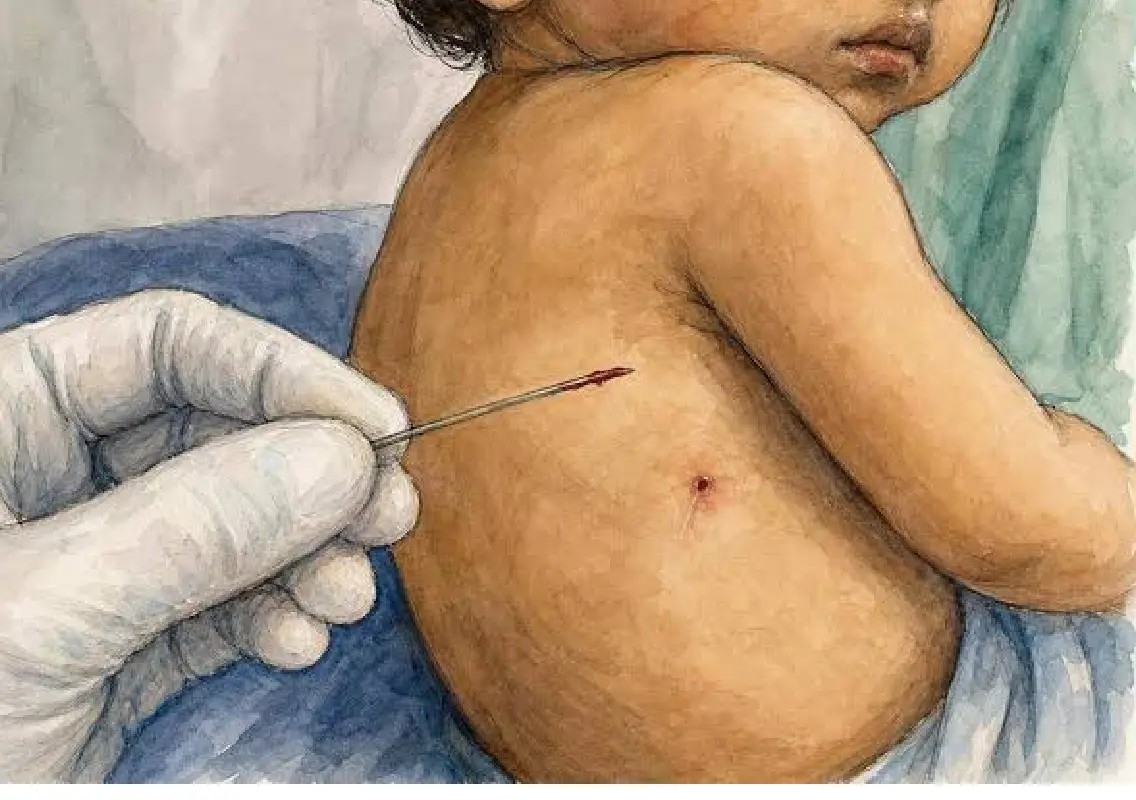


Kochi : The parents of a one-year-old girl in Kerala have alleged medical negligence after a needle was discovered lodged near the child’s ribs, raising questions about how the object came to be inside her body.
According to the report, the parents suspect that the needle may have been left behind during an earlier medical procedure. The discovery has caused concern for the family and prompted demands for an explanation regarding the circumstances surrounding the foreign object.
The case highlights the importance of medical safety protocols, proper instrument management and timely investigation when an unexpected foreign object is discovered inside a patient’s body.
Needle discovered inside infant’s body
The child’s parents reportedly became aware of the problem after medical examinations revealed the presence of a needle near her ribs.
The discovery was unexpected and caused considerable distress to the family, particularly because of the child’s young age.
The parents have alleged that the needle could have been left inside the infant during a previous treatment or procedure.
However, the precise circumstances in which the needle entered the child’s body have yet to be established.
A detailed medical investigation would be necessary to determine whether the object was connected to an earlier procedure and, if so, how it came to remain inside the child.
Parents raise medical negligence concerns
The parents have questioned whether appropriate precautions were followed during the child’s earlier medical care.
Medical negligence allegations can be established only after examining the relevant medical records, treatment history, clinical findings and the circumstances surrounding a procedure.
The discovery of a foreign object by itself does not establish negligence.
An independent inquiry and expert assessment would be required to determine how the needle came to be lodged near the infant’s ribs and whether established medical protocols were followed.
Child’s safety remains the priority
The presence of a foreign object inside the body of a one-year-old raises obvious concerns about potential injury and complications.
Depending on its location and condition, a retained object can potentially cause pain, tissue damage, infection or other complications.
Doctors therefore have to carefully assess the child’s condition and determine the safest course of treatment.
Imaging can help establish the precise location of an object and assist doctors in deciding whether it needs to be removed.
Importance of medical records
The child’s previous medical records are likely to be important in understanding the case.
Details of any injections, procedures, surgeries or other treatment received by the infant could help investigators establish whether the needle may have been associated with an earlier medical intervention.
Medical records can also provide information about the instruments used and the procedures carried out.
Such documentation is particularly important when a family raises concerns about possible medical negligence.
Why retained objects are taken seriously
Medical procedures involve the use of numerous instruments and devices, making proper counting, handling and documentation essential.
Hospitals follow safety procedures intended to prevent instruments or other foreign objects from being inadvertently left inside patients.
Such protocols can include instrument counts before and after procedures and checks by members of the medical team.
The discovery of an unexpected object can therefore warrant a detailed review of the procedure and the circumstances surrounding it.
Allegation needs an independent investigation
The parents’ allegation has raised questions, but responsibility cannot be determined without a proper investigation.
Authorities or medical institutions examining the case would need to establish when the needle entered the child’s body and whether it was connected to medical treatment.
They may also need to examine the hospital records and speak to medical personnel involved in the child’s earlier care.
An independent medical assessment could help establish whether there was a breach of the accepted standard of care.
Need for transparency
Cases involving alleged medical negligence can be particularly distressing for families because they place trust in healthcare professionals under scrutiny.
Parents naturally expect medical procedures involving children to be conducted with the highest degree of care.
When an unexpected object is discovered, clear communication becomes especially important.
Families need accurate information about what happened, what treatment is required and what steps are being taken to investigate the incident.
Transparency can help prevent misinformation and ensure that the child’s welfare remains the central concern.
Foreign objects can have serious consequences
A retained foreign object is not merely a procedural concern.
If an object remains inside the body, doctors need to determine whether it poses an immediate or long-term risk.
Its location is particularly important.
An object positioned close to vital organs, blood vessels or sensitive tissues can require careful management.
In the present case, the needle was reportedly found near the infant’s ribs. Doctors would therefore need to assess its exact position before determining the appropriate treatment.
The emotional burden on parents
For the child’s parents, the discovery is likely to have been deeply unsettling.
Parents place considerable trust in doctors and hospitals when their children require medical care.
Learning that a needle may have remained inside their infant can naturally lead to anxiety and questions about previous treatment.
The family is now seeking answers about how the object came to be there.
Importance of hospital safety systems
The case also underlines the importance of robust safety systems in healthcare facilities.
Hospitals have procedures designed to minimise the risk of instruments being misplaced or retained.
These systems depend not only on individual doctors and nurses but also on teamwork, documentation and institutional oversight.
Regular audits and adherence to safety protocols can help identify weaknesses and prevent avoidable incidents.
Protecting children during medical procedures
Children require particular attention during medical treatment because they may be unable to describe symptoms or communicate discomfort clearly.
Parents and caregivers therefore rely heavily on healthcare professionals to identify complications and provide appropriate follow-up.
If a child develops unexplained symptoms after a procedure, medical evaluation can help identify potential causes.
In cases involving suspected retained objects, timely imaging and specialist assessment can be particularly important.
What the investigation may establish
A thorough investigation could answer several key questions.
These include when the needle entered the child’s body, whether it was associated with a medical procedure, which facility or medical team may have been involved, and whether established safety protocols were followed.
Investigators may also examine whether the object was detected during any subsequent medical examinations.
The answers will be important in determining whether the parents’ allegation of medical negligence is supported by evidence.
A reminder about patient safety
The incident is a reminder that patient safety must remain central to healthcare delivery.
Medical professionals work in complex environments, but established procedures exist precisely to reduce the possibility of preventable errors.
When an unexpected foreign object is discovered, the priority should be the patient’s immediate safety, followed by a transparent examination of how the incident occurred.
Family seeks answers
For now, the parents’ allegation remains a matter requiring investigation.
The discovery of a needle near their one-year-old daughter’s ribs has understandably caused concern, but determining responsibility will require medical evidence and a careful review of the child’s treatment history.
The case also highlights the need for healthcare institutions to respond promptly and transparently whenever questions about patient safety arise.
Ultimately, the child’s health and wellbeing must remain the foremost priority while the circumstances surrounding the needle’s presence are established.