







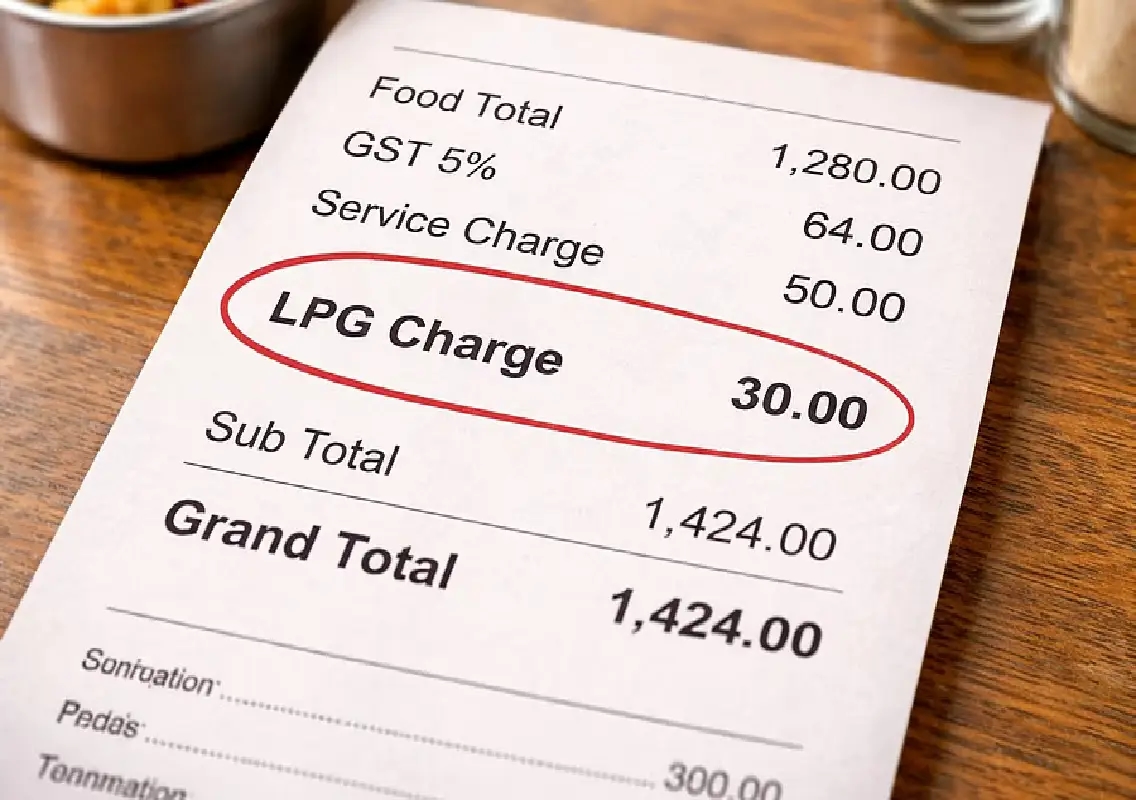


In a major step to protect consumer rights, the Central Consumer Protection Authority (CCPA) has issued a strict advisory to hotels and restaurants across the country, directing them not to impose additional charges such as LPG fees, gas surcharges, or fuel cost recovery on customer bills.
The authority has categorised such levies as “unfair trade practices” under the Consumer Protection Act, 2019 and warned of strict action against establishments that fail to comply.
‘LPG charges’ termed unfair practice
The CCPA said it has taken serious note of complaints and reports indicating that some establishments are adding charges like “LPG charges”, “gas surcharge”, or “fuel recovery fees” over and above menu prices and applicable taxes.
According to the regulator, these charges are being imposed by default without consumer consent, which violates fair pricing norms.
The authority clarified that operational expenses such as fuel, LPG, and electricity are inherent to running a business and must be included in the pricing of food and beverages, not billed separately.
Only menu price and taxes permitted
Reiterating existing rules, the CCPA emphasised that consumers are only required to pay:
- The price displayed on the menu
- Applicable government taxes
Any additional charge added automatically to the bill is not permissible unless it is voluntary and clearly communicated.
The advisory explicitly states that no hotel or restaurant should levy such charges by default or compel customers to pay them.
Action under consumer law
The directive has been issued under Section 10 of the Consumer Protection Act, 2019, which empowers the CCPA to regulate and prevent unfair trade practices.
The authority also warned that attempts to bypass earlier service charge guidelines by introducing alternative levies will not be tolerated.
Officials indicated that violations could invite penalties and legal action to safeguard consumer interests.
Monitoring and enforcement
The CCPA has stated that it is actively monitoring compliance across the country. Establishments found violating the directive will face appropriate action under the law.
The move comes amid growing complaints from consumers about hidden charges that increase the final bill without prior notice.
Such practices, the authority noted, place an unjustified financial burden on customers and reduce transparency in pricing.
How consumers can complain
Consumers who encounter such charges have been advised to first request removal of the fee from their bill.
If the issue is not resolved, complaints can be filed through multiple channels:
- National Consumer Helpline (dial 1915)
- Mobile applications linked to the helpline
- e-Jagriti portal
- District Collector’s office or directly with the CCPA
The authority has encouraged citizens to report violations to ensure better enforcement.
Context: LPG supply concerns
The advisory comes at a time when LPG supply chains are under pressure due to global geopolitical tensions, particularly disruptions affecting routes like the Strait of Hormuz.
Despite these challenges, the government has clarified that there are no immediate supply disruptions, and LPG deliveries remain stable.
India imports a significant portion of its LPG requirements, making it sensitive to global supply fluctuations.
Push for transparent pricing
The latest directive reinforces the government’s broader push towards transparency in billing practices within the hospitality sector. By ensuring that all operational costs are built into menu prices, the CCPA aims to eliminate hidden charges and protect consumers from arbitrary billing.
Conclusion
The CCPA’s advisory sends a clear message to the hospitality industry: pricing must be transparent and fair. As enforcement tightens, businesses will be expected to comply strictly with consumer protection norms, while customers are encouraged to remain vigilant and assert their rights.